Author: Security – Computerworld

Gov’t IT spending seen as key to building Europe’s tech ecosystem

As more European organizations reconsider their reliance on US technology suppliers amid rising geopolitical and trade tensions, public sector organizations are leading the way in a potential shift to local tech providers. 

The German state of Schleswig-Holstein is moving tens of thousands of employees from Microsoft apps Office, Windows and Exchange to open-source alternatives, for example, while Denmarks’ Ministry of Digitalization has begun to phase out Office 365 in favor of LibreOffice. The French government recently announced plans to swap Microsoft Teams and Zoom for its own video conferencing platform for 200,000 employees – potentially saving €2 million a year in licensing costs.

These are exceptions, however, and the European public sector is still heavily reliant on US suppliers. 

The German federal government spends €481 million on Microsoft licenses annually, a figure revealed in a response to a recent written inquiry by Rebecca Lenhard, a member of German Parliament representing the Green Party. That’s only the spending at a federal level, with the total amount across German states “certainly even higher,” said Lenhard, speaking during a roundtable discussion hosted by German open source software vendor, Nextcloud, this week. “It’s a lot of money we are investing in one company that we are completely dependent on.”

The recent surge in interest around European digital sovereignty is driven by a desire to reduce the use of non-European suppliers.  

Not all see it as a positive development. Several tech leaders recently voiced concerns about digital sovereignty strategies, which they claim could increase business costs and slow user adoption of digital technologies in the region, hampering productivity and competitiveness.

Still, the notion of digital sovereignty continues to gain traction among European organizations, a growing number of which plan to increase cloud computing spend with local providers. Sovereign cloud infrastructure-as-a-service revenues are set to triple by the end of 2027, according to Gartner. 

The topic has become a strategic focus at a national government and EU level. Last  November, French and German leaders pledged to increase the use of open-source technologies among government organizations as part of that push. 

Open-source software should be the “default” across Germany’s public sector, said Lenhard, a member of the Bundestag’s Committee on Digital Transformation and Government Modernization.

“Public procurement is one of the critical points where we have to change,” said Kim van Sparrentak, a Dutch member of the European Parliament representing Group of the Greens/European Free Alliance. A “buy European” approach should be favored where possible, said van Sparrentak, “not as prerequisite for all technologies — because it’s maybe not possible yet — but for the critical aspects of government at least.” 

The state can also serve as a “valuable anchor client,” said Lenhard, supporting the growth of a wider ecosystem of European tech and service providers, which is currently dwarfed by the US tech sector. This would give businesses the ability to “plan demand better, [and] invest the money in their products so they become better and better,” she said.

A 2025 report by Cigref — a non-profit that represents French businesses and public administrations — estimates that European organizations spend a total €265 billion on US software and service each year. 

Mirko Boehm, senior director for Community Development at the Linux Foundation Europe, said policy makers should “require that every major IT procurement includes an assessment of strategic dependency.

“If a ministry in one of the member states signs a contract with a hyperscaler, that’s not just an IT decision, it’s an industrial policy decision, a skills development decision, a technology transfer decision, and a digital sovereignty decision,” said Boehm. “These are all costs that are currently not considered in procurement.”

Every euro invested in public sector procurement generates multiples more in subsequent economic activity, said Boeh, a benefit that Europe misses out on by purchasing most of its technologies from US tech companies. 

“When European governments, for example, purchase from non-European hyperscalers, that multiplier effect builds in their innovation ecosystem — not in ours,” said Boehm. “The jobs, the supplier networks, the research and development investments, the tax base — all of that compounds somewhere else.”

Boehm said open-source technologies can provide an alternative for European organizations to “retain this econonic multiplier.

“The dependency that we currently see is basically a choice, a choice we made. It’s not an inevitability,” he said. “We have the options…. We need a political will.”

European consumers ask EU to put a stop to digital enshittification

Online rights campaigners have come together to complain about the propensity of IT companies to make life more difficult for their users. The groups, mainly from Europe but with some from the US, have written to policy makers in the EU/EEA, UK and the US.

The initiative has been spearheaded by Forbrukerrådet (the Norwegian Consumer Council) which complained of the “enshittification” of software. The term was popularized by writer Cory Doctorow, one of the signatories of the letter to the policymakers.

In the letter the groups complain about “the increasing concentration of power and lack of alternatives in digital markets, the push for deregulation, and the urgent need to enforce digital laws to protect our fundamental rights and create a level playing field for competition and innovation.”

They call for a rebalancing between software providers and consumers, the need to tackle the dependency on Big Tech by introducing more competition, greater use of existing laws to help companies fight against restrictive practises and the introduction of a strong Digital Fairness Act.

But the warning applies to any enterprise considering making its own systems harder to use once it has customers locked in.

While there is no evidence that enterprise software companies are deliberately trying make their products worse, many customers have lamented the shift to subscription-only services for software features they previously owned and the cramming of unwanted AI services into every corner of applications.

To illustrate what it’s talking about, Forbrukerrådet has produced a video to demonstrate how enshittification has taken hold, leading to the constant need to upgrade systems, the pervasiveness of ads, and the need to pay subscriptions to access features previously included in the purchase price of a product.

GPT 5.4 solves previously unsolved math problem with help from long-forgotten human research

GPT just keeps getting better at mathematics, increasingly solving the trickiest of problems.

In January, AI testing company Epoch AI found that a previous version of the AI model, GPT-5.2 Pro had solved 31% of its mathematical challenges, a rise from the previous score best of 19%.

The newest version has continued the progress, tackling a range of mathematical problems set by academics..

According to an Epoch AI blog post, it has gone one stage further: “GPT-5.4 Pro solved one Tier 4 problem that no model had solved before. In a preliminary analysis, it appeared to have found a preprint from 2011 which let it shortcut much of the intended work. The problem author was unaware of this preprint,” said the blog, referring to an academic paper that had not yet been subjected to peer review.

While “solving” the problem, this does demonstrate how GPT-5.4 (and indeed all AI models) are sophisticated search engines, whose effectiveness depends on access to and rapid assimilation of information.

GPT 5.4 Pro offers several other innovations. Open AI claimed that it was the first version that can do things on computers, rather than saying how to do things. For example, GPT-5.4 Pro can click a mouse — or to be more precise, it can issue a “click the mouse” command to an agent.

It also has improved spreadsheet skills, can solve problems using fewer tokens, and will prepare a plan before tackling complex tasks, giving users the chance to tweak the results and steer it in the correct direction.

Leaked Mac benchmarks show that Apple offers tomorrow’s AI PCs today

Early benchmarks for Apple’s latest Mac processors have emerged. They tell us that the all-new MacBook Neo can and will deliver a great experience for everyday tasks like browsing the web, using apps, or all the other tasks they aim to support. They also tell us that Apple now offers the fastest consumer PC processor on the planet with the M5 Max MacBook Pro, which has the highest single- and multi-core scores in the business.

Perhaps one way to articulate the computational power inside both devices is to understand the difference between single- and multi-core tasks. Single-core tasks encompass things like web surfing, opening apps, writing an email or document, or all the other basic chores we do all the time. Multi-core is all about video editing, gaming, 3D-modelling, and AI model creation — high-end tasks that need a lot of computing power. 

A machine with high multi-core scores is better for pros, while for everything else we look to high single-core scores. When you think about it, it is inevitable that the dedicated M-series Macs will offer a better balance of both — but even with the iPhone 16’s A18 pro chip, the MacBook Neo is still an impressive budget-priced system for everyday tasks.

How do the new Macs perform?

With that in mind, let’s take a quick look at the early scores. These might fluctuate as the new Macs ship and get tested, but they will almost certainly be in the same ball park:

M5 Max MacBook Pro 

  • Single-core score: 4,268
  • Multi-core score: 29,233

MacBook Neo

  • Single-core score: 3,461
  • Multi-core score: 8,668

For comparison, the M1 MacBook Air delivers the following:

  • Single-core score: 2,346
  • Multi-core score: 8,342

The M4 MacBook Air from last year provides:

  • Single-core score: 3,696
  • Multi-core score: 14,731

While the 14-in./ M5 MacBook Pro (reviewed here) can promise:

  • Single-core score: 4,228
  • Multi-core score: 17,460.

What do you need?

What these data points show is that for everyday use, any of the above Macs will do what you need. (The MacBook Neo will probably do those tasks noticeably faster than a M1 MacBook Air —and only slightly less swiftly than some more recent Macs.)

Meanwhile, running those more advanced professional tasks on the latest M5 Max Macs will pretty much eat everybody else’s lunch and still leave you with enough computational horsepower for more. Even a Ryzen 5950X chip, with its 12,016 multi-core performance, is outclassed. The highest-end Macs are 2.4x faster, meaning Macs now lead the PC industry.

Of course, performance isn’t just about running a Keynote presentation or creating your first video blog in Final Cut Pro (which needs a “video blogging” setting), performance is also about the things you don’t see quite so often.

In this day and age, it means how well your systems run artificial intelligence. We know that every single one of these Macs will run Apple Intelligence, which is Apple’s platform-based approach to AI, so we can also surmise they’ll be able to handle large language models (LLMs) from third parties, as well. 

Even the Neo will do this, given it’s just as capable as the iPhone 16 whose chip it uses, though memory will constrain performance; if you are searching for an AI PC, Apple will point you to its other more powerful Macs with higher multi-core performance. 

AI is the future; Apple hardware is ready

If AI is the future, then Apple’s new Macs are built to run that future. That’s going to be of more importance as the rapidly compounding energy, political, security, and component crises highlight how AI services are best run at the edge, need to respect sovereign data privacy boundaries, and can be seen as commodities that need platforms on which to play.

Apple is the world’s leading AI PC, even including the MacBook Neo to some extent.

The data in this case doesn’t lie. From the high-end all the way down to entry-level general purpose devices, Apple now has a Mac for everyone, and an iPad or iPhone for everybody else. None of this is by accident, all of it is by design, and to a huge extent the success of these deployments reflects the massive success of what the company has achieved in silicon design. It’s going to show in growing Mac market share this year, even while the overall PC industry continues its decline.

You can follow me on social media! Join me on BlueSky,  LinkedIn, and Mastodon.

Apple unveils its next-gen M5 family of Mac laptops

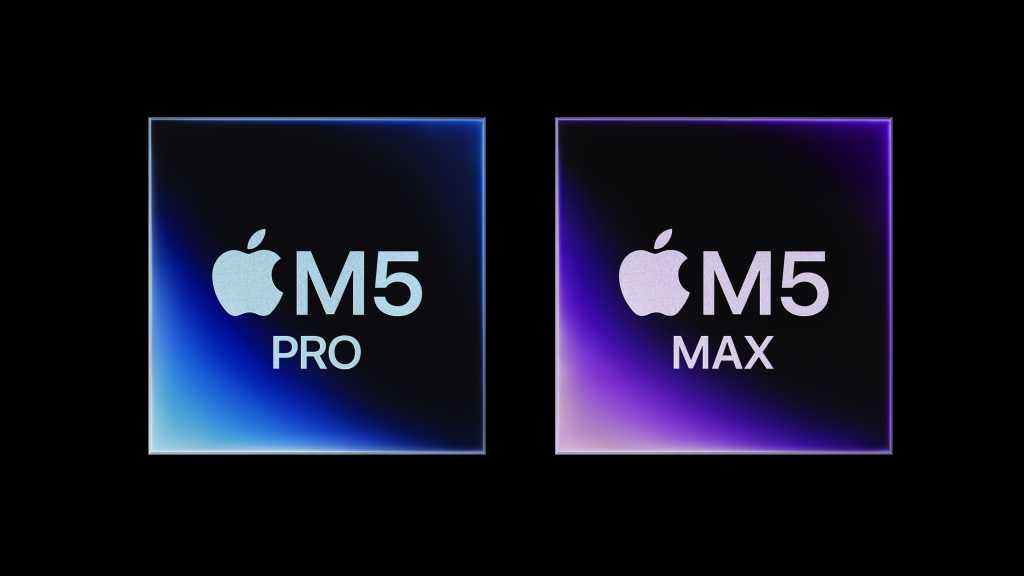
Turning to the Mac, Apple on Tuesday updated the world’s most popular laptop, introducing the MacBook Air with an M5 chip. It also unveiled super-powered M5 Pro and M5 Max chips inside the MacBook Pro, a new Studio Display and all-new Studio Display XDR.   

The latest product introductions follow Monday’s announcement of a new M4-powered iPad Air and the all-new iPhone 17e, and we expect even more news during the rest of the week.

The biggest highlight concerns the M5 chip used in these Macs. It promises superb performance and will only make Apple even more ascendant in terms of power and efficiency in its class. I’d argue these are now the best laptops money can buy.

There are some slight price increases. For example, both the M5 Pro and M5 Max Macs cost roughly $200 more than their predecessors, while the M5 MacBook Air now starts at $1,099 rather than $999. That cost increase is balanced by the fact that you do get twice the storage as before in the basic models.

Apple forges forward with M5 chips

The M5 Pro and M5 Max are engineered for AI and built using the new Apple-designed Fusion Architecture. The chip design combines two dies into a single system on a chip, promising tremendous performance boosts. M5 Pro and M5 Max feature a new up-to-18-core CPU with 6 super cores, and 12 all-new performance cores, optimized for power-efficient, multithreaded pro workloads — altogether delivering up to 30% faster performance.

The chip designs are remarkable in and of themselves, combining a powerful CPU, scalable GPU, Media Engine, unified memory controller, Neural Engine, and Thunderbolt 5 capabilities.

Apple shared a few statistics to suggest what these chips deliver in performance terms:

  • 30% increase in performance for pro tasks.
  • 4X faster for AI operations.
  • 35% increase in ray-tracing performance in contrast to the M4 Pro and M4 Max systems.

“M5 Pro and M5 Max are a monumental leap forward for Apple silicon, leveraging our new Fusion Architecture to scale the capabilities of Apple silicon while preserving its core tenets of performance, power efficiency, and unified memory architecture,” said Johny Srouji, Apple’s senior vice president of hardware technologies. “Both chips underscore our relentless pace of innovation.”

Don’t let the dizzying array of data points confuse you. What they mean is that every single one of these Macs will deliver performance that’s considerably faster than the preceding models. The chips cement Apple’s growing reputation for offering the best and most performant systems in the world.

MacBook Air with M5 chip

Apple seems to have impressed itself with the M5 MacBook Air, describing it as being up to 4x faster than the M4 model for AI functions and an astonishing 9.5x faster than the MacBook Air with an M1 chip.

The move to M5 puts a huge amount of performance with the reach of most consumer users and will do nothing to dent growing demand for these Macs from among enterprise pros.

“The new MacBook Air with M5 brings incredible performance and even more capability to the world’s most popular laptop,” said John Ternus, Apple senior vice president of hardware engineering. “With M5, MacBook Air powers through a wide range of tasks, from everyday productivity to creative workloads.”

  • The M5 processor in the Air has a 10-core CPU.
  • There’s an up-to-10-core GPU with a Neural Accelerator in each core.
  • Storage now starts with a 512GB SSD that promises about twice the read/write speeds of the last version of the Mac.
  • The Macs are available with 13.6-in. or 15.3-in. Liquid Retina displays offering 500nits brightness and a 12MP camera.
  • Connectivity includes an Apple N1 wireless chip for Wi-Fi 7 and Bluetooth 6. You also get two USB-C/Thunderbolt ports and MagSafe charging.
  • They’re available in sky blue, midnight, starlight, and silver and boast of up to 18 hours of battery life on a single charge.

Pre-orders begin March 4, with availability on March 11. As noted, prices start at $1,099.

MacBook Pro (M5 Pro and M5 Max)

Aimed at professionals and capable of the heaviest tasks, the new MacBook Pro models are so highly specified they should munch through any task you throw at them.“MacBook Pro with M5 Pro and M5 Max redefines what’s possible on a pro laptop, now up to 4x faster than the previous generation,” said Ternus.

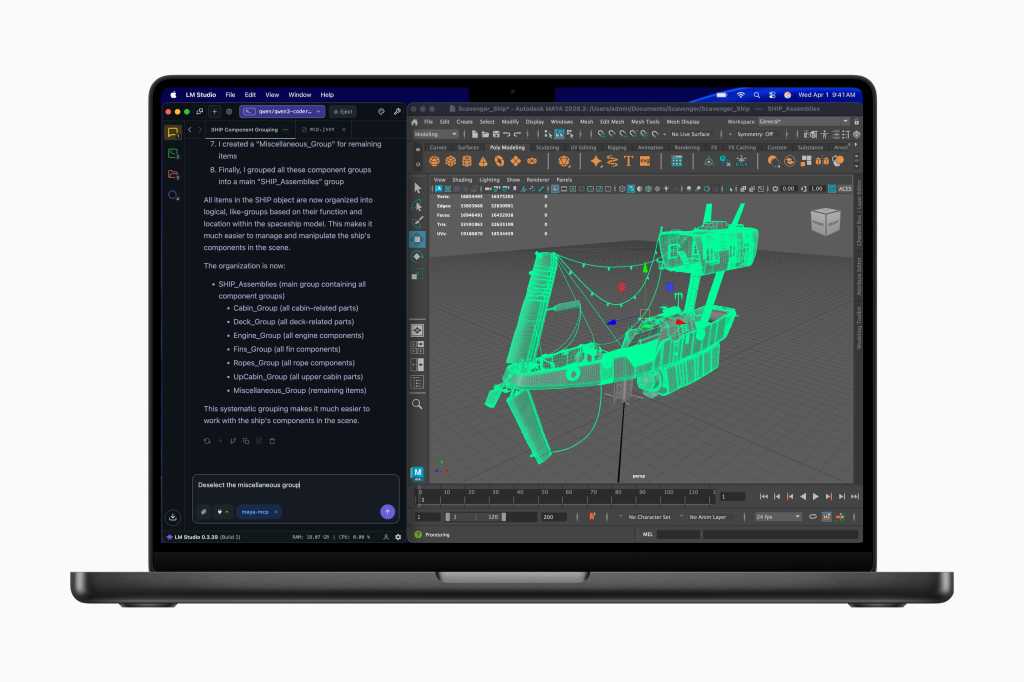
“With Neural Accelerators in the GPU, the new MacBook Pro enables professionals to run advanced LLMs on device and unlock capabilities that no other laptop can do — all while maintaining exceptional battery life,” he said. “Combined with even faster unified memory and storage, it empowers users to take their work even further, unleashing new possibilities and pushing the boundaries of what they can do.”

You can also opt for the base 14-in. M5 MacBook Pro at prices from $1,699.

  • The M5 processors are available with up to 18 CPU cores (6 super cores and 12 performance cores).
  • There’s a next-gen GPU, each core with a Neural Accelerator for AI compute
  • The new models are up to 4× faster with on-device AI vs. the previous gen and up to 8× faster than the M1 Pro/Max.
  • Unified memory bandwidth is impressive — up to 64GB memory at 307 GBps on the M5 Pro, and up to 128GB memory at 614 GBps on the Mac Max.
  • Storage starts at 1TB SSD for M5 Pro models, or 2TB SSD in the M5 Max machines. The SSD speeds are twice as fast as before.
  • They feature a Liquid Retina XDR display with anano-texture option, a 12MP Center Stage camera, a studio-quality mic array and a 6-speaker system.
  • Connectivity includes an Apple N1 wireless chip for Wi-Fi 7 and Bluetooth 6 and Thunderbolt 5 ports.
  • Available in space black and silver, they deliver up to 24 hours of battery life on a single charge.

Pre-orders begin March 4, with availability on March 11. The M5 MacBook Pro starts at $1,699; M5 Pro models start at $2,199 and M5 Max costs from $2,699. 

Apple’s new Studio Displays

Of course, even if you use a notebook most of the time, there are times when it helps to do your computing on a larger screen — particularly when handling intensive professional tasks. That is what Apple’s two new displays are for, including a redesigned 27-in. Studio Display for everyday use, and a new 27-in. Studio Display XDR particularly targeted at pro workflows.

The big changes in this generation include support for Thunderbolt 5 rather than the older Thunderbolt 3 Apple’s earlier displays supported. This lets you daisy-chain multiple displays and accessories and provides much higher bandwidth. The cameras are better, supporting features like Desk View, for instance.

But the big leap in display tech is the move to Mini-LED with HDR. Use of this tech in the Studio Display XDR makes for dramatic improvements in contrast, black levels and HDR performance. It also means a bright display, which will be particularly useful for pro video editors, as will be the far faster and smoother 120Hz refresh in the high-end display. You also gain support for AdobeRGB, which these displays lacked until now. Eagle-eyed readers might note that the 5K LCD display in the standard model remains the same, but with much better tech.

“Apple has led the industry in delivering the world’s most advanced displays for pros to do their life’s best work, and today we do that once again with the introduction of the new Studio Display family,” said Ternus, the man hotly-tipped to become the next Apple CEO.

What are the specifications of the new displays?

For the 27-in. Studio Display:

  • A 5,120×2,880 5K Retina panel.
  • 600 nits of brightness and P3 wide color.
  • 12MP Center Stage camera and a studio-quality three-mic array.
  • A six-speaker system with Spatial Audio designed for video calls, creative workflows, and immersive sound. 
  • Thunderbolt 5 with two downstream ports (to enable daisy-chaining), 2x USB-C ports, and up to 96W charging for notebooks via included cable.
  • Tilt-adjustable stand standard, with tilt-and-height adjustable stand an optional extra.
  • Nano-texture glass available for glare control .
  • Price: $1,599, with pre-orders starting March 4 and availability on March 11. 

For the 27-in. Studio Display XDR (Pro Model)

  • 5K Retina XDR with mini-LED backlight.
  • 2,000 nits peak HDR brightness and 1,000 nits SDR.
  • More than 2,000 local dimming zones for deep contrast.
  • P3 + Adobe RGB wide color gamuts for professional workflows.
  • 120Hz refresh rate with adaptive Sync for smoother motion and variable frame support.
  • 12MP Center Stage camera, studio-quality three-mic array and a six-speaker system with Spatial Audio.
  • DICOM medical imaging presets and optional Medical Imaging Calibrator (for diagnostic work, pending FDA clearance).
  • Two Thunderbolt 5 ports, 2xUSB-C ports, and up to 140 W charging for larger notebooks.
  • Tilt- and height-adjustable stand, with a VESA mount adapter available .
  • Price: $3,299, with pre-orders starting March 4 and availability on March 11.

Please follow me on Twitter, or join me in the AppleHolic’s bar & grill and Apple Discussions groups on MeWe. Also, now on Mastodon.

OAuth phishers make ‘check where the link points’ advice ineffective

Microsoft has warned that phishers are exploiting a built-in behavior of the OAuth authentication protocol to redirect victims to malware, using links that point to legitimate identity provider domains such as Microsoft Entra ID and Google Workspace. The links look safe but ultimately lead somewhere that isn’t.

“OAuth includes a legitimate feature that allows identity providers to redirect users to a specific landing page under certain conditions, typically in error scenarios or other defined flows,” Microsoft’s Defender Security Research Team wrote in a blog post. “Attackers can abuse this native functionality by crafting URLs with popular identity providers, such as Entra ID or Google Workspace, that use manipulated parameters or associated malicious applications to redirect users to attacker-controlled landing pages.”

The company said it has disabled several malicious OAuth applications linked to the activity but warned that related campaigns are continuing and require ongoing monitoring.

How the attack works

The attack starts with a phishing email, with observed lures impersonating e-signature requests, HR communications, Microsoft Teams meeting invites, and password reset alerts, the malicious links embedded either in the email body or inside a PDF attachment, Microsoft researchers wrote in the blog post.

The link points to a real OAuth authorization endpoint but is built with deliberately broken parameters. Attackers use a “prompt=none” value, requesting a silent authentication with no login screen, and pair it with an invalid scope value. The combination is designed to fail. When it does, the identity provider redirects the user’s browser to a URI registered by the attacker.

“Although this behavior is standards-compliant, adversaries can abuse it to redirect users through trusted authorization endpoints to attacker-controlled destinations,” the researchers wrote in the blog post.

The technique represents a structural shift in how attackers approach identity, said Greyhound Research chief analyst Sanchit Vir Gogia. “The first hop is real. The browser is behaving correctly. The identity provider is behaving correctly. The trust signal is authentic,” he said. “This shifts phishing from deception at the brand layer to manipulation at the workflow layer.”

In one campaign Microsoft detailed in the blog post, the redirect delivered a ZIP archive containing a malicious shortcut file to the victim’s device. Opening the file triggered a PowerShell script that ran reconnaissance commands and ultimately connected to an attacker-controlled server, the post said. Microsoft described the subsequent activity as consistent with pre-ransomware behavior.

Other campaigns the blog post detailed routed victims to adversary-in-the-middle frameworks such as EvilProxy to harvest credentials and session cookies.

Context, not the URL, is the new red flag

Sakshi Grover, Senior Research Manager at IDC Asia/Pacific, said the longstanding advice to hover over a link and verify its domain was built for an era of lookalike domains and that it no longer holds in environments where authentication flows routinely pass through trusted identity providers.

“Organizations should shift awareness messaging from ‘check the link’ to ‘validate the context,’” she said. “Employees should be trained to question whether an authentication request was expected, whether it aligns with a current business activity, and whether the application is requesting permissions that make sense.”

Gogia said enterprises need to go further and change the underlying behavior entirely. “Never initiate authentication journeys from unsolicited inbound links,” he said. “Authentication should begin from controlled starting points, not from email triggers.” He added that reporting unexpected login journeys must be made frictionless, and that speed of reporting is more valuable than confidence in personal judgment.

The governance gap attackers exploit

Both analysts pointed to OAuth application governance as the deeper structural gap this campaign exploits.

Grover of IDC said governance maturity remains uneven across enterprises. “Broad default consent settings and limited monitoring of redirect URIs remain common, particularly in environments where cloud and SaaS adoption have outpaced identity governance controls,” she said.

The scale of the problem is easy to underestimate, according to Gogia of Greyhound Research. “Every SaaS integration, automation workflow, and collaboration tool may require an application registration. Over time, tenants accumulate hundreds or thousands of registered apps. Redirect URIs are configured during setup and rarely revisited,” he said. “Telemetry exists. Interpretation does not.”

Microsoft said in the blog post that organizations should restrict user consent to third-party OAuth applications, audit app permissions regularly, and remove applications that are unused or over-privileged. The post also published 16 client IDs linked to the threat actors’ malicious applications and a list of initial redirection URLs as indicators of compromise. KQL hunting queries for Microsoft Defender XDR customers are included in the post to help identify related activity across email, identity, and endpoint signals.

The technique will remain effective for as long as enterprises leave these gaps unaddressed, Gogia warned. “It does not require breaking encryption,” he said. “It requires exploiting administrative complacency.”

This article first appeared on CSOonline.

What is digital employee experience — and why is it more important than ever?

On any given day, an organization’s employees might be using smartphones, laptops, desktop computers, tablets, a variety of cloud and networking services, a host of enterprise applications and mobile apps, and other digital tools. Many of them might be working remotely, and nearly all of them will be operating with tight security and data privacy constraints.

From the users’ standpoint, what could possibly go wrong? A lot, in fact. Today’s digital workforce can face numerous obstacles — from slow internet service to awkward and time-consuming access to systems and devices.

This is where digital employee experience (DEX) comes in. DEX tools and services can help organizations enhance the technology their workers use every day, which in turn can lead to improved productivity and increased employee retention.

What is digital employee experience?

Digital employee experience is a measure of how workers perceive and interact with the many digital tools and services they use in the workplace. It examines how employees feel about these technologies, including systems, software, and devices.

Enterprises can deploy a DEX strategy that focuses on tracking, assessing, and improving employees’ technology experience, with the aim of increasing productivity and worker satisfaction.

DEX management tools can support a DEX strategy by aggregating data on usage and performance, analyzing the data, and delivering insights that can help organizations make the necessary enhancements to their technology. For example, a DEX software platform could gauge how easy it is for workers to use a company’s collaboration platforms, how fast the network is during peak hours, or how effective their mobile apps and devices are for performing everyday business tasks.

The main point of DEX is to uncover how employees are dealing with the ever-growing number of technology tools they rely on to do their jobs — and offer solutions to enhancing their experiences. DEX has become more important than ever with the rise of artificial intelligence in the workplace.

Why DEX matters

With the growing reliance on digital tools in the workplace, DEX has become a vital component of IT management. DEX tools and services can lead to potential benefits such as increased productivity, enhanced engagement, better collaboration, and higher employee satisfaction.

“DEX matters because the workplace is primarily digital for most employees, and friction creates compounding impact,” says Dan Wilson, vice president and research analyst, digital workplace, at research firm Gartner.

Digital friction, not technology outages, has become the primary employee problem to manage, Wilson says. Brought on by fragmented technology deployments, inconsistent workflows, and other factors, “friction accumulates when employees can’t find information, miss updates, or work without context,” he says.

Gartner’s research over the past several years shows that persistent digital friction impedes the ability to work, Wilson says. “DEX tools are increasingly being used to identify, prioritize and automate friction remediation, and track improvement using a blend of objective telemetry and employee sentiment,” he says.

Among the common examples of digital friction the research cites are slow application launch time, frequent application crashes or freezes, lag in collaboration tools during meetings or calls, inconsistent performance between office and remote environments, and repeated login prompts during the workday.

“Most digital friction is invisible to IT because employees adapt instead of escalating,” Wilson says. “Friction accumulates across devices, apps, identity, workflows, and support, not in silos. These are not necessarily new issues, but the impact on the workforce increases as employees are increasingly dependent on technology to perform their work tasks.”

DEX is shifting from a nice-to-have IT visibility tool to an operational discipline focused on improving productivity and business outcomes, says Christy Punch, principal analyst at Forrester Research. “DEX isn’t about having a tool; it’s having a measurable way to reduce digital friction that quietly taxes productivity every day and ultimately impacts the bottom line,” she says.

During the pandemic, investments poured into remote software and devices, “but office technology fell by the wayside,” Punch says. “Now, with the push for employees to return to offices, organizations are realizing their physical workplace tech isn’t ready for hybrid collaboration. Employees are vocal about unreliable office experiences,” and IT teams are scrambling to upgrade outdated technologies.

What DEX tools do

At a high level, DEX tools help organizations measure, diagnose, and improve the day-to-day experience of working with technology — using telemetry, sentiment, analytics, and automation, Punch says.

“DEX tools are evolving from ‘visibility dashboards’ into systems of action,” Punch says. “They don’t just detect issues; they increasingly orchestrate fixes and prevent problems. The most important capability expansion is that experience data is no longer trapped in silos by teams.”

DEX is becoming the layer “that connects endpoints, apps, support, and workflows into an end-to-end story, breaks down operational silos, and enables DEX optimization at scale across the business,” she says.

Capabilities have expanded beyond “device health,” Punch says, into areas such as experience visibility, connecting real-time telemetry with qualitative sentiment and feedback to diagnose issues and track trends over time; and proactive remediation, fixing issues before employees are impacted.

DEX meets AI

As is the case with so many other technology offerings, DEX tools are incorporating artificial intelligence capabilities. This helping to make DEX more accessible to departments outside of IT, such as human resources.

DEX tools leverage AI for several functions, Wilson says. These include signal compression, to prioritize massive telemetry data; accelerated diagnosis of issues, through faster anomaly detection/correlation and root‑cause analysis; and natural language interaction, to help executives gain insights and explanations of service issues.

While DEX tools can safely be used by non-IT teams, and some leading organizations do this, it’s not yet a common practice due to “limited IT maturity and collaboration” with the technology, Wilson says.

“AI is now being used to interpret signals, recommend fixes, automate workflows, and drive proactive remediation at scale,” Punch says. “DEX tools are unifying data that traditionally lived in organizational silos, and AI provides insights and issue prioritization in real time.”

With rising costs, heavy tech investments, and the growing influence of AI, organizations are shifting their mindset, Punch says. “Instead of focusing on solution-first, tool-heavy strategies, they’re prioritizing optimization, rationalization, and efficiency at scale,” she says.

Rapid advancements in AI “will push the boundaries of what’s possible in DEX, especially around automated remediation and predictive insights,” Punch says. “Vendors must innovate quickly to stay competitive and meet customer needs.”

DEX and UEM

Many unified endpoint management (UEM) vendors have started to provide real-time measurements of digital employee experience into their platforms, and this gives organizations another option for acquiring DEX capabilities.

Gartner advises clients looking for a DEX tool to prioritize DEX features when selecting a UEM platform or adding these on to existing endpoint management and IT service management tools. This can speed up deployment of DEX capabilities, Wilson says.

That said, DEX capabilities within UEM platforms are typically not as robust as those in dedicated DEX software. “Standalone DEX tools often [are optimal] when deeper experience analytics, broader workload coverage, and stronger closed‑loop automation are required,” Wilson says.

Challenges with the technology

Deploying and maintaining DEX tools can present a number of challenges for organizations.

One is overcoming “actionability gaps,” Wilson says. “IT often uses the tools for dashboards and reports and does not address the process and behavioral changes required to deliver more strategic outcomes,” he says.

Another is overcoming fear of automation. “Technical staff tend to limit widespread use of automation due to [concerns over] appropriate testing, approvals, rollback, and auditability,” Wilson says.

A lot of organizations also need to address the lack of skills or capacity required to use DEX tools effectively. “Many IT teams lack sufficient analytics, automation, service [operations], and employee enablement skills to elevate DEX from a toolset to a strategy,” Wilson says.

Then there’s the issue of who’s responsible for DEX success. DEX spans IT, HR, operations, communications, and business teams, “and fragmented accountability leads to fragmented experiences,” Punch says. In addition, endpoint telemetry, observability, analytics, and sentiment data often live in separate systems, managed by separate teams using disjointed processes, she says.

Finally, there are hurdles related to privacy and trust. “As [employee device] monitoring and AI expand, transparency and governance become non-negotiable,” Punch says. “Ever-evolving data privacy laws, AI regulations, and labor union rules may also play a critical role in how DEX is implemented.”

A market still on the rise

Despite these and other challenges, demand for DEX is rising. This is due in part to an increasingly distributed workforce, application sprawl, faster software update and change cycles, and pressure to improve productivity without adding headcount, Wilson says.

The DEX software market was valued at $1.32 billion in 2024 and is projected to reach $2.97 billion by 2032, according to a January 2026 report from Verified Market Research.

The market “has expanded rapidly due to the rise of hybrid and remote work, where the digital environment effectively is the workplace,” the report says.

Success stories: Yamaha, AdventHealth, Southwest Airlines

Companies using DEX are finding it to be a valuable tool for enhancing users’ experiences with technology.

Vehicle manufacturer Yamaha Motor Corp. deployed the ControlUp ONE DEX platform about nine months ago to help address a lack of consistent, reliable data across its endpoint environment, says Faisal Muhammad, head of infrastructure, operations, and end user services.

“We had information coming from multiple sources, but it did not tell a clear story or support confident decision-making,” Muhammad says. “We needed a DEX solution that could give us accurate visibility into our endpoints, validate assumptions we were making about hardware and software, and help us move from opinion-based decisions to data-driven ones. ControlUp addressed that gap by giving us a clear, unified view of our environment.”

The main driver for using DEX was the need for trustworthy data to support major infrastructure and end-user computing decisions. “When I joined Yamaha, we were preparing for a Windows 10 to Windows 11 migration and had been told that roughly 2,000 devices needed to be replaced,” Muhammad says. “There was a $2.4 million budget tied to that estimate, but there was no validated data behind it.”

The company was also dealing with mixed reports and inconsistent asset data, which made it difficult to confidently justify spending. “The goal of deploying DEX was to understand exactly what we had in our environment, what truly needed attention, and where we could avoid unnecessary cost while still meeting deadlines and performance expectations,” Muhammad says.

ControlUp ONE provides deep visibility into endpoint hardware, software, and usage data, and helps turn that data into something meaningful that Muhammad’s team can act on. Beyond cost savings, ControlUp ONE has helped reduce service desk workload, improve transparency with stakeholders, and support better planning and prioritization, he says.

The addition of AI promises even more benefits. “ControlUp is moving in a direction where AI plays a meaningful role, and that is something I am very interested in,” Muhammad says. “From my perspective, the real value of AI in DEX is its ability to analyze historical data, logs, and patterns to help us anticipate and fix problems before employees experience them. You cannot predict the exact moment of an incident, but based on historical data, you know where problems are likely to occur and when.”

The end result is fewer disruptions, faster resolution times, and a better overall experience for employees, while allowing IT teams to handle more issues with less effort.

Another company, healthcare provider AdventHealth, is using Lakeside SysTrack as its enterprise DEX platform. SysTrack has been in place for several years, with a major license expansion between 2022 and 2024, says Sonny Noto, vice president of technology services at AdventHealth. AI and IT service management capabilities are now being enabled to support the service desk and engineering teams, he says.

“We needed to evolve beyond reactive, ticket-based support,” Noto says. “SysTrack’s telemetry and analytics provide predictive visibility into device health, application performance, [and] user friction.” Visibility into the performance of Epic electronic health record (EHR) software has been especially important, he says.

“Before SysTrack, monitoring was fragmented,” Noto says. “SysTrack unified endpoint telemetry, dashboards, and automated incident generation — particularly for clinical workflows.” It also provides visibility into remote connectivity and collaboration experiences to better support hybrid workflows, as well as device health scoring, CPU/memory/storage insights, driver and peripheral health, and application behavior across more than 100,000 endpoints.

“Teams are able to isolate workstation-specific causes of issues that previously appeared to be Epic performance problems,” Noto says.

AdventHealth is actively enabling SysTrack AI, which provides a substantial leap forward in how the company can detect, diagnose, and resolve endpoint issues, Noto says. Among the categories of AI features now in use or being piloted are natural‑language querying across endpoint telemetry, allowing engineers and service desk staff to address a variety of user issues; automated diagnostic findings, with the system’s Pulse feature analyzing thousands of device signals and producing intelligent summaries of root-cause factors; and anomaly detection and early warning indicators for deviations from normal behavior.

The company is building one of the first integrations between SysTrack AI and AI assistant platform Moveworks, combining conversational AI with real-time device intelligence and ensuring immediate consumption of telemetry, health scores, and AI findings, Noto says.

Southwest Airlines began its DEX journey in 2021, with the deployment of Nexthink’s platform. The company was aiming to modernize endpoint visibility and shift from reactive IT operations to a proactive, data-driven model, says Darius Cincan, enterprise endpoint & digital experience leader.

Prior to deploying DEX, Southwest faced challenges including lack of real-time visibility, reactive issue resolution, and inefficiencies in endpoint remediation, Cincan says.

The primary objectives included proactively identifying issues before they impacted employees and reducing disruption to the workforce. “Equally important was the goal of elevating the employee experience by minimizing performance degradation and downtime,” Cincan says.

Nexthink provides real-time monitoring, analytics, and automation across all endpoints, enabling IT teams to detect issues early and remediate them at scale.

“One notable outcome has been the reduction in user login times, achieved by identifying and addressing the underlying causes of slow logons,” Cincan says. “Nexthink has also enabled automated reboot campaigns based on device performance, proactively restoring system stability and improving the day-to-day compute experience for end users.”

In shared device environments, automated logoff of idle user profiles has helped reclaim system resources and reduce profile bloat, Cincan says. “Automated cleanup of unused user profiles and disk space has significantly reduced storage consumption, mitigating ‘disk full’ conditions that can block operating system updates, application installations, and security patching,” he says. This has reduced the need to procure higher-capacity storage hardware, resulting in cost savings.

Nexthink has strengthened root cause analysis capabilities by correlating endpoint telemetry across hardware, operating system, application, and user experience data, which has shortened troubleshooting cycles and cut dependency on multi-team investigations, Cincan says.

The platform supports natural language queries, allowing IT teams to ask questions in plain English and receive contextual insights, recommendations, and links to relevant dashboards or knowledge resources, Cincan says. “AI-driven insights automatically assess alert scope and impact, enabling teams to prioritize the most critical issues,” he says.

By automating remediation, improving visibility, and leveraging AI-driven insights, Southwest Airlines has reduced operational friction and shifted IT from a reactive support function to a proactive experience enabler, Cincan says.

This story was originally published in August 2022 and updated in March 2026.

Researchers warn about ChatGPT’s new health service

A new study published in the journal Nature Medicine raises concerns about the safety of Open AI’s health service ChatGPT Health, which in many cases fails to recommend emergency care when it ‘ actually needed, according to The Guardian.

Researchers tested ChatGPT Health with 60 realistic patient scenarios, ranging from mild discomfort to acute medical conditions. Three doctors assessed in advance the level of care required, and the results were then compared with the AI tool’s recommendations. In more than half of the cases where a patient should have been sent to the hospital immediately, the system instead advised them to stay home or get a regular doctor’s appointment.

According to the study, the service performed better in clear emergency situations, such as strokes or severe allergic reactions, but had trouble handling more complex or ambiguous symptoms. The researchers also point to shortcomings in how the system handled suicide risk, where warning functions sometimes disappeared depending on what additional information was added to the scenario.

In response, OpenAI said the study does not reflect how the service is typically used in practice and that the model is continuously updated, The Guardian reported.

OpenAI says its US defense deal is safer than Anthropic’s, but is it?

OpenAI has struck a deal to supply the US government with AI services, announcing it hours after US President Donald Trump’s decision on Friday to ban its AI rival Anthropic from all US government contracts.

Sam Altman, CEO of OpenAI, said of the negotiation, “It was definitely rushed, and the optics don’t look good,” in a post on X on Sunday.

Anthropic was banned for its refusal to let its product be used for mass surveillance of US citizens or in fully autonomous weapons; OpenAI said its deal contained the same limitations, raising questions about how it had managed to secure such concessions so quickly — or indeed whether it had secured them at all.

The US government wanted Anthropic to allow the use of its technology for all lawful purposes. Anthropic agreed, save for those two exceptions, and on Friday its intransigence got it banned.

On Saturday, OpenAI called for the government to offer deals to other AI companies on the same terms it had agreed to, saying in a blog post: “We think our agreement has more guardrails than any previous agreement for classified AI deployments, including Anthropic’s.”

Redlining

“We have three main red lines that guide our work with the DoW, which are generally shared by several other frontier labs,” the company said, using the Department of Defense’s secondary name, the Department of War.

Those red lines, it said, are no use of its technology for mass domestic surveillance; no use of its technology to direct autonomous weapons systems, and no use of its technology for high-stakes automated decisions such as “social credit” systems.

So did OpenAI really succeed where Anthropic failed? And if so how?

OpenAI protects its red lines through “a more expansive, multi-layered approach,” it said in the Saturday blog post. “We retain full discretion over our safety stack, we deploy via cloud, cleared OpenAI personnel are in the loop, and we have strong contractual protections. This is all in addition to the strong existing protections in U.S. law.”

It cited the part of the contract offering those protections: “The Department of War may use the AI System for all lawful purposes, consistent with applicable law, operational requirements, and well-established safety and oversight protocols. The AI System will not be used to independently direct autonomous weapons in any case where law, regulation, or Department policy requires human control, nor will it be used to assume other high-stakes decisions that require approval by a human decisionmaker under the same authorities.”

That only imposes limits on the use of OpenAI technology to control autonomous weapons where the law or regulations forbid it; where laws and regulations are silent on the matter, it offers no protection.

“I’m not surprised that OpenAI has given DoW what DoW wanted. I am a little surprised that so many observers appear to be under the impression that the contract snippet OpenAI has published guarantees something significantly different from ‘all lawful use,’” wrote Charlie Bullock, a senior research fellow at independent think tank Institute for Law and AI, said in a post on X.

As for mass domestic surveillance, the contract terms cited by OpenAI said, “For intelligence activities, any handling of private information will comply with the Fourth Amendment, the National Security Act of 1947 and the Foreign Intelligence and Surveillance Act of 1978, Executive Order 12333, and applicable DoD directives requiring a defined foreign intelligence purpose. The AI System shall not be used for unconstrained monitoring of U.S. persons’ private information as consistent with these authorities. The system shall also not be used for domestic law-enforcement activities except as permitted by the Posse Comitatus Act and other applicable law.”

OpenAI’s guardrails may not be enough

However, lawyers are not convinced that the contractual language that OpenAI quotes in the blog post is enough to stop the DoD from actually carrying out domestic mass surveillance in the US.

The contractual language that OpenAI revealed allow agencies like the NSA, which is a part of the DoD, to engage in bulk domestic metadata collection under existing legal powers, said Pranesh Prakash, principal consultant at law and policy advisory firm Anekaanta.

Bullock wrote that he was unaware of a precise legal definition of mass domestic surveillance, saying there are things that a sufficiently advanced AI system could do that would be legal but would also qualify as mass domestic surveillance under at least some reasonable definitions of that term.

There are other ambiguities as well, Bullock noted, saying that the legal picture remains fuzzy, largely because OpenAI hasn’t published the full contract.

If the contract expressly limits surveillance or weapons related deployment, said Anandaday Misshra, founder of Amlegals, a law firm specializing in AI regulatory intelligence and data protection, “OpenAI can rely on standard contract law principles to enforce those limits, at least as between the parties.”

However, said Misshra, once the US government is involved, particularly through an entity like the DoD, OpenAI’s ability to prevent certain uses becomes more fragile: “National security carve-outs, classified programs, and sovereign immunity doctrines significantly weaken any attempt to challenge government use purely on ethical grounds. Courts have historically shown deference where national security is invoked, even when private contractors object,” he said.

There have been “similar tensions” in past disputes involving telecom surveillance and defense contracting, where companies relied on contractual language and internal governance but “ultimately had limited leverage once federal authorities asserted statutory powers,” he said.

Unfavorably for OpenAI, there is no clean precedent where a technology provider successfully blocked the federal government from using a tool for security or defense purposes once access was contractually granted, Misshra said, adding that national security exceptions would likely override softer commitments around ethical AI use in the case of a direct conflict.

The regulations around data protection don’t favor OpenAI’s position either, at least in their current form in the US, said Misshra.

“Unlike data protection and AI regimes in Europe, the United States does not yet have a binding federal AI law that would clearly prohibit military or intelligence applications, which means OpenAI is operating more on self-imposed policy than statutory protection,” Misshra said.

A silver lining in the cloud deployment

There are some technical safeguards, OpenAI said. “This is a cloud-only deployment, with a safety stack that we run that includes these principles and others. We are not providing the DoW with ‘guardrails off’ or non-safety trained models, nor are we deploying our models on edge devices,” the company wrote in Saturday’s blog post. “Our deployment architecture will enable us to independently verify that these red lines are not crossed, including running and updating classifiers.”

Bullock wrote that, given OpenAI’s emphasis on the technical and operational protections, “It makes sense to base your opinion of their decision on how much you trust the company, their technical safeguards, and their in-the-loop personnel rather than on what the two paragraphs of their contract that they chose to publish say.”

Despite the promise of architectural control Misshra said disagreements like this between AI firms and the US government may set a precedent not for resistance, but for how tech companies negotiate guardrails.

“Expect future agreements to be more explicit on permitted use, audit rights, model versioning, and liability allocation. Ethical commitments will increasingly be embedded as contractual risk management tools rather than moral vetoes,” Misshra said.

This article first appeared on CIO.

Apple announces the iPhone 17e and a new M4-powered iPad Air

Apple promised a big week of new product introductions  and seems ready to deliver. Starting the week off are the iPhone 17e and an iPad Air with a powerful M4 chip. Both systems meet the promises we heard during pre-introduction speculation, but perhaps it is even more impressive that Apple has somehow also managed to offer both new systems at exactly the same basic price as their predecessors. (That’s despite the global spike in memory prices.)

The end result, of course, is that as competitor prices increase and Apple stays the same — while simultaneously widening the performance gap between its own and other devices in the class — the company can grab an ever greater chunk of mid-range customers. In the background, Apple’s devices are highly performant, making them suitable hosts for almost any form of AI, on-device or in the cloud.

Introducing the iPhone 17e

The big improvement in this new model is the processor. The new iPhone 17e uses the same chip as the standard iPhone 17. Apple callas this phone “a compelling option for customers looking to upgrade to the iPhone 17 family,” according to Kaiann Drance, Apple’s vice president of worldwide iPhone product marketing. 

If there’s a compromise to be had it is in the camera; just like the iPhone 16e, the new model uses a single-lens camera, though this is now improved with 2x telephoto lens. It is also interesting to note that Apple’s new video ad for the device quite openly aims to attract switchers from other platforms.

“We know our customers want a product that will last, and iPhone 17e delivers just that,” said Drance. “With A19 for incredible performance, double the entry storage, a smarter camera system, and enhanced durability, iPhone 17e is designed to stay fast, secure, and valuable for years to come.”

Given rapidly increasing component costs, along with continued uncertainty in manufacturing and logistics, it is also impressive that Apple kept prices unchanged. You’ll still pay $599 for a standard configuration iPhone 17e or for an 11-inch iPad Air with the M4 chip.

In the current business environment, Apple has clearly decided to swallow a potential hit on margins in exchange for a chance to build market share as the cost of competing devices seems likely to increase.

The iPhone 17e at a glance

  • Processor: A19 chip with 6 CPU cores, a 4-core GPU and 16-core Neural Engine.
  • Face ID support.
  • Storage: From 256GB (twice the entry level storage of iPhone 16e).
  • Modem: Apple-designed C1X modem, up to twice as fast and 30% more energy efficient than 5G modem in iPhone 16e.
  • Display: 6.1-in. Super Retina XDR OLED display, peak 1,200 nits brightness.
  • Camera: 48MP Fusion Camera with 2x Telephoto and 4K. Night mode is supported, as is spatial audio.
  • Colors: Black, white, soft pink.
  • Power: Apple promises all-day battery life and said the device will reach 50% charge in just 30 minutes. You also get MagSafe up to 15 watts.
  • Cost: From $599. Pre-orders begin March 4, with availability a week later.

The use of an Apple modem has another advantage: the iPhone 17e supports satellite connectivity features such as Emergency SOS. Finally, Apple says the Ceramic Shield coating makes the iPhone 17e three times more resistant to scratching than the previous generation. 

The all-new M4-powered iPad Air

Apple also rolled out an iPad Air equipped with an M4 processor and (optional) 5G support. Apple claims the new iPad is up to 30% faster than last year’s M3 models, but the improvements don’t stop there.

Arguably, the 2025 iPad Air is a significant generational leap over the previous models, certainly in terms of processing power, AI capabilities and connectivity. Apple says, for example, that the Neural Engine is three times faster than in the M1-powered model. You’ll see tremendous speed improvements if upgrading from an M1 iPad Air as Apple promises up to 2.3x faster performance.

“iPad Air gives users more ways than ever to be creative and productive, offering powerful performance and incredible versatility to help them turn their ideas into reality,” said Bob Borchers, Apple’s vice president of worldwide product marketing. “With its blazing performance thanks to M4, incredible AI capabilities, and game-changing iPadOS 26 features, there’s never been a better time to choose or upgrade to iPad Air.”

iPad Air M4 at a glance

  • Processor: M4 chip with 8-core CPU and 9-core GPU, 16-core Neural Engine.
  • Memory: 12GB of unified memory with 120 GBps bandwidth — 50% more memory than the previous model.
  • N1 chip: Wi-Fi 7, Bluetooth 6, Thread support.
  • Modem: Cellular models gain the C1X modem, which promises up to 50% faster data and 30% improved energy efficiency over the preceding model. 
  • Display: Available in 11-in. and 13-in. configurations.
  • Camera: 12MP camera front and back.
  • Cost: From $599 (11-in.), $799 (13-in.).

It’s hard to ignore the central pillars of these upgrade; more speed from the new processor and a big boost in general performance thanks to the inclusion of twice as much memory. What this means is that users will find everything works a lot faster, and it means these iPads, like every Apple device, have more than enough power to handle Apple Intelligence and other forms of AI. In tablet form, at least, I’m not confident anyone else offers a product in the category that matches this.

More Apple products are about to see the light of day this week. We anticipate new Macs, including a $599 A18 Pro MacBook and M5 Pro MacBook Pros, updated Apple displays, and more.  

Please follow me on Twitter, or join me in the AppleHolic’s bar & grill and Apple Discussions groups on MeWe. Also, now on Mastodon.