Category: Apple, Computers, Computers and Peripherals, Laptops, Mac, MacBook, Vendors and Providers

Apple unveils its next-gen M5 family of Mac laptops

Turning to the Mac, Apple on Tuesday updated the world’s most popular laptop, introducing the MacBook Air with an M5 chip. It also unveiled super-powered M5 Pro and M5 Max chips inside the MacBook Pro, a new Studio Display and all-new Studio Display XDR.   

The latest product introductions follow Monday’s announcement of a new M4-powered iPad Air and the all-new iPhone 17e, and we expect even more news during the rest of the week.

The biggest highlight concerns the M5 chip used in these Macs. It promises superb performance and will only make Apple even more ascendant in terms of power and efficiency in its class. I’d argue these are now the best laptops money can buy.

There are some slight price increases. For example, both the M5 Pro and M5 Max Macs cost roughly $200 more than their predecessors, while the M5 MacBook Air now starts at $1,099 rather than $999. That cost increase is balanced by the fact that you do get twice the storage as before in the basic models.

Apple forges forward with M5 chips

The M5 Pro and M5 Max are engineered for AI and built using the new Apple-designed Fusion Architecture. The chip design combines two dies into a single system on a chip, promising tremendous performance boosts. M5 Pro and M5 Max feature a new up-to-18-core CPU with 6 super cores, and 12 all-new performance cores, optimized for power-efficient, multithreaded pro workloads — altogether delivering up to 30% faster performance.

The chip designs are remarkable in and of themselves, combining a powerful CPU, scalable GPU, Media Engine, unified memory controller, Neural Engine, and Thunderbolt 5 capabilities.

Apple shared a few statistics to suggest what these chips deliver in performance terms:

  • 30% increase in performance for pro tasks.
  • 4X faster for AI operations.
  • 35% increase in ray-tracing performance in contrast to the M4 Pro and M4 Max systems.
“M5 Pro and M5 Max are a monumental leap forward for Apple silicon, leveraging our new Fusion Architecture to scale the capabilities of Apple silicon while preserving its core tenets of performance, power efficiency, and unified memory architecture,” said Johny Srouji, Apple’s senior vice president of hardware technologies. “Both chips underscore our relentless pace of innovation.”

Don’t let the dizzying array of data points confuse you. What they mean is that every single one of these Macs will deliver performance that’s considerably faster than the preceding models. The chips cement Apple’s growing reputation for offering the best and most performant systems in the world.
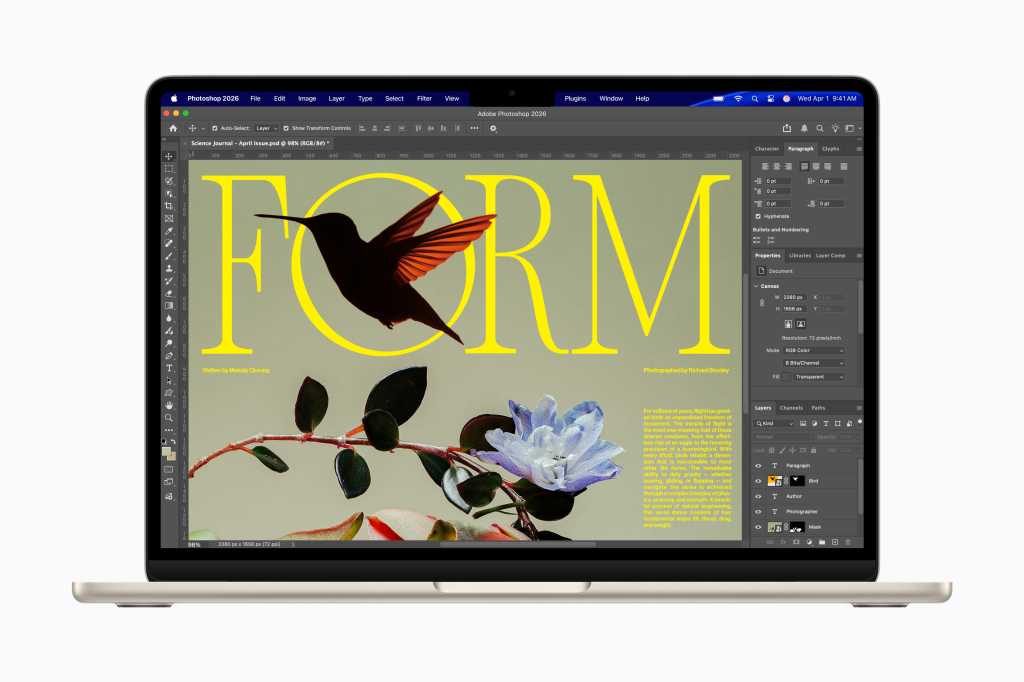
MacBook Air with M5 chip

Apple seems to have impressed itself with the M5 MacBook Air, describing it as being up to 4x faster than the M4 model for AI functions and an astonishing 9.5x faster than the MacBook Air with an M1 chip.

The move to M5 puts a huge amount of performance with the reach of most consumer users and will do nothing to dent growing demand for these Macs from among enterprise pros.

“The new MacBook Air with M5 brings incredible performance and even more capability to the world’s most popular laptop,” said John Ternus, Apple senior vice president of hardware engineering. “With M5, MacBook Air powers through a wide range of tasks, from everyday productivity to creative workloads.”

  • The M5 processor in the Air has a 10-core CPU.
  • There’s an up-to-10-core GPU with a Neural Accelerator in each core.
  • Storage now starts with a 512GB SSD that promises about twice the read/write speeds of the last version of the Mac.
  • The Macs are available with 13.6-in. or 15.3-in. Liquid Retina displays offering 500nits brightness and a 12MP camera.
  • Connectivity includes an Apple N1 wireless chip for Wi-Fi 7 and Bluetooth 6. You also get two USB-C/Thunderbolt ports and MagSafe charging.
  • They’re available in sky blue, midnight, starlight, and silver and boast of up to 18 hours of battery life on a single charge.

Pre-orders begin March 4, with availability on March 11. As noted, prices start at $1,099.
MacBook Pro (M5 Pro and M5 Max)

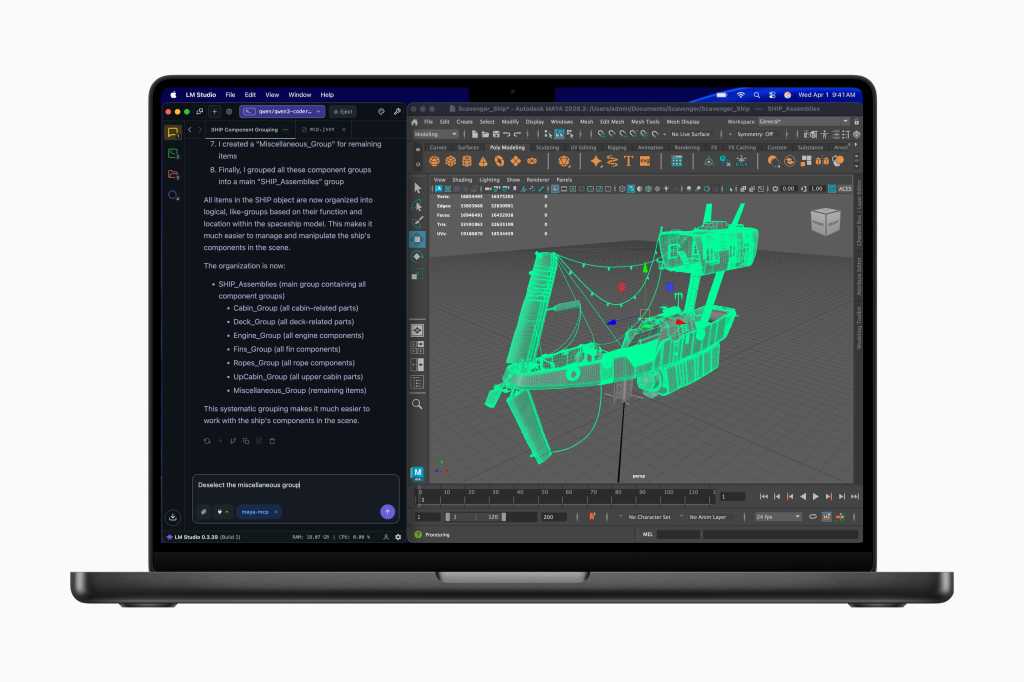
Aimed at professionals and capable of the heaviest tasks, the new MacBook Pro models are so highly specified they should munch through any task you throw at them.“MacBook Pro with M5 Pro and M5 Max redefines what’s possible on a pro laptop, now up to 4x faster than the previous generation,” said Ternus.

“With Neural Accelerators in the GPU, the new MacBook Pro enables professionals to run advanced LLMs on device and unlock capabilities that no other laptop can do — all while maintaining exceptional battery life,” he said. “Combined with even faster unified memory and storage, it empowers users to take their work even further, unleashing new possibilities and pushing the boundaries of what they can do.”

You can also opt for the base 14-in. M5 MacBook Pro at prices from $1,699.

  • The M5 processors are available with up to 18 CPU cores (6 super cores and 12 performance cores).
  • There’s a next-gen GPU, each core with a Neural Accelerator for AI compute
  • The new models are up to 4× faster with on-device AI vs. the previous gen and up to 8× faster than the M1 Pro/Max.
  • Unified memory bandwidth is impressive — up to 64GB memory at 307 GBps on the M5 Pro, and up to 128GB memory at 614 GBps on the Mac Max.
  • Storage starts at 1TB SSD for M5 Pro models, or 2TB SSD in the M5 Max machines. The SSD speeds are twice as fast as before.
  • They feature a Liquid Retina XDR display with anano-texture option, a 12MP Center Stage camera, a studio-quality mic array and a 6-speaker system.
  • Connectivity includes an Apple N1 wireless chip for Wi-Fi 7 and Bluetooth 6 and Thunderbolt 5 ports.
  • Available in space black and silver, they deliver up to 24 hours of battery life on a single charge.

Pre-orders begin March 4, with availability on March 11. The M5 MacBook Pro starts at $1,699; M5 Pro models start at $2,199 and M5 Max costs from $2,699. 
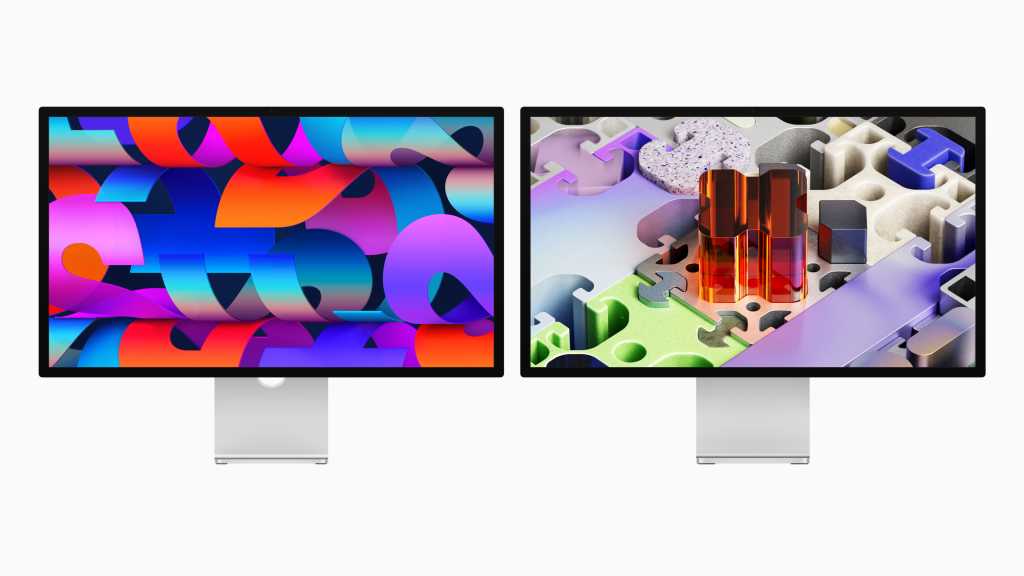
Apple’s new Studio Displays

Of course, even if you use a notebook most of the time, there are times when it helps to do your computing on a larger screen — particularly when handling intensive professional tasks. That is what Apple’s two new displays are for, including a redesigned 27-in. Studio Display for everyday use, and a new 27-in. Studio Display XDR particularly targeted at pro workflows.

The big changes in this generation include support for Thunderbolt 5 rather than the older Thunderbolt 3 Apple’s earlier displays supported. This lets you daisy-chain multiple displays and accessories and provides much higher bandwidth. The cameras are better, supporting features like Desk View, for instance.

But the big leap in display tech is the move to Mini-LED with HDR. Use of this tech in the Studio Display XDR makes for dramatic improvements in contrast, black levels and HDR performance. It also means a bright display, which will be particularly useful for pro video editors, as will be the far faster and smoother 120Hz refresh in the high-end display. You also gain support for AdobeRGB, which these displays lacked until now. Eagle-eyed readers might note that the 5K LCD display in the standard model remains the same, but with much better tech.

“Apple has led the industry in delivering the world’s most advanced displays for pros to do their life’s best work, and today we do that once again with the introduction of the new Studio Display family,” said Ternus, the man hotly-tipped to become the next Apple CEO.

What are the specifications of the new displays?

For the 27-in. Studio Display:

  • A 5,120×2,880 5K Retina panel.
  • 600 nits of brightness and P3 wide color.
  • 12MP Center Stage camera and a studio-quality three-mic array.
  • A six-speaker system with Spatial Audio designed for video calls, creative workflows, and immersive sound. 
  • Thunderbolt 5 with two downstream ports (to enable daisy-chaining), 2x USB-C ports, and up to 96W charging for notebooks via included cable.
  • Tilt-adjustable stand standard, with tilt-and-height adjustable stand an optional extra.
  • Nano-texture glass available for glare control .
  • Price: $1,599, with pre-orders starting March 4 and availability on March 11. 

For the 27-in. Studio Display XDR (Pro Model)

  • 5K Retina XDR with mini-LED backlight.
  • 2,000 nits peak HDR brightness and 1,000 nits SDR.
  • More than 2,000 local dimming zones for deep contrast.
  • P3 + Adobe RGB wide color gamuts for professional workflows.
  • 120Hz refresh rate with adaptive Sync for smoother motion and variable frame support.
  • 12MP Center Stage camera, studio-quality three-mic array and a six-speaker system with Spatial Audio.
  • DICOM medical imaging presets and optional Medical Imaging Calibrator (for diagnostic work, pending FDA clearance).
  • Two Thunderbolt 5 ports, 2xUSB-C ports, and up to 140 W charging for larger notebooks.
  • Tilt- and height-adjustable stand, with a VESA mount adapter available .
  • Price: $3,299, with pre-orders starting March 4 and availability on March 11.

Please follow me on Twitter, or join me in the AppleHolic’s bar & grill and Apple Discussions groups on MeWe. Also, now on Mastodon.
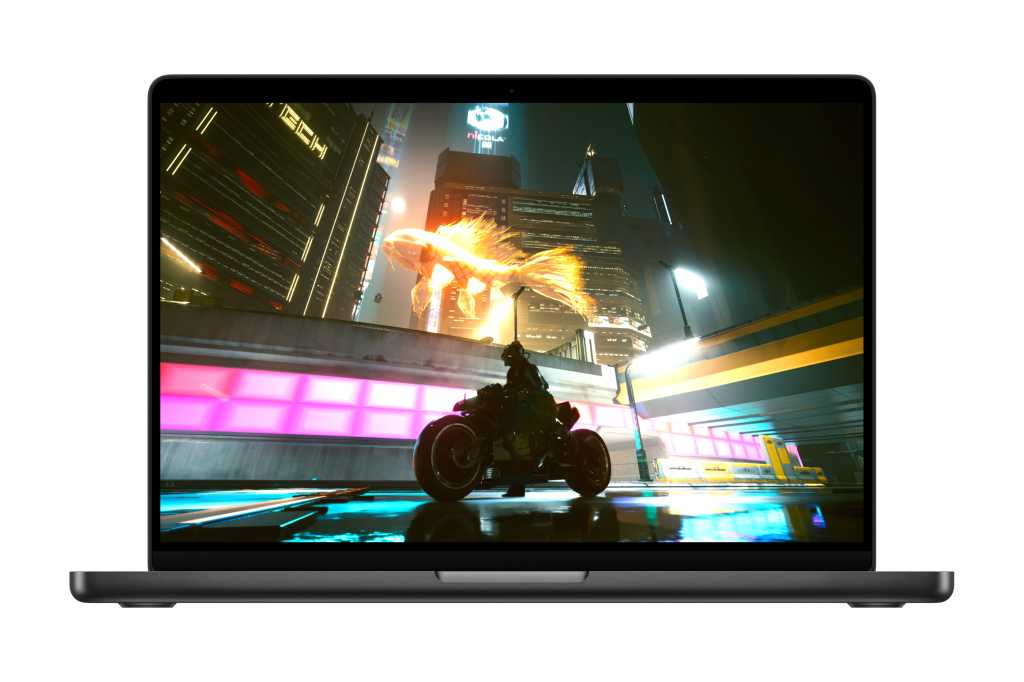
Review: Apple’s 14-in. M5 MacBook Pro – one day all computers might be as good

The laptop you use tomorrow will be like a Mac: Beautifully-designed, easy-to-use, highly secure, and packed with enough power to run artificial intelligence (AI) on device. 

It will possess advanced memory handling to optimize the use of that precious component, rather than squandering cash, heat sinks, and internal real estate on RAM that doesn’t usually get used. Designed to optimize the OS it runs, it will integrate with your mobile devices, have a built-in tracker in case of loss, and will retain the best possible value on second-user markets.

Professionals will use these machines to replace desktops in countless scenarios, boosted by on-device AI capabilities — or at least, highly private and sovereign cloud-based AI services. In a world of energy scarcity, the power efficient chip in the device in your hands will be worth three in the cloud, while computing models will evolve to be small enough to work on devices at the edge most of the time.

What you’ve got

You don’t need to wait for this future; with Apple’s all-new 14-in. MacBook Pro with an M5 processor, tomorrow’s already here.

It’s a computer that ticks each one of those boxes, with the kind of best-in-class, industry-leading power and performance required to make it a capable productivity partner for years to come. In that sense, it’s much like the M5 iPad Pro I recently reviewed.

As for the specifications, I’ve been using a stylish, Apple-provided Space Black 14-in. MacBook Pro. The mid-range model ships with 1TB SSD storage, costs $1,799 and carries the powerful 10-core CPU/10-core GPU M5 processor, equipped with 16GB Unified Memory. Apple got it back, but I still have my memories.

Which begs the question, how powerful is this chip? Stopping briefly from making pictures of family members riding unicorns in DrawThings AI, I reached for my Apple ID and installed a handful of the usual tests.

Making sure to check the OS was up to date on my test model and sadly switching off the rather thrilling game I’d managed to disappear into, I set them running (one at a time). These are the results I gained on the test machine. (They seem to be in the same range as data found online.)

GeekBench 6

  • Single-core: 4,250
  • Multi-core: 17,819
  • OpenCL: 48,470.

CineBench

  • CPU: Single-Core: 2,464. Multicore: 15,745
  • MP ratio: 6..39

Blackmagic Disk Speed Test

  • Write: 6,500.4 MB/s
  • Read: 6,774.3 MB/s

What do the numbers mean?

Given test results really only mean something to a relatively small number of folks, let me paraphrase the significance of these data points.

The Geekbench score means these Macs are among the top three computers in the world when it comes to processor intensive operations (the others are energy-devouring desktops you can’t pop under your arm). The score also means the M5 MacBook Pros should turn out to be the fastest Macs you’ve ever browsed the web with, as apps such as browsers, email, and all the other things you use each day tend to rely on single-core processes — and the MacBook Pro is the fastest single-core notebook you’ll find on Geekbench right now.

That means you’ll experience a noticeable difference doing the things you do every day, while also having the power to handle complex operations you might need to tackle less often.

The CineBench data is also good news. It means that if your business involves rendering images, applying complex 3D transitions, or even data modelling, these machines will crunch right through those tasks. Finally, the Blackmagic test reassures us that even when handling really large chunks of data, such as video or RAW images, you’ll have little lag while those huge files are opened and worked with.

Everything you do, from games to 3D modeling to messing around with Genmoji will look remarkable on the now customary Liquid Retina XDR display — a display that also happens to be color-accurate enough for film and television color grading. 

These will do the business

As you might expect from a professional Mac, these machines will take anything you throw at them and come back for more. Serious pro users will take heart in this, as it bodes extraordinarily well for the more advanced (M5 Pro, M5 Ultra) processors we expect to appear in spring. 

That Macs running those chips are likely to appear means the company now has a Mac to scale across the widest possible usage scenarios, with introduction of a low-cost MacBook expected to take an even bigger chunk out of the low and mid-range PC market. 

When it comes to price, the fact you can pick up the same machine I tested for $1,799 makes these Macs an absolute steal. Yes, I know that amount isn’t peanuts, it’s a lot of money – more than I can afford on the ever-shrinking pittance I make in journalism. But if you’re a professional user doing professional tasks that require this much horsepower, the price seems plenty attractive. 

Given that the Mac consistently delivers significantly higher Geekbench test results than its PC brethren, Windows laptops with Snapdragon X Elite and Intel Core Ultra 7 200 processors can’t match these devices. Indeed, by the time PCs carrying the next-gen Snapdragon/Intel chips appear next year, Apple will answer back with an even more performant M5 Pro. Apple Silicon really is winning the processor wars, and even high-end gamers will see the benefit of the performance, power, and flexibility of these machines, with much better battery life.

And a better OS

Skip the eye candy and think about it. Apple’s OSes consistently generate the highest user satisfaction scores in the business. More secure, built with privacy inside, easy to use and much-loved by consumers (your employees), Macs are cheaper to run over time, cost less in tech support, and you can swap them for real hard currency once they reach EOL in your company.

Not only this, but you get regular software updates, annual operating system updates (free), and a thriving ecosystem to support device management, security, identity and beyond. Better yet, free training is available at most Apple retail stores.

While I agree that defining what makes an OS “better” is necessarily about individual choice, it’s hard not to see how these Macs tick the right boxes. That they will also run Windows really well in emulation mode thanks to Parallels (or various flavors of Linux) means you can legitimately go Mac while maintaining legacy integration. 

Innovation inside

If I had a cent every time some “influencer” moaned about Apple’s lack of innovation, I’d probably be only mildly better off, but it remains as untrue as it’s ever been. Guy Debord puts it this way, saying, “The fetishism of the commodity … attains its ultimate fulfilment in the spectacle.”

When it comes to Apple, it means many continue to seek innovation in relatively shallow things like shape and form, while ignoring the value of the heaps of innovation packed inside the company’s products. Think about the Macs you own now and what they can do in contrast to the iMac you perhaps once had in your home in the late 90s.

Sure, the devices aren’t in see through, multi-colored plastic any more. But just look at the rich set of features inside: the processor, the operating system, the components, the graphics support, the display innovation, more. Stop, think beyond the spectacle, and you will surely recognize that packed inside each Mac are literally hundreds and hundreds of years of human ingenuity, going all the way back to at least 1843 and the genius of Ada Lovelace — and probably back to alchemy itself.

Alchemy? What else do you call the weird magic in materials science inside every MacBook Pro? That alchemy is evidenced in that the Mac is made from 45% recycled material, including a 100% recycled aluminium enclosure and 100% recycled rare earths in the magnets, even down to 100% recycled cobalt in the battery.

While some of these materials owe debts to early chemistry, Apple’s deep investments in new manufacturing processes should be seen as just as innovative as the touch UI on the first iPhone. Even Alexander Graham Bell would be impressed making his first FaceTime call using that 12-megapixel Center Stage Camera, the built-in studio microphones, and superb six-speaker surround sound system. Put some music on and disappear into a beautifully productive audio bubble from this machine.

Buying advice

Not everyone needs one, but many people will want one anyway. Apple’s MacBook Air remains the go-to Mac for most of us, but if your work involves anything at all processor-intensive, then you’ll want to go Pro. 

If that’s you and you happen to be using an M1 or (arguably) M2 Mac, or earlier, then this is the right upgrade for you. If you are already using an M4 you can probably wait another year before you upgrade. If you’re on a Windows PC, it’s likely that after a little culture shock (mostly around the Ctrl button) you’ll be eminently satisfied with a Mac that runs Windows better than most PCs.

Would I get one? Of course I would, I’m the Appleholic. It should be clear that tomorrow’s laptops will deliver as much as this Mac — but by then, Apple will be offering something even better. Right now, I don’t think there is a laptop that’s any better than this that isn’t also made by Apple.

You can follow me on social media! Join me on BlueSky,  LinkedIn, and Mastodon.