Category: Apple, Mobile, Mobile Device Management, Mobile Management, Vendors and Providers

Beth Tschida takes over at Jamf as AI transforms Apple in the enterprise

Jamf has a new CEO: former CTO Beth Tschida. She succeeds previous CEO John Strosahl, who himself replaced Dean Hager on his retirement. Tschida has served as interim CEO since March.

Jamf-using IT pros should be pleased. Tschida is an engineer who joined the company in 2018 as senior vice president, engineering and became CTO four years later. She has led the company’s expansion into security as well as its ongoing mission in device management. She takes the helm as device management, and IT more generally, struggle with the potential and the peril of artificial intelligence deployment across industry.

‘We are making AI work on Apple’

“Over the last eight years, I’ve had the privilege of working with an exceptional team to build the leading platform for managing and securing Apple at work,” said Tschida in a statement. “Now, AI is reshaping how organizations work, and we are making AI work on Apple. We’re building autonomous management so devices manage themselves within boundaries, opening our platform so others can build AI tools directly with Jamf, and delivering the governance layer to deploy AI confidently. Everything we’re doing is built on the trust we’ve earned over two decades of making Apple simple, secure, and connected at scale. I’m energized by what’s ahead.”

Challenges and opportunities

Following its acquisition by Francisco Partners, Jamf is no longer a public company, but it faces a fresh set of challenges as it enters its 25th year of existence. The Apple ecosystem it is built around has utterly transformed, with Macs, iPhones, and iPads acting as peer players in enterprise IT.

The company’s specialized Apple-focused model faces fresh challenges from other more multipolar IT device management vendors, even while the scale of opportunity for Apple in the enterprise continues to grow. There are more Macs used in business today than ever before, the success of MacBook Neo has only boosted that fact, and the number of companies seeking MDM and security support across Apple’s platform continues to grow.

In fact, Apple recently entered the ring with its own very much expanded Apple Business product; as Hager said when that service originally launched, “When Apple innovates, Jamf celebrates,” arguing that Apple effectively grew its presence in enterprise IT — creating more opportunity for vendors such as Jamf – by doing so.

Regulation, security and control

Brian Decker, partner and co-Chief Investment Officer at Francisco Partners, certainly sees opportunity in the Apple-in-the-enterprise space. “We look forward to working with Beth as she builds on what this team has built and goes after the opportunity ahead in Apple enterprise management and security,” he said in a statement.

News of the promotion comes in the sleepy prelude to what may be Apple’s most important WWDC yet for enterprise professionals. Many business users have been somewhat reluctant to fully embrace AI services in their work and will be very curious to find out if Apple has figured out some way to support the conveniences of such services while retaining the data privacy regulators demand.

That’s certainly a need Tschida recognizes. When she discussed Jamf’s FedRAMP partnership with UberEther late last year, she said the goal was to “bring secure, Apple-first management and security solutions to highly regulated environments.” 

Getting ahead of AI adoption with Jamf

Jamf, of course, sees plenty of opportunities that can be unleashed by Ai, and it seems is ready to ramp up its offerings. It’s not a new initiative, as the company has been weaving AI into its own ecosystem for some time; indeed, as CTO, Tschida introduced Jamf AI Assistant in 2024, which she called a “game changer for Apple device management and security.” 

The company also recently introduced a beta version of its own AI tool for executive threat detection, designed to detect sophisticated attacks targeting high-value users. This trajectory makes it very unlikely the company will slow down its exploration of how AI can improve the world of Apple enterprise IT, while also protecting against shadow AI.

As Tschida told me today: “98% of organizations have employees using AI tools their IT team never sanctioned. That number is not going down. The organizations that figure out how to govern AI adoption on Apple, rather than just react to it, will have a real advantage. That is exactly what we are building at Jamf.”

You can follow me on social media! Join me on BlueSky,  LinkedIn, and Mastodon.
Apple goes global with key MDM tools and services for business

As it steadily grows its share in business markets, Apple has at last introduced its very useful collection of services for small and mid-sized businesses (SMBs), Apple Business Essentials, outside the US; except it’s not called Apple Business Essentials, and much of it will be free.

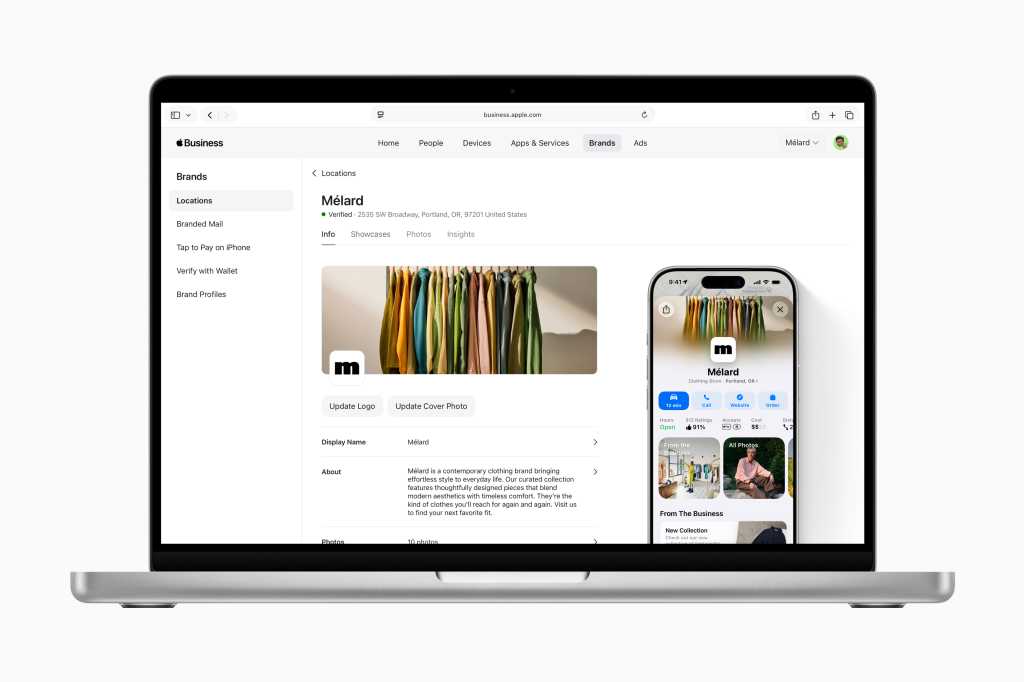
First introduced November 2021 following the company’s acquisition of Fleetsmith, Business Essentials is a collection of tools focused on the needs of SMBs. It includes Apple-friendly MDM tools, services, storage, and premium AppleCare and support options. It also includes free business-class domain-based email and calendar services, custom domain support, and location-based advertising within Apple Maps along with powerful tools for brand management.

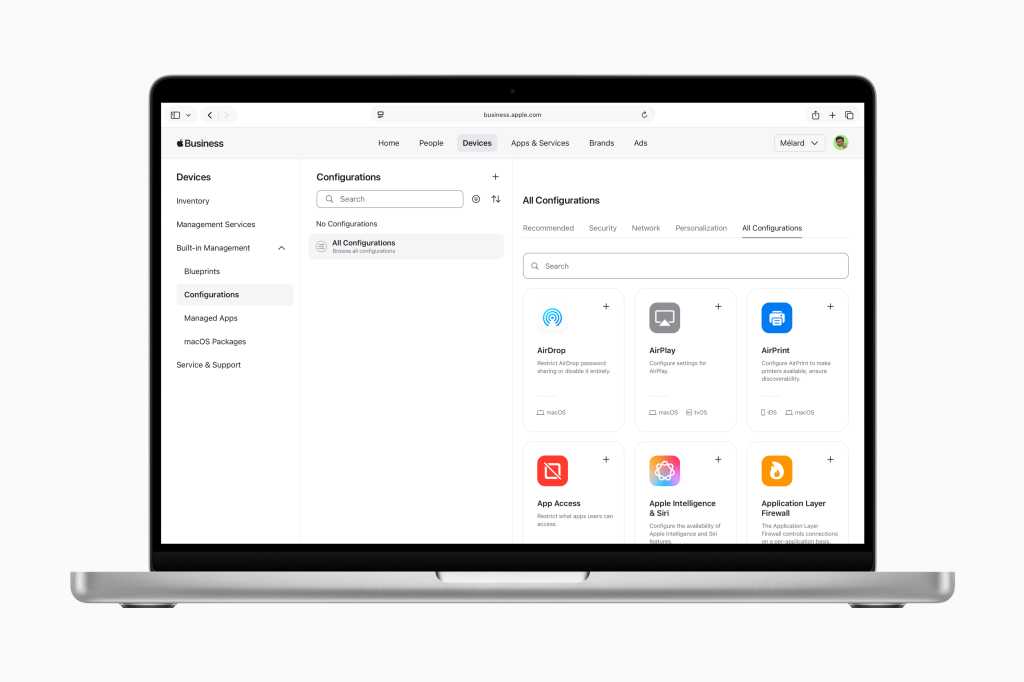
The entire cornucopia of services is being made available via the all-new Apple Business portal, which combines Apple Business Connect, Apple Business Essentials, and Apple Business Manager all in one place. The idea is to make it much easier for any business to manage its tech and its presence from within the Apple ecosystem, though not every feature will be available in every place. 

“Apple Business is a significant leap forward in our decades-long commitment to helping companies of all sizes leverage the power of Apple products and services to run and grow,” Susan Prescott, Apple’s vice president of enterprise and education marketing, said in a statement. “We’ve unified Apple’s strongest business offerings into one simple, secure platform, delivering key features for organizations in every stage and sector, including built-in device management, collaboration tools, and additional ways to reach new customers….” 

What is Apple Business?

Apple Business will be available starting April 14 in more than 200 countries and regions. The new platform offers all of Apple’s key business-focused services with a few additions. For most business users, the most important tool will be the built-in mobile device management service Apple can provide. While not pretending to be anything as granular as MDM services from the likes of Jamf, Iru, or Hexnode, what is available will help SMBs manage, deploy and configure new Apple hardware.

Some of the features include:

  • Managed Apple accounts that separate private employee data from company information through integration with an identity service provider.
  • The ability to configure employees and/or employee groups.
  • Tools to manage device settings and security.
  • Tools to manage and deploy apps and settings using Blueprints and the App Store.
  • Zero-touch deployment of new hardware.

Apple’s APIs offering access to device, user, audit, and MDM service data are also now available to businesses seeking even more control — particularly for larger deployments. For many smaller enterprises, what matters most is that the basic MDM features are now free, rather than requiring a subscription as before. The company offers 5GB storage for employee accounts, with higher amounts starting at 99 cents per person.

The company also announced that AppleCare+ for Business coverage is available per device or per user, starting at $6.99 per month, or $13.99 per month per user for up to three devices.  When this was first introduced in 2022, it offered 24/7 access to phone support, training for both IT admins and employees, and up to two device repairs per plan — by individual, group, or device — each year. (I’m not clear yet on whether that component of the service offers as much.)

Competing with Google Workspace and M365?

What Apple now has on offer means it is putting together a viable competitor for existing productivity suites. Not only has it made it possible to use custom domains for email, and to populate your online presence with pro-seeming details such as logos that appear in outbound emails, but it also supports Apple Business with free apps such as Pages or Keynote. And it now provides fully integrated email, calendar, and directory services. 

Put it all together and you can use Apple Business to drive efficiency in business, with scheduling tools like calendar delegation, a company directory, and personalized contact cards.

Apple also offers its own collaboration tools such as Messages, FaceTime, and FreeForm, which, when you add it up, means many business users might now think Apple’s platforms offer particularly good value — particularly as the cost of entry to the ecosystem falls.

The only surprise to m, is why Apple hasn’t corralled all of this together under the iconic “Apple Works” brand. But, as predicted shortly after the service first appeared, today’s news can only intensify the company’s bid to woo business users. 

You can follow me on social media! Join me on BlueSky,  LinkedIn, and Mastodon.