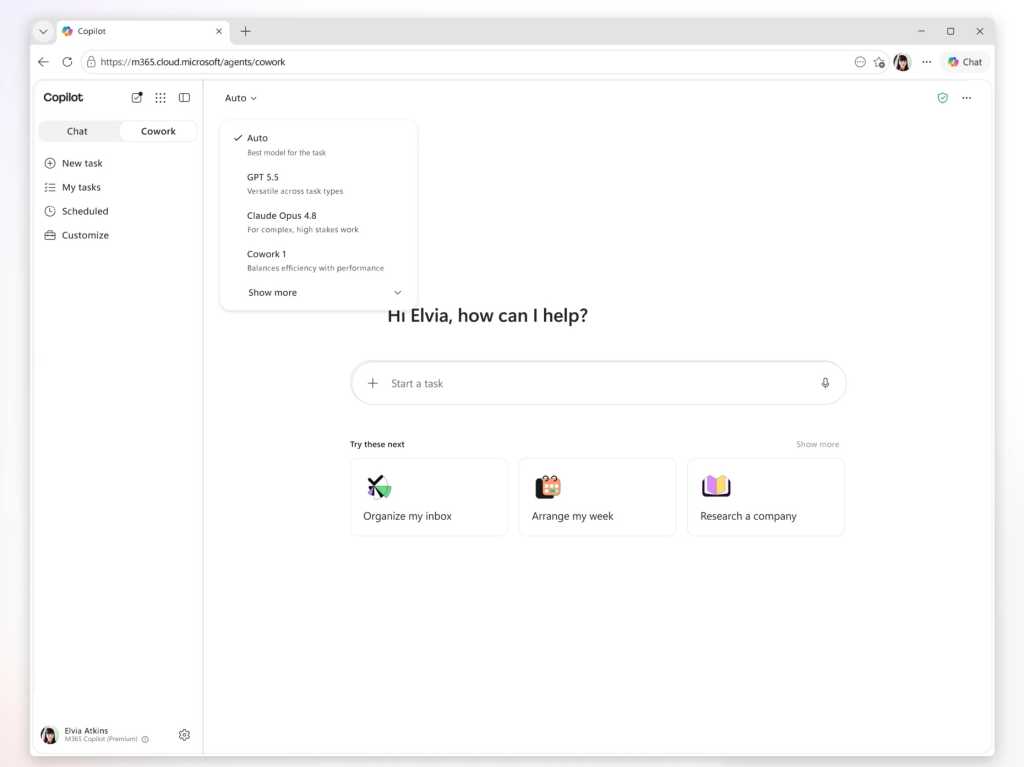
Microsoft is set to remove Copilot Chat access within Microsoft 365 apps such as Word, Excel, and PowerPoint for large M365 commercial customers starting April 15 — a “mystifying backtrack,” according to one technology industry analyst.
Copilot Chat is essentially a freemium version of the paid Microsoft 365 Copilot, which costs $30 per user per month for larger customers, and $21 per user per month for businesses with 300 or fewer users. Using Copilot from within the M365 apps used to require a separate Microsoft 365 Copilot license, but in September 2025, Microsoft made Copilot Chat available at no extra cost to Microsoft 365 customers.
With Microsoft 365 customers unconvinced of the value of the paid version — only around 3% pay for the fully-featured version, Microsoft revealed in January — Copilot Chat has proven a more attractive option for businesses to try out the AI assistant.
Copilot Chat provides access to many of the same features as the paid version, with certain limitations: it’s grounded in web data rather than work information such as emails, files, and other data a customer has connected to Microsoft 365.
Microsoft has also expanded Copilot Chat functionality in recent months, rolling it out in Microsoft 365 apps — Word, Excel, PowerPoint, Outlook, and OneNote — via a side panel, closing one of the gaps with the paid version.
However, Microsoft now plans to remove this functionality for Microsoft 365 customers with more than 2,000 users, and place usage restrictions for others.
“Starting April 15, 2026, Copilot will no longer be available in Word, Excel, PowerPoint, and OneNote for Copilot Chat users,” Microsoft said via a message sent to those large customers in the Microsoft 365 admin message center, according to a copy of the message archived on a third-party mirror. This access will instead require a paid Microsoft 365 Copilot license. Access to Copilot Chat will remain in Outlook for these customers, however.
The situation is different for customers with fewer than 2,000 users. Here, Microsoft will restrict rather than remove access to Copilot features in Word, Excel, and PowerPoint for Copilot Chat users. This means Copilot Chat will users will have “standard access” to features, with reduced quality and performance at certain points during the day, subject to service capacity. Copilot Chat users may also see “in-product notifications” for the paid Microsoft 365 Copilot license, Microsoft said in a separate message to admins at smaller enterprises.
In both cases, Microsoft said it will introduce “in-product labels,” with Copilot Chat referred to as “Copilot Chat (Basic)” and the Microsoft 365 Copilot license as “M365 Copilot (Premium).”
Commenting on the changes to Copilot Chat, a Microsoft spokesperson said: “These updates clarify the Copilot experience available to customers and reinforce that enterprise-grade AI capabilities in our core productivity apps are delivered through Microsoft 365 Copilot, including advanced reasoning, model choice, and Work IQ.”
There are two likely reasons for the move, according to Jack Gold, principal analyst at J. Gold Associates. One is the resources it takes to enable Copilot Chat functionality in Microsoft 365 apps. The other is to “maximize revenues” from customers.
Gold expects the change will result in little or no increase in adoption of the paid version of Microsoft 365 Copilot in the short term, though “in the longer term it may give some companies pause,” he said.
“If this change goes through, it would represent a mystifying backtrack on Microsoft’s part,” said J.P. Gownder, vice president and principal analyst at Forrester, who spoke conditionally because he was not briefed on Microsoft’s announcement.
Microsoft’s decision to roll out Copilot Chat features inside Microsoft 365 apps last September appeared to undercut or at least muddy the value proposition of the paid Microsoft 365 Copilot, he said. But reversing the decision is unlikely to drive Microsoft 365 Copilot adoption, he added. “It would, however, be likely to anger customers who feel like this move is chaotic and capricious,” said Gownder.
The change would be “unhelpful” to organizations that are actively rolling out Copilot Chat for their entire workforce but that don’t currently have budget for Microsoft 365 Copilot licenses. “The gap in pricing is very significant,” he said.
The move may lead some organizations to consider other AI assistants, according to Gownder, and investigate offerings such as ChatGPT Enterprise, Anthropic Claude, and Gemini in Google Workspace.
The reversal will “undercut confidence in Microsoft’s Copilot decision-making and commitment to customer centricity,” he said.
The competition for AI chat products is pretty intense right now, said Gold, with most companies focusing on “best for their needs” tools. “Many Microsoft-centric shops are no longer simply adopting what Microsoft offers as a default,” he said.
Related reading: