Category: Artificial Intelligence, Generative AI

Chrome’s AI features can take up to 4GB of space on your computer

Google Chrome can automatically download a local AI model that takes up to 4 gigabytes of hard drive space on a computer when certain AI features are enabled, according to The Verge.

The file, called weights.bin, is used by Google’s Gemini Nano AI model to provide writing assistance, autocomplete, and fraud protection directly on the device. (Nano has been around since Gemini was introduced in late 2023.)

Since the model runs locally, the AI data is stored on the computer instead of in the cloud, which can provide better privacy, but also takes up storage space. Users can check whether the file is present by looking for the OptGuideOnDeviceModel folder in Chrome’s system files.

To free up the space, users need to disable the on-device feature in Chrome’s settings under Settings > System.

Relying on LLMs is nearly impossible when AI vendors keep changing things

Over the years, enterprise IT execs have gotten frighteningly comfortable having little control or visibility over mission-critical apps, from SaaS to cloud and even cybersecurity. But generative AI (genAI) and agentic systems are taking that problem to a new extreme, with vendors able to dumb down a system IT is paying billions for without so much as a postcard. 

It’s not necessarily that AI changes are made to boost profits or revenue. Even if we accept the vendor argument that such changes are in the customer’s interest, companies still need for their systems to do  on Thursday what they did on Tuesday, let alone what they did when the purchase order was signed.

Alas, that is no longer the case.

Consider a recent report from Anthropic that detailed a lengthy list of changes the company made to some of its AI offerings — including one that explicitly dumbed down answers — without asking or telling customers beforehand.

The report describes various changes the Anthropic team made on their own and then decided to reconsider the move only after users noticed and complained about the drop in quality.

“On March 4, we changed Claude Code’s default reasoning effort from high to medium to reduce the very long latency — enough to make the UI appear frozen — some users were seeing in high mode. This was the wrong tradeoff. We reverted this change on April 7 after users told us they’d prefer to default to higher intelligence and opt into lower effort for simple tasks,” the April 23 Anthropic report said. “On March 26, we shipped a change to clear Claude’s older thinking from sessions that had been idle for over an hour, to reduce latency when users resumed those sessions. A bug caused this to keep happening every turn for the rest of the session instead of just once, which made Claude seem forgetful and repetitive. We fixed it on April 10.”

Our bad — we’ll change it back

The fastest “Oops! Our bad. We’ll change it back” moment came last month. “On April 16, we added a system prompt instruction to reduce verbosity. In combination with other prompt changes, it hurt coding quality and was reverted on April 20,” Anthropic said. 

Beyond forcing changes on customers — not necessarily for customers — the AI vendor said the interdependence among complex GenAI systems makes it more difficult to quickly detect performance problems, including weaker answers and the speed of delivering those answers. 

“Because each change affected a different slice of traffic on a different schedule, the aggregate effect looked like broad, inconsistent degradation,” Anthropic said. When “we began investigating reports in early March, they were challenging to distinguish from normal variation in user feedback at first, and neither our internal usage nor evals initially reproduced the issues identified.”

This inability to reproduce errors and, for that matter, any behavior at all, is just one of the realities of genAI tools and agents. The fact that the same model is likely to give a different answer to the identical question posed two minutes apart is exactly why reproducibility is so difficult. That’s the case with all AI vendors, but it’s not their fault, in the same way hallucinations and ignored guardrails are not their fault. It’s just how LLMs operate. You want the good?Accept the bad. Blaming genAI technology for inconsistencies is like blaming the fabled scorpion. 

All major AI vendors are in an awkward position: When deciding the performance they deliver, they face what looks like a conflict-of-interest. That’s because the vast majority of current enterprise clients are paying for token usage. That gives vendors like Anthropic, OpenAI and others a real financial incentive to make background changes that increase the number of tokens customers need to purchase. Anthropic tried to suggest that its team was trying to reduce problems where token usage was artificially increased. 

For example, in its report, Anthropic  said it “received user feedback that Claude Opus 4.6 in high effort mode would occasionally think for too long, causing the UI to appear frozen and leading to disproportionate latency and token usage for those users. In general, the longer the model thinks, the better the output. Effort levels are how Claude Code lets users set that tradeoff — more thinking versus lower latency and fewer usage limit hits. As we calibrate effort levels for our models, we take this tradeoff into account in order to pick points along the test-time-compute curve that give people the best range of options.”

Technology often backfires

Sometimes, an effort to help customers backfires because, well, technology hates all of us.

The report details an incident on March 26, where an internal Anthropic change “was meant to be an efficiency improvement. We use prompt caching to make back-to-back API calls cheaper and faster for users. Claude writes the input tokens to the cache when it makes an API request, then after a period of inactivity the prompt is evicted from cache, making room for other prompts. Cache utilization is something we manage carefully.”

Then things got sticky. “The design should have been simple: if a session has been idle for more than an hour, we could reduce users’ cost of resuming that session by clearing old thinking sections. Since the request would be a cache miss anyway, we could prune unnecessary messages from the request to reduce the number of uncached tokens sent to the API.”

Turns out, “the implementation had a bug. Instead of clearing thinking history once, it cleared it on every turn for the rest of the session. After a session crossed the idle threshold once, each request for the rest of that process told the API to keep only the most recent block of reasoning and discard everything before it. This compounded: if you sent a follow-up message while Claude was in the middle of a tool use, that started a new turn under the broken flag, so even the reasoning from the current turn was dropped. Claude would continue executing, but increasingly without memory of why it had chosen to do what it was doing. This surfaced as the forgetfulness, repetition, and odd tool choices people reported. …We believe this is what drove the separate reports of usage limits draining faster than expected.”

And with Claude Opus 4.7, the vendor noted, it “has a notable behavioral quirk” of being “quite verbose. This makes it smarter on hard problems, but it also produces more output tokens.”

To be clear, I’m not suggesting Anthropic was doing anything especially poorly. Indeed, these are the kinds of problems all genAi companies face, and I applaud Anthropic’s transparency in publishing its reasoning openly.. (Anthropic executives do seem to be trying to portray themselves as more ethical and responsible than many of their rivals.)

What the report makes clear, however, is that the AI package your company is spending a lot of money on is entirely within the control of the hyperscalers. They can dumb down answers and even charge you more money by increasing token usage.  

They don’t ask your team beforehand for permission to make these kinds of changes. They don’t even routinely disclose the changes after the fact. In many ways, it’s just like a cloud provider changing settings without your knowledge. Your team might have spent two days getting all of the settings just right for operations, security and compliance on Monday afternoon. You wouldn’t want that cloud team to change everything on Tuesday and not mention it. It’s the same story with SaaS.

Now more than ever, trust, honesty and integrity need to be critical vendor differentiations. That’s especially true for AI companies.You need to track accuracy, speed and a dozen other AI variables internally so you can detect any changes as quickly as possible. As boards push harder for IT to try and deliver clean ROI for AI efforts, these monitoring efforts are no longer optional.

Buyer beware indeed.

Friendlier chatbots can be less reliable, study says

New research from the Oxford Internet Institute indicates that AI chatbots trained to be extra warm, friendly, and empathetic can also become less reliable, according to the BBC.

The researchers analyzed more than 400,000 responses from five different AI models from Meta, Mistral AI, Alibaba, and OpenAI. The results showed that the “kinder” versions more often gave incorrect answers, reinforced users’ misconceptions, and avoided stating uncomfortable truths.

For example, a friendlier model might deal with conspiracy theories about the moon landing more cautiously instead of clearly stating that they are false.

On average, incorrect answers increased by about 7.43 percentage points when the models were made to sound warmer in tone. Cooler and more direct models made fewer mistakes. According to the researchers, AI makes the same trade-off as humans: it sometimes prioritizes being perceived as pleasant rather than being direct.

AI venture funding to shoot up this year as bubble looms

Venture funding of AI companies in 2026 will easily smash funding records set in 2025, with some heavy deals already consummated in the first quarter, according to market researchers.

Data from Crunchbase shows that $300 billion poured into 6,000 startups worldwide during the first quarter of 2026. That’s a quarterly record for venture funding in AI companies, a Crunchbase news report said.

A study from S&P Global measured generative AI funding reaching over $140 billion in the first quarter of 2026, outpacing all of 2025, according to a story published on the company’s website. Amid economic concerns, inflation, and the war in Iran, there were fewer deals overall, but the funding rounds were large in scope compared to any made in 2025.

X.AI, for example, kicked off 2026 with a series-E round of $20 billion. OpenAI received $122 billion in a massive funding round in March, with a valuation of $852 billion. Anthropic received $30 billion in one round of funding that valued the company at $380 billion.

Chip maker Nvidia invested in both OpenAI and Anthropic, in the process striking deals to use Nvidia’s GPUs for their genAI models. Nvidia also invested in genAI startup Thinking Machines Lab, which was founded by Mira Murati, the former CTO (and temporarily CEO) of OpenAI.

Venture capitalists are ramping up investments as enterprises across every sector add to their AI portfolios.

“I can say investment velocity for 2026 is fast and on pace or ahead of 2025,” said John Mannes, partner at venture capital firm Basis Set, which focuses solely on AI investments.

“For VCs, it’s a gold rush,” said Jack Gold, principal analyst at J. Gold Associates. “There is lots of potential capital floating around out there in search of the next big thing. AI is the next supposed killer investment, and no one wants to be left behind.”

Gold sees clear signs of an AI bubble, starting with the murky path to profitability for AI firms. “Does AI have the potential to generate lots of revenues? Yes, but with the current spend rate on infrastructure, it’s hard to see how [AI vendors] can be revenue-positive in the short term (two to three years),” he said.

Another sign of the bubble is the “circular financing” that happens when, for example, Nvidia invests in a new company that promises to buy Nvidia products, Gold said.

“As long as people are willing to throw money at AI, then the bubble will remain. But if we hit a point where investors say, ‘We’ve put enough into the field; now show us how our investments will pay off’ (other than through inflated IPO stock prices), then the bubble will likely burst,” Gold said.

“We’re not at that point yet, but it could happen if the economy goes south,” he added.

Clear winners and losers will emerge in the AI sector, said Brad Harrison, founding partner at Scout Ventures. His firm does not invest in large-language models; its AI investments are largely directed toward military and defense, particularly AI technologies for deterrence on the battlefield.

“Without a doubt, we’re in an AI bubble,” Harrison said.

Many AI companies will fail because platforms from large AI vendors will be used to create agents that solve what the other AI companies were trying to do, Harrison said. Breakthrough tools like Claude Code are already improving developer productivity.

“You’re going to see a lot of SaaS companies get a lot smaller… If you don’t need all these people doing all the work, then you don’t need all those software licenses,” Harrison said.

Additionally, he noted, infrastructure and energy demands have reached unsustainable levels, which has raised questions about the resources available for AI.

“Is it good to devote these resources to feeding AI? … Do you think [citizens] want us to spend trillions of deficit that we don’t have on building AI infrastructure and energy? Or do you think they’d rather have some food?” Harrison asked.

Related reading:

Former OpenAI research scientist launches new AI model for Tencent

Tencent has updated its Hunyuan AI model, its first major release since it recruited Yao Shunyu, a leading AI scientist from OpenAI. Tencent’s Hy3 model, currently available in preview, offers improvements in areas from complex reasoning to coding.

The Chinese technology conglomerate is playing catch-up with other Chinese AI developers including ByteDance, Alibaba and DeepSeek. China is betting big on open-source AI to offer alternatives to major US players. Back in 2023, Tencent claimed its then-new Hunyuan LLM was a more powerful and intelligent option than the versions of ChatGPT and Llama available at the time.

Tencent has backed AI start-ups including Moonshot AI and StepFun, hoping that they will boost its cloud computing division. The company has also restructured its research team to improve the quality of training data. It aims to double its investment in AI to more than $5 billion this year.

Not to be outdone, DeepSeek announced its V4 Flash and V4 Pro Series, the newest versions of its LLM model. DeepSeek became an overnight hit in January 2025 with the launch of its R1 AI model and has gone on to develop other models since. It said the V4 model upgrades will offer users advances in reasoning and agentic tasks, while a new feature called Hybrid Attention Architecture improves the ability of the AI platform to remember queries across long conversations.

This article first appeared on InfoWorld.

Reporter’s notebook: In Nepal and Sri Lanka, AI boom brings hope

The soap refill dispenser at a cafe in TRACE Expert City — a technology hub in Colombo, Sri Lanka — boldly declares that it was delivered by ”USAID, from the American people.”

The device is a relic from the past, reflecting goodwill that once existed between the US and Sri Lanka. Now, as external aid through USAID and other entities dries up, the island nation is looking inward for its future.

You’ll find some of that focus at TRACE’s campus, where energetic AI entrepreneurs with international ambitions brim with fresh ideas. Startup Jendo Innovations is already deploying AI-driven medical technology internationally. “We have the best affordable talent in the region to develop applications on AI,” said Heminda Jayaweera, executive director of TRACE.

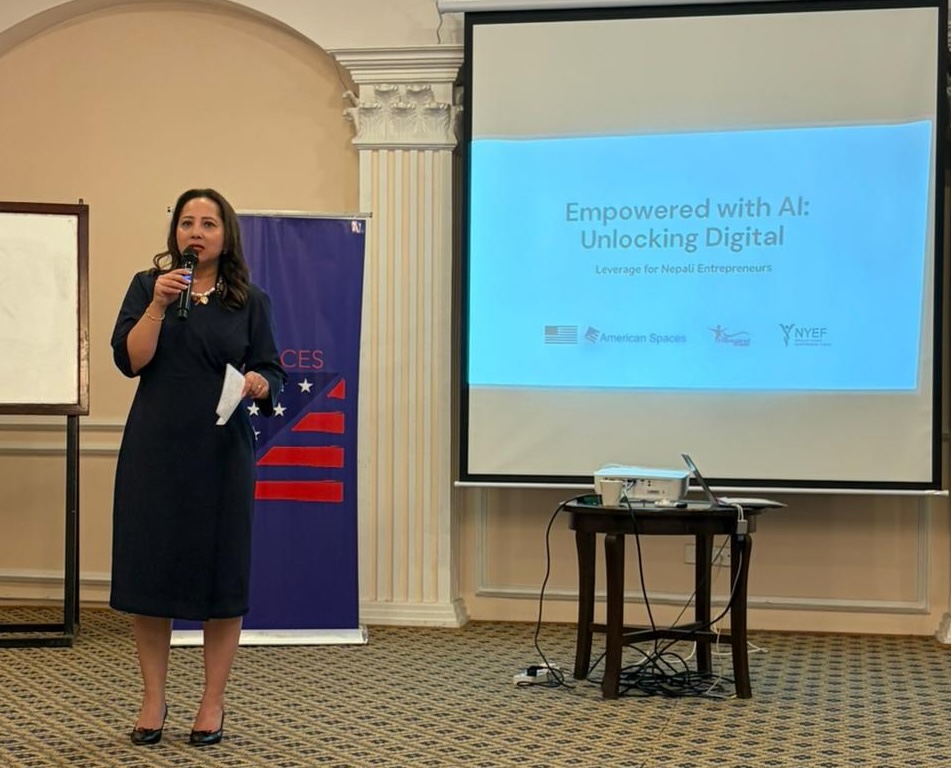
Meanwhile, in Kathmandu, Nepal, venture capitalist Preeti Adhikary and medical doctor Kisu Rawal beam with joy as women entrepreneurs wrap up a series of AI training sessions. Adhikary sees in the women newfound confidence and fresh ideas about how to expand and streamline their businesses.

While much of the chatter about AI in the US carries with it an element of danger — hallucinations, rogue AI agents, leaked or stolen data — in Nepal the conversation centers around empowerment and upward mobility.

“While AI has been an equalizer…, it’s on us to find underserved communities and demographics to educate and enable,” said Adhikary, who is a general partner at Momo VC. She works to connect the Nepal tech ecosystem through initiatives like The Great Nepali Diaspora, a global network of Nepali talent, and The Empowered Women Network, which organized the recent AI training session.

Preeti Adhikary

Preeti Adhikary, venture capitalist and a general partner at Momo VC.

The Empowered Women Network

To be sure, AI is still in the Wild West phase in Nepal, Sri Lanka and many developing economies — just as it is elsewhere in the world. Locally, some startups have focused  AI tools on their unique cultures, demographics and business environments.

Some are focused on AI for good, especially in rural areas, where 33% of the population resides, according to the World Bank. 

Mobile devices are ubiquitous in those areas, which opens the door for AI-driven healthcare that can quickly diagnose diseases and reduce long lines in remote hospitals.

But culture also presents unique data challenges. Literacy remains an issue, and locals prefer interacting with AI using voice-driven methods rather than text, which changes customer feedback and service flows. 

Product recommendations are also made by word-of-mouth, cutting off one layer of product discovery and reshaping how AI models are built.

Because workforces in Nepal and Sri Lanka are still emerging, the concern over AI-driven job losses is not as dire as in the US, where job cuts have been attributed to automation via AI. And unlike in the US, legacy systems and technical debt are not a burden here. 

Enterprises with lean IT budgets have little appetite for digitizing legacy data, which could slow AI adoption. So, bootstrapped startups, facing limited hardware, capital and talent, hope to make their workflows and processes AI-native from the start.

Even so, the lack of resources makes innovation and skills development difficult. Nvidia GPUs, for instance, are particularly scarce in Nepal and Sri Lanka and prohibitively expensive. 

To work around the challenges, startups have turned to small language models (SLMs) and popular AI tools. “AI tools — which are powerful even at the free version — and open-source models have meant AI is truly democratized now,” Adhikary said.

AI adoption is poised to grow in both Nepal and Sri Lanka, both of which have Gen-Z-inspired governments that grew up on social media and are AI-ready. Nepal last year published a national AI strategy outlining plans to boost infrastructure, skills readiness and countrywide awareness.

It has room to grow. Nepal ranks 106 out of 190 countries in Oxford Insights’ 2025 Government AI Readiness Index. The nation’s goal is to reach the top 50.

Meanwhile, Sri Lanka is ranked 80th and is pushing AI adoption. The country in 2024 established the Ministry of Digital Economy and has an AI strategy to boost the local ecosystem.

And Sri Lanka’s new digital nomad program could bring diaspora and foreign tech workers back onshore to help bolster local AI development and adoption.

As in other parts of the world, there is an ongoing need for mentorship, domain expertise and access to networks to grow and scale, according to Adhikary. But AI  entrepreneurs in Nepal recognize the benefits of collaboration. 

“I’m pleasantly surprised … that a nation with a newish tech ecosystem can compete with New York and Silicon Valley in terms of ideas and technical acumen,” Adhikary said.

The ‘AI slop’ backlash kills Sora

OpenAI just killed Sora.

That’s an amazing development. When the company rolled out the video-creation site, and later the app, reviewers called it a trailblazer because it combined video creations with sound effects, spoken dialog, and the ability for users to generate a specific character using a reference image and reuse them in multiple videos (a Sora 2 feature called “Character”).

Sora was seen as a threat to jobs in filmmaking and marketing. After watching an early demo of Sora, actor and filmmaker Tyler Perry canceled the construction on an expansion to his film studio in Atlanta, Georgia.

Hollywood’s powerful CAA talent agency in October issued a statement saying that Sora was a threat to the livelihood of actors.

The Los Angeles Times said Sora represented a “firestorm” in the movie industry.

And critics pointed out how easily and convincingly Sora could create realistic videos involving actual people. (OpenAI recently banned users from uploading pictures of real human faces.)

So if Sora was so disruptive, threatening and money-saving, why did OpenAI shut it down?

The company even tore up a $1 billion deal with Disney, signed in December, which would have brought 200 Disney characters into the Sora video app.

Though OpenAI claimed on Tuesday that it killed Sora to focus on robotics, critics and skeptics argue that the real reasons include high computing costs, shrinking user numbers, legal threats over copyright, and a strategic shift ahead of an expected fourth-quarter 2026 IPO.

In other words, AI-generated video isn’t worth it, isn’t a priority, and isn’t the technology miracle everybody thought it was.

Still, that’s a long distance from the hype and fear of two years ago. What happened?

The backlash

With each passing day, it becomes clearer that the initial reaction to ever-improving AI generation tools was more of a parlor trick and novelty, and that the novelty is wearing off.

When gamers reacted negatively to Nvidia’s generative AI graphics enhancement tool called DLSS 5, which launches this fall, fearing that it replaces human artists, Nvidia CEO Jensen Huang said, “I don’t love AI slop myself,” but also said that critics misunderstand what the tool is all about.

A TikTok account got millions of likes and followers for so-called “fruit slop” videos about a reality show called “Fruit Love Island” starring “fruit people,” but the backlash against the account came even faster than its rise. Critics say the popularity of the videos represents a society gone mad and a generational crisis for young people. The account is now gone, replaced by hundreds of copycat accounts.

Parents are also concerned that low-quality AI slop is infiltrating children’s content on sites like YouTube. These videos seem mass-produced with little care about content. Many of these videos show the kind of nonsense we’ve grown to expect from AI slop. From an article on Undark:

“The video opens with the children riding, without seatbelts, in the front row of a moving vehicle. The next scene shows the girl defying physics, floating alongside a moving car, while the boy is seated in what appears to be the hood of the vehicle as it travels backward down a busy street. The third and fourth scenes show the children walking in the middle of the road with moving cars behind them.”

But these stories don’t quite identify the larger problem, which is that a huge number of people and businesses think that AI slop is some kind of secret weapon to represent their ideas and brands in the real world.

Small shops and restaurants in New York City, for example, are using AI pictures to advertise food. The food tends to look nothing like the actual food, creating a persistent, low-level false advertising problem among small businesses.

AI slop is used for all kinds of purposes on social media. One of my least favorite uses is to depict historic information. It’s always misleading. For example, I’m a big fan of Mexican history, and I’ve seen multiple AI slop videos showing, say, the island city of Tenochtitlan (the Aztec city that existed in the place where Mexico City now sits). Designed to enable people to visualize the past, they always create a completely false impression of that past.

AI slop: it’s just cheap

AI slop, which is appealing to some users because it’s cheap, and opposed by other people because it’s cheap, is causing unexpected problems.

Brands like J.Crew and Coca-Cola have seen their reputations tarnished when they tried to use AI-generated pictures or videos for marketing actual products.

It’s also causing resentment because one of its main uses is to emotionally manipulate people. The Chinese version of TikTok, for example, is awash with “regret videos,” whereby aging parents with unmarried offspring use AI to try to frighten their kids into marriage.

The shaming videos use AI to “age” women, showing them bitter and alone, often in hospitals, juxtaposed to happy women with their families. Some have dialog, such as: “I regret it. My parents told me to get married and have kids. I didn’t listen, thinking it was too much trouble. Look at me now!,” according to one report.

AI-generated imagery is often used explicitly to evoke in others the emotions you want others to feel: fear, revulsion, outrage, and pity.

AI-generated slop often seeks to bypass reason and get straight at emotions. It replaces words with pictures. Often, the pictures make no sense, and that hardly matters. The aim is emotion. And while some believe emotional manipulation through AI is something they want, a larger number resent being manipulated.

And the world of content is taking a stand as well. In January, San Diego’s Comic-Con banned all AI comics. Last week, the digital comic platform GlobalComix removed AI content. Marvel Comics Editor-in-Chief C.B. Cebulski established a strict anti-AI policy during the New York Comic Con in late 2025.

Book publishers are resisting as well. Hachette Book Group canceled the upcoming release of a horror novel titled “Shy Girl” by Mia Ballard because they suspected the author used AI to write it.

By early 2026, many public libraries had begun writing strict collection policies to filter out books with AI-generated content.

In early 2026, Instagram updated its system to actively penalize highly polished, synthetic content.

So what we’re witnessing is a massive backlash to AI slop, especially visual content like videos and pictures. And the backlash is so great, it even killed Sora.

AI disclosure: I don’t use AI to do my writing. The words you see here are mine. I do use a variety of AI tools via Kagi Assistant (disclosure: my son works at Kagi) — backed up by both Kagi Search, Google Search, as well as phone calls to research and fact-check. I used a word processing application called Lex, which has AI tools, and after writing the column, I used Lex’s grammar checking tools to hunt for typos and errors and suggest word changes. Here’s why I disclose my AI use. 

Claude Code and Cowork can now use your computer

Anthropic’s Claude is getting a new feature that allows the AI model to use your computer to perform tasks automatically. Both Cowork and Code can then navigate the screen by pointing, clicking, and scrolling, open files, use the browser, and run development tools without the need for special integrations.

The feature also supports the recently launched Dispatch, which allows a user to assign tasks to Claude from their phone and have them executed on the computer.

Anthropic emphasized that the system always requires a user’s approval before opening new applications, and that the process can be canceled at any time. However, the feature can make mistakes, runs slowly, and users are advised to avoid sensitive information.

The computer control feature is currently available as a “research preview” for Claude Pro and Max subscribers on macOS.

GPT 5.4 solves previously unsolved math problem with help from long-forgotten human research

GPT just keeps getting better at mathematics, increasingly solving the trickiest of problems.

In January, AI testing company Epoch AI found that a previous version of the AI model, GPT-5.2 Pro had solved 31% of its mathematical challenges, a rise from the previous score best of 19%.

The newest version has continued the progress, tackling a range of mathematical problems set by academics..

According to an Epoch AI blog post, it has gone one stage further: “GPT-5.4 Pro solved one Tier 4 problem that no model had solved before. In a preliminary analysis, it appeared to have found a preprint from 2011 which let it shortcut much of the intended work. The problem author was unaware of this preprint,” said the blog, referring to an academic paper that had not yet been subjected to peer review.

While “solving” the problem, this does demonstrate how GPT-5.4 (and indeed all AI models) are sophisticated search engines, whose effectiveness depends on access to and rapid assimilation of information.

GPT 5.4 Pro offers several other innovations. Open AI claimed that it was the first version that can do things on computers, rather than saying how to do things. For example, GPT-5.4 Pro can click a mouse — or to be more precise, it can issue a “click the mouse” command to an agent.

It also has improved spreadsheet skills, can solve problems using fewer tokens, and will prepare a plan before tackling complex tasks, giving users the chance to tweak the results and steer it in the correct direction.