If you overlook the introduction of the iPhone 16e with its own Apple-designed 5G modem along with the release of new iPads, Macs and processors, you might argue that Apple didn’t make an impression at this year’s Mobile World Congress. However, it clearly did, as — thanks to rumors from two of the world’s most well-connected Apple bloggers — its mobile plans are casting a large shadow across the industry.
These plans seem to involve the rapid development of faster and more performant mobile processors, intense effort to bring highly competitive and very fast 5G modems to market, platform-wide implementation of artificial intelligence, and whispers of new mobile devices. The latter include the first ever Apple foldable iPhone and a super-thin model expected this year.
All of these solutions will be supported by the company’s other products and services, giving Apple the kind of integration between mobile and other devices most other hardware vendors can’t even dream of. Even if the 5G modem doesn’t quite match up to everything Qualcomm’s modems currently promise, the additional benefits of platform integration could yet make up the gap.
But with incumbents in the mobile space working feverishly to bring networked services, including 5G-based services, to market, the importance of the Apple modem cannot be underestimated. Will carriers be able to use these chips to deliver private 5G services effectively? Will Apple look to deploy its software development talents to create systems enterprise developers can use to craft bespoke network services for clients? Will Apple seek to make its unique 5G modem a technology to enable further digital transformation?
Those are the kinds of questions people attending MWC this week may have been talking about. It matters that the C1 modem appeared in the week before the event. The speculation driving the conversation at this year’s show included:
Out of the shadows
We know, because Apple told us, that the company has a road map for C1 development.
Apple analyst Ming-Chi Kuo has added a little more flesh to help us see what those plans may involve. In a post, he says Apple is working to upgrade the C1 next year, likely with the introduction of support for mmWave 5G (which is important in the US and a few other places). The current chip only supports the slightly slower (but far more widely used) sub-6GHz band. The analyst says the main challenge Apple is trying to solve is to build reliable and power efficient tech to support the band.
The idea here is that reception will be consistent and battery life not impacted. Kuo also says the C1 will be used in some additional products, but that Apple won’t put its own modem inside all the iPhones it sells until 2026. We don’t yet know what Apple plans for the C2, but what Kuo has been able to tell us suggests that reliability and energy consumption will remain critical pillars in what it does do.
Under the fold
As tariffs, frightening surveillance plans from an increasingly conflict-obsessed UK at war with its own poorest citizens, and regulation of its business, weigh down Apple’s stock performance, it’s not a big surprise that the pace of Apple rumors is accelerating. When it comes to a folding iPhone (in development for years), the latest claims are that Apple’s foldable device will be slim, fast, and equipped with a fold you can barely see. That hinge will combine stainless steel and titanium alloy.
It will also be equipped with Apple Intelligence, including the situation-aware Apple AI the company seems to be having challenges getting to the mass market. That piece in this jigsaw is coming, however, which means the iPhone fold (and all iPhones) will soon be equipped with cross-app AI integration likely to amplify what you can do with these devices. Kuo also says the device will have a 7.8-in. display when unfolded, making it just slightly smaller than an iPad mini; MWC attendees can breathe a sigh of relief in that the Apple foldable isn’t likely to appear before the end of next year.
In with the thin
We’ll see an iPhone 17 Air appear later on this year, Kuo claims. This will hold a super- high density battery for excellence in battery life and should be 5.44mm thin — thinner than any other smartphone. Speculation suggests it will use a C modem like the iPhone 16e, sport a 48MP camera, and use that super-fast A-series A17 chip, which is part of what enables Apple to make such thin devices.
Explode into space
Meanwhile, Apple’s work with GlobalStar continues, a space race that opens a new frontier in the mobile industry, support of which may really benefit from Apple’s control of modem production. In other words, once again, Apple doesn’t need to attend MWC to become talk of the town. The world’s leading handset vendor already is that.
I’m not gonna lie to you: Writing these Android Upgrade Report Cards isn’t always exhilarating.
By and large, these reports tend to reinforce the same trends we see time and time again from the same small group of Android device-makers. Even when those trends are somewhat unpredictable in nature, that, too, often feels like a predictable quality.
This Android upgrade cycle is decidedly different.
With Android 15, officially launched in early September 2024, no one followed their typical upgrade performance patterns. Everything was topsy-turvy. And almost nothing played out in the way we’d expect.
This exact type of underemphasized variability is exactly why I started doing these Android Upgrade Report Cards way back in the platform’s prehistoric ages. From the get-go, we’ve seen some wild disparity in how well different device-makers support their products after you’ve finished paying for ’em — and as an average phone-owner or perhaps even business-wide fleet manager, there’s no real way to know what’s gonna happen six months or a year after you or your employees shell out stacks of dollars for a top-tier device.
[Get level-headed knowledge in your inbox with my Android Intelligence newsletter. Three things to know and try every Friday!]
It’s in part just par for the course with the nature of Android as a platform. The operating system is open source, which means each device-maker can modify it how they want (for better or sometimes for worse). And consequently, that means the responsibility falls on each company’s shoulders to process every new incoming Android version and get it out to its customers.
While we can’t control the level of care and commitment each company puts into that process, we can control our own knowledge about how different device-makers do or don’t prioritize post-sales support. That way, you can at least have the context you need to make an educated decision about which phone is right for you or your organization — not just for the first few weeks that you own it but for the entire two-year, three-year, or maybe even longer period that you’re likely to carry it around.
Now that we’re six months past the launch of Android 15, it’s time to step back and look at who’s making upgrades a priority and who’s treating ’em as an afterthought. Only you can decide how much this info matters to you. (Hint: It oughta matter — a lot!). But whether you find post-sales software support to be a top priority or an irrelevant asterisk, as always, you deserve to be armed with all the data that empowers you to make fully informed future buying decisions.
Want the full nitty-gritty on how these grades were calculated? You can find a detailed breakdown of the formula and every element taken into account at the end of this article.
Google
JR Raphael, IDG
Length of time for upgrade to reach current flagships: 43 days (46/50 points)
Length of time for upgrade to reach previous-gen flagships: 43 days (23/25 points)
Length of time for upgrade to reach two-cycles-back flagships: 43 days (14/15 points)
Communication: Good (7/10 points)
This almost-always-first section of our Android upgrade analysis is usually the easiest to write — because with extremely rare exception, Google always gets each and every latest Android software update to all of its still-supported Pixel devices more or less instantly after the software’s release.
This year, as you may have guessed, is one of those rare exceptions. Technically, the company did still lead the pack this go-round, but instead of the typical near-instant rollout, Google took a leisurely month and a half to start sending Android 15 to its self-made Pixel products.
Given that it’s Google we’re talking about — the same company that creates Android — this was presumably a deliberate decision and a calculated compromise. Seemingly, the company wanted to get the Android 15 source code out there and available for everyone to work on despite the fact that it wasn’t quite ready to send it out to its Pixel devices at that same point. And so one could argue it serviced the greater good for the overall Android ecosystem while taking a hit on its own record.
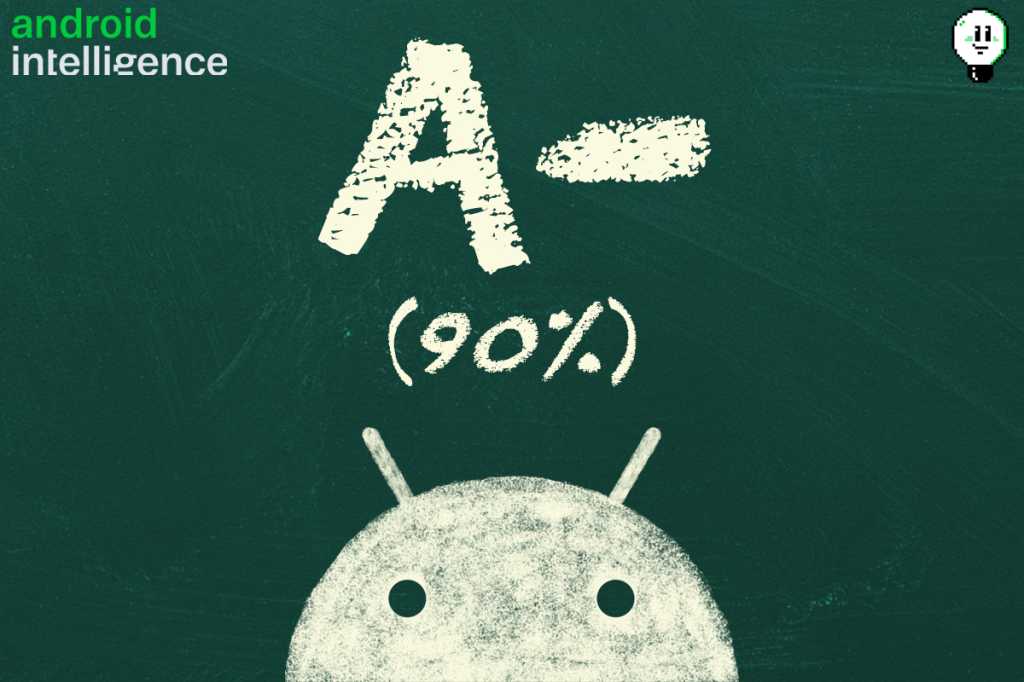
Even so, our grading metric is constant here, no matter what circumstances may surround any specific scenario. So in an unusual occurrence, Google itself is coming in with a notably imperfect “A-” ranking for this latest Android rollout.
For all practical purposes, of course, Google’s Android 15 Pixel rollout was when the software first became available for anyone as a regular phone-owner. The fact that the source code came out 43 days earlier doesn’t really mean Pixel owners were waiting, since no one else had a working version of that final software yet, either. But technicalities are technicalities, and rules are rules. So Google’s grade, despite being at the top of the heap, is a respectable but slightly surprising 90%.
That being said, the relative picture is what really matters for anyone who buys Android devices. And, as I remind us all each upgrade cycle, the consistent level of difference in post-sales software support between Google and literally every other Android device-maker out there really is astounding. As you’ll see reinforced in a moment, Google is the only Android device-maker that makes an unwavering commitment to providing timely and reliable software updates — and makes that a formal part of its products’ promise — even with the occasional slightly later-than-expected kickoffs like this one.
Also of note, as per its typical standard, all of Google’s currently eligible Pixel devices — including both models of the regular current-gen Pixel, the newer flagship-tier folding Pixels, and the previous-gen Pixel flagships from one year and two years back — started receiving Android 15 at the same exact time.
(For the purposes of this analysis, by the way, it’s the start of a rollout — to a flagship phone model in the US — that counts, as you can read about in more detail at the bottom of this page.)
It’s a significant point to note that Google and Google alone treats all of its phones as equals — meaning that even if you own a previous-gen device, a two-year-old flagship phone, or even a lower-priced Pixel “a” model (be it current or an older model), you still get major updates like Android 15 at the same time as the current-gen flagship phone owners. That’s a sharp contrast to the way every other device-maker handles its lineup, and it’s very much the way things ought to be.
And while Google’s usual “rolling out in waves” asterisk always applies to a certain degree — with some Pixel owners not receiving the software on that very first day — Android 15 made its way to all supported Pixel devices within a reasonable amount of time and without the need for any extra communication beyond the company’s initial announcement (though the company’s initial announcement of the rollouts starting for Pixel owners “in the coming weeks” — a phrase used by Google so often that it’s become a bit of a punchline among those of us who watch this space closely — could have used a little more specificity, hence the slight ding to the company’s communication score).
For the standard caveat here: Sure, we could argue that Google has a unique advantage in that it’s both the manufacturer of the devices and the maker of the software — but guess what? That’s part of the Pixel package. And as a person purchasing a phone, the only thing that ultimately matters is the experience you receive.
As usual, the results tell you all there is to know: Even when the rollouts aren’t day-one perfection, Google’s phones are without a doubt the most reliable way to receive ongoing updates in a dependably timely manner on Android. It’s the only company that makes an explicit guarantee about that as a part of its devices’ purchasing package, and — as we’re about to reveal with some truly shocking twists — it’s the only one that consistently delivers on such a standard, year after year.
OnePlus
JR Raphael, IDG
Length of time for upgrade to reach current flagships: 65 days (43/50 points)
Length of time for upgrade to reach previous-gen flagships: 110 days (19/25 points)
Length of time for upgrade to reach two-cycles-back flagships: 175 days (9/15 points)
Communication: Poor (2/10 points)
If you read much tech news or follow many forums, you probably know that the popular narrative around OnePlus tends to be that it does a consistently decent job of providing post-sales software support to its Android devices.
I won’t beat around the bush: That narrative is flat-out inaccurate — and extremely misleading.
OnePlus bounces around with its software support more than any other Android device-maker out there. The best we could say is that it provides mediocre support on average, with the occasional pleasant surprise. But when you really dig deeper into the data, the reality is much more nuanced than that.
With Android 15, specifically, OnePlus took just over two months to get the software into the hands of folks who paid for its most recent top-of-the-line flagship (at the time of Android 15’s release) — which, hey, may not be gold-medal brag-worthy but is still reasonably all right.
The problem comes when you look at the company’s commitment to its older devices — flagships from just one to two years back, which waited 110 days and 175 days, respectively, to see their Android 15 updates. That’s inexcusable and unacceptable, and it’s also pretty typical for OnePlus.
If we look at the company’s overall grades from the last seven cycles, you’ll see what I mean:
Android 15: 73% C
Android 14: 69% D
Android 13: 77% C
Android 12: 76% C
Android 11: 60% D
Android 10: 85% B
Android 9: 74% C
As usual, what adds insult to injury is the fact that OnePlus is absolutely awful about communicating with its customers. Wade through the official OnePlus forum, and you’ll find pages upon pages of comments from frustrated phone-owners who are either desperate for any shred of info about when their top-of-the-line device will see its increasingly dated software update or are pulling their hair out because of problems with the rollouts that have started.
All in all, it’s just not a remarkable result — though, well, it could always be worse.
Motorola (Lenovo)
JR Raphael, IDG
Length of time for upgrade to reach current flagships: 170 days (31/50 points)
Length of time for upgrade to reach previous-gen flagships: 167 days (16/25 points)
Length of time for upgrade to reach two-cycles-back flagships: Still waiting (0/15 points)
Communication: Poor (0/10 points)
Well, well, well: Look who’s bucking the trends and actually trying for the first time in recent memory!
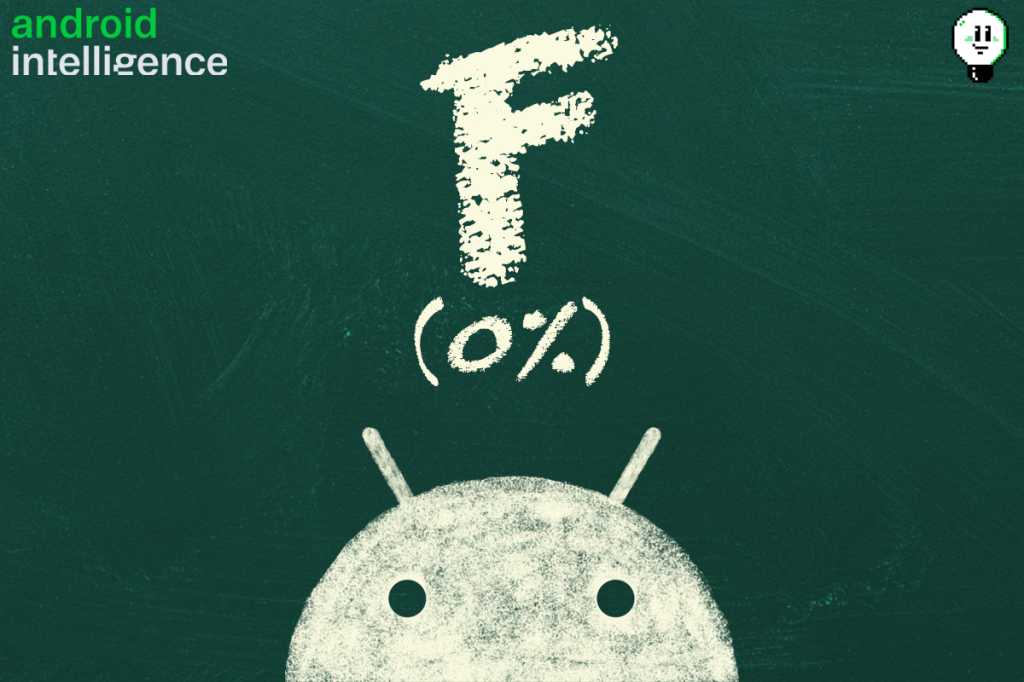
Now, hang on — let’s not get too excited. Motorola still earns a big fat “F” for its lackluster Android upgrade efforts with the Android 15 update. It’s done so in every analysis I’ve performed since 2016. (It scored a “D” the year before that.) Its last good grade was in 2014 — which was the last Android Upgrade Report Card prior to Lenovo’s acquisition of the company, for anyone keeping track.
But for the first time in a long time, Moto’s actually done something and brought itself up above a single percentage point. And for once, that at least isn’t nothing — which, if you ask me, is certainly something to celebrate.
Motorola managed to eke out an update to its current-gen co-flagship foldable, the 2024 Razr+, in early February of this year. It hasn’t sent anything to its non-folding US flagship, the 2024 Edge yet, which brings down its average in that area considerably. But, again: It’s still something!
A similar story shapes up in the previous-gen flagship category, with the US 2023 Razr+ receiving Android 15 in early February but the US 2023 Edge still waiting. The two-year-old flagships, meanwhile, haven’t had any activity, and Motorola’s communication is as minimal as usual.
On top of that, reports indicate all sorts of awful problems with the update — seemingly rendering phones more or less unusable in at least some circumstances.
All in all, it’s not much, and it sure doesn’t change the fact that it’s damn-near impossible to recommend Motorola phones because of their subpar post-sales support. But relative to Moto’s typical zero-effort showing in this arena as of late, it’s at least an improvement and a sign of a teensy bit of effort from a company we’d long ago assumed had given up entirely on caring.
Samsung
JR Raphael, IDG
Length of time for upgrade to reach current flagships: Still waiting (0/50 points)
Length of time for upgrade to reach previous-gen flagships: Still waiting (0/25 points)
Length of time for upgrade to reach two-cycles-back flagships: Still waiting (0/15 points)
Communication: Poor (0/10 points)
One word: Yikes.
I don’t even know what to say about Samsung with its software support performance for the Android 15 release. There’s simply no excuse for the top-selling US Android phone-maker to have failed to send out a single update to any of its devices — now more than six months after a major operating system release — and to land at the very bottom of this analysis, after even the most notorious Android upgrade flunkee of ’em all (hello, Moto!).
And we’re not talkin’ budget-level products here for Samsung, either. These are devices people have paid many of hundreds, sometimes well over a thousand dollars to own. They’re positioned as professional, business-caliber devices, too. And no professional business should be okay with using software that’s six-plus months out of date, especially when said software includes so many fixes and enhancements around critical areas like privacy, security, and performance.
Samsung, too, has managed to gain a reputation in recent years for being a “leader” in Android update delivery. Much like with OnePlus, this perception is misguided.
The data tells you everything you need to know. Here are Samsung’s Android Upgrade Report Card results from the past seven Android release cycles:
Android 15: 0% F
Android 14: 81% B
Android 13: 73% C
Android 12: 68% D+
Android 11: 68% D+
Android 10: 68% D+
Android 9: 37% F
The company’s certainly had some commendable (relative) high points, such as last year’s 81% result. But there’ve been an awful lot of ups and downs and some truly terrible lows in the mix, too. And a seven-year average of 56% is nothing to write home about.
Plus, much like OnePlus, Samsung tends to prioritize its most recent, current flagship while making anyone who owns a top-of-the-line phone from even a year ago wait significantly longer — anywhere from 60-some-odd days, on the better end of the spectrum, to well over 150 days on many recent cycles. (And that’s to say nothing about the company’s extremely poky progress with midrange and budget-level devices, which are treated very much as distant second-class citizens when it comes to upgrade deliveries.)
The company is also consistently quiet when it comes to any meaningful communication about its progress or when folks can expect to see something, anything, show up on their phones. In fact, the first official peep we’ve heard at all about a rollout date came this past Tuesday — March 4 — which was 183 days after Android 15’s release and after the six-month window of consideration for this specific analysis. (Long story short, Samsung now says it’ll start its first Android 15 rollouts sometime in April, which means best-case scenario, certain Galaxy phone owners may have the software seven months late and on the brink of Android 16’s arrival.)
All in all, it’s not a great look for anyone — but especially not for the company that most average phone buyers associate with Android and frequently turn to without even realizing other options are available.
Wait — what about everyone else?
Does this list seem shorter than you were expecting? Alas, this is our current Android hardware reality, at least here in the States at this moment.
One-time Android regular LG is no longer around, as the company bowed out of the phone-making game entirely in 2021. And early Android veteran HTC has been off the grid since 2021’s Report Card, given the fact that it’s barely even putting out new phones anymore — certainly not flagship-level devices. If the company ever comes back around and attempts to get in the game again at any point, I’ll eagerly add it back into the list for inclusion.
And then there’s Sony — a company a random reader will ask me about on occasion but that just doesn’t make sense to include in this list right now. Sony has never had much of a meaningful presence in the US smartphone market (which is a shame, really — but that’s another story for another time), and in recent years, its role in the US mobile market has dropped from “barely anything” to “virtually nothing.”
I can’t even begin to make head or tails of Sony’s convoluted, confusingly named phone lineup anymore, but the company sent out its first Android 15 upgrade in late November and has been chipping away at its list slowly but surely ever since. It certainly wouldn’t be topping the list if it were included in this analysis, but it’d be another addition to the middle-of-the-pack, C-range section if it had any meaningful US presence.
What about the HMD-owned Nokia? That company has a fairly limited presence in the US, but it had generally done a solid job of keeping its phones updated with both major and minor OS releases and with monthly security patches up until 2021, when Google’s Android One program started quietly falling apart. These days, HMD/Nokia’s taking its good sweet time to get current software onto its devices — with rollouts just getting going in late December — so even if it were included in this analysis, it wouldn’t be a remarkable result.
Last but not least, there’s Nothing — the hype-loving small-scale phone-maker from OnePlus founder Carl Pei. Nothing has been doing (ahem) virtually nothing in terms of communicating about its software support progress with its paying customers, but its earliest hint of an incoming Android 14 upgrade happened in mid-December, for its current-gen Nothing Phone 2 models, with its older-gen Nothing Phone 1 following in mid-January. Suffice it to say, its score wouldn’t be spectacular if it were significant enough to include in this breakdown.
In detail: How these grades were calculated
This Android Upgrade Report Card follows the same grading system used with last year’s analysis — which features precise and clearly defined standards designed to weigh performance for both current and previous-generation flagship phones along with a company’s communication efforts, all in a consistent and completely objective manner.
Each manufacturer’s overall grade is based on the following formula, with final scores being rounded up or down to the nearest full integer:
50% of grade: Length of time for upgrade to reach current flagship phone(s)
25% of grade: Length of time for upgrade to reach most immediate previous-gen flagship phone(s)
15% of grade: Length of time for upgrade to reach two-cycles-back previous-gen flagship phone(s)
10% of grade: Overall communication with customers throughout the upgrade process
Notably, 2023’s Android 13 analysis marked the first time the formula was expanded to account for flagship phones that are two generations back in addition to the most recent previous-gen models. With the de facto standard support window stretching to a minimum of three years, it made sense to take a broader view and see how different device-makers are actually doing when it comes to supporting those older models — as a promise of support alone only means so much. How long it actually takes for those phones to receive updates is equally important. And the scores here now reflect that, extending further into a phone’s lifespan.
Upgrade timing often varies wildly from one country or carrier to the next, so in order to create a consistent standard for scoring, I’ve focused this analysis on when Android 15 first reached a flagship model that’s readily available in the US — either a carrier-connected model or an unlocked version of the phone, if such a product is sold by the manufacturer and readily available to US customers — in a public, official, and not opt-in-beta-oriented over-the-air rollout.
(To be clear, I’m not counting being able to import an international version of a phone from eBay or from some random seller on Amazon as being “readily available to US customers.” For the purposes of creating a reasonable and consistent standard for this analysis, a phone has to be sold in the US in some official capacity in order to be considered a “US model” of a device.)
By looking at the time to Android 15’s first appearance (via an over-the-air rollout) on a device in the US, we’re measuring how quickly a typical US device-owner could realistically get the software in a normal situation. And since we’re looking at the first appearance, in any unlocked or carrier-connected phone, we’re eliminating any carrier-specific delays from the equation and focusing purely on the soonest possible window you could receive an update from any given manufacturer in this country. We’re also eliminating the PR-focused silliness of a manufacturer rushing to roll out a small-scale upgrade in somewhere like Lithuania just so they can put out a press release touting that they were “FIRST,” when the practical implication of such a rollout is basically just a rounding error.
I chose to focus on the US specifically because that’s where this publication (and this person writing this right now — hi!) is based, but this same analysis could be done using any country as its basis, of course, and the results would vary accordingly.
All measurements start from the day Android 15 was released into the Android Open Source Project: September 3, 2024, which is when the final raw OS code finished uploading and became available to manufacturers.
The following scale determined each manufacturer’s subscores for upgrade timeliness:
1-14 days to first US rollout = A+ (100)
15-30 days to first US rollout = A (96)
31-45 days to first US rollout = A- (92)
46-60 days to first US rollout = B+ (89)
61-75 days to first US rollout = B (86)
76-90 days to first US rollout = B- (82)
91-105 days to first US rollout = C+ (79)
106-120 days to first US rollout = C (76)
121-135 days to first US rollout = C- (72)
136-150 days to first US rollout = D+ (69)
151-165 days to first US rollout = D (66)
166-180 days to first US rollout = D- (62)
More than 180 days to first US rollout (and thus no upgrade activity within the six-month window) = F (0)
There’s just one asterisk: If a manufacturer outright abandons any US-relevant models of a device, its score defaults to zero for that specific category. Within that category (be it current or previous-gen flagship), such behavior is an indication that the manufacturer in question could not be trusted to honor its commitment and provide an upgrade. This adjustment allows the score to better reflect that reality. No such adjustments were made this year, though there have been instances where it’s happened in the past (hello, Moto — again!).
Last but not least, this analysis focuses on manufacturers selling flagship phones that are relevant and in some way significant to the US market and/or the Android enthusiast community. That, as I alluded to above, is why a company like Sony is no longer part of the primary analysis — and why companies like Xiaomi and Huawei are not presently part of this picture, despite their relevance in other parts of the world. Considering the performance of players in a market such as China would certainly be interesting, but it’d be a completely different and totally separate analysis, and it’s beyond the scope of what we’re considering in this one report.
Aside from the companies included here, most players are either still relatively insignificant in the US market or have focused their efforts more on the budget realm in the States so far — and thus don’t make sense, at least as of now, to include in this specific-sample-oriented and flagship-focused breakdown.
Google has launched an experimental search mode that replaces traditional links with AI-generated summaries, as it ramps up efforts to integrate AI amid growing competition.
Currently, Google Search displays AI Overviews, which provide summaries above traditional search results.
The new AI Mode expands on AI Overviews with improved reasoning and multimodal capabilities, allowing it to handle more complex queries, Google said in a blog post.
“You can ask anything on your mind and get a helpful AI-powered response with the ability to go further with follow-up questions and helpful web links,” the company added.
AI Mode runs on a customized version of Google’s Gemini 2.0 model, designed with advanced reasoning to handle more complex queries.
Subscribers of Google One AI Premium can access the new feature by selecting the “AI Mode” tab on the search results page, alongside options like Images and Maps.
Addressing AI accuracy concerns
AI Overviews has faced criticism for inaccuracies, occasionally generating misleading or incorrect information. If such issues persist, they could erode user trust and harm Google’s reputation.
“In the future, the way people search for information will shift from simple retrieval to understanding, summarizing, and presenting data in a way that is both accurate and fair,” said Thomas George, president of Cybermedia Research. “Striking this balance could make a defining moment for Google. If it fails, the company risks losing the very users and partners that helped it thrive.”
Introducing too many AI-driven changes without sufficient support for the broader web ecosystem could also trigger backlash from users and content creators.
Last month, edtech firm Chegg sued Google, claiming that AI-generated previews diminish demand for original content and make it more difficult for publishers to compete.
Google’s adaptation of the traditional search model into AI Mode is complicated by its primary monetization method – advertising that drives traffic to external sites, according to Suseel Menon, practice director at Everest Group.
“For Google, it’s a ‘search economics’ problem,” Menon said. “It’s a difficult equation for Google to solve, as generative queries cost on average 30-40% more to operate than traditional queries. Bringing AI Mode under a subscription tier addresses the long-term economics of search.”
Competing in the AI search race
With companies like OpenAI and Perplexity rapidly advancing their AI-powered search capabilities, Google faces increasing pressure to refine its approach and stay ahead.
Data from Statcounter showed that late last year Google’s search market share dipped below 90% for the first time since 2015.
“The rivalry with companies like Microsoft and OpenAI will push Google to continually refine its strategy to keep AI-powered search relevant and profitable,” George said. “While AI-driven search enhances innovation and efficiency, it also disrupts the established digital business model, forcing stakeholders to adapt to rapid change.” Google must improve data training, human oversight, algorithms, and user feedback while ensuring accuracy, content moderation, and transparency in experimental features to stay competitive, George added.
Apple has publicly been pushing back against a UK order that demands it create encryption backdoors, and it has now formally appealed that order to the UK Investigatory Powers Tribunal.
The filing is only slightly concerned with the UK market, said Fred Chagnon, principal research director at Info-Tech Research Group. The United States has also echoed Apple’s concerns.
The greater objective is getting the UK authorities to back off on the request, which would hopefully discourage other governments from trying the same tactic, Chagnon said, describing it as preventing a potential domino effect.
Let’s say that Apple lets the order stand and simply opts out of the UK market, which is essentially what it has already done, he said. That could encourage other governments, especially those in France, Australia, and Canada, to try the same tactic.
“If that happens, then the [UK] government has set a precedent,” Chagnon said. But if Apple succeeds in this appeal, which was reported in various media including The Financial Times, “then Apple will have turned the tables and set their own precedent. It would be saying ‘No, China, no, Germany, no, France, you can’t have a backdoor.’”
Nikolas Guggenberger, an assistant law professor at the University of Houston Law Center, said the risk of a domino effect is particularly strong in Europe right now.
Guggenberger, who was born in Germany and studied law there before immigrating to the US, said many European countries might try to mimic what the UK does. The situation would have been different before 2020, when the UK formally exited the EU, because that shift gave more influence to Germany and France. Given Germany’s strong privacy position, Guggenberger said, it’s unlikely the EU today would embrace an encryption backdoor.
However, noted Forrester senior analyst Madelein van der Hout, the potential for global ripple effects is very real and troubling.
“If one government is granted this level of access, others will undoubtedly follow, leading to a global erosion of digital privacy,” van der Hout said.
Guggenberger also questioned the premise of the UK’s official argument. The UK maintains that it only want this backdoor to access the records of specific criminal suspects. But Guggenberger argued that what the UK authorities actually want is to be able to access a massive number of records at once.
“They want to be able to, very cheaply, hit not the cloud content of one person but the cloud content of thousands of people at once,” Guggenberger said.
Fruit of the poisonous tree
In the US, there is a legal doctrine known as the fruit of the poisonous tree. It holds that if data is accessed illegally, not only will that data be excluded as evidence, but anything that law enforcement learned by leveraging that data is also excluded.
But, Guggenberger argued, “the fruit of the poisonous tree doctrine is not nearly as strong in Europe compared with the US,” meaning that law enforcement fishing expeditions might benefit police there.
Another concern about forcing Apple to create a backdoor, beyond the fact that a backdoor for law enforcement will also be a backdoor for state actors and cyberthieves, is that if UK law enforcement is truly only interested in the records of specific criminal suspects, it has the ability to access them without Apple’s help.
The FBI proved that back in 2017 when it used tools, reportedly from an Israeli security vendor, to break into the phone of a suspect in the San Bernardino shooting attack, without any help from Apple. Since then, the technology has sharply improved.
Could create an uneven playing field
Forrester’s van der Hout also speculated that the appeal likely argues that it was unfair for the UK government to issue such an order against only Apple rather than all tech players.
“Apple’s position also raises concerns about fairness in the industry. If it were forced to comply while competitors faced no such obligations, it could create an uneven playing field, potentially distorting market competition,” van der Hout said. “More broadly, Apple’s stance sends a strong message to other technology providers: companies can — and should — push back against government overreach when it threatens the security of their users. This could galvanize a broader industry movement advocating for stronger encryption protections.”
Van der Hout said that Apple’s resistance is also about broader issues.
“Ultimately, this case highlights the ongoing tension between innovation, security and regulation. Apple’s resistance is not just about one company’s policies,” van der Hout said. “It’s about setting a global precedent for how technology firms defend encryption and user trust in the face of increasing governmental pressure. Especially since more European governments are trying to demand similar measures,” as illustrated by Signal’s battle with Sweden.
The UK’s Competition and Markets Authority (CMA) spent a great deal of time deciding whether it should investigate Microsoft’s investment in OpenAI as a potential merger situation, but in the end, decided to open and close the investigation within 24 hours.
In explaining why the the investigation was closed so quickly, Joel Bamford, CMA executive director, wrote in a LinkedIn post, “looking at the evidence in the round (including the recent changes), we have found that there has not been a change of control by Microsoft from material influence to de facto control over OpenAI. Because this change of control has not happened, the partnership in its current form does not qualify for review under the UK’s merger control regime.”
However, he wrote, “the CMA’s findings on jurisdiction should not be read as the partnership being given a clean bill of health on potential competition concerns; but the UK merger control regime must of course operate within the remit set down by Parliament.”
Recent changes in relationship helped
The CMA, he wrote, “engaged directly and constructively with executives at Microsoft and OpenAI throughout the process, carefully reviewing both companies’ operations and documents as the partnership continued to evolve.”
According to Bamford, “the changing nature of the arrangements between Microsoft and OpenAI during the course of our investigation added a further layer of complexity in what is already a rapidly evolving sector. As recently as January 2025, Microsoft announced a change to its contractual rights in relation to supply of compute capacity, which reduced OpenAI’s reliance on Microsoft.”
Phil Brunkard, executive counselor at Info-Tech Research Group UK, said that perhaps OpenAI’s plans with Project Stargate, its gradual distancing from Microsoft, and Microsoft’s scaling down of its plans for building AI infrastructure were just the levers the CMA needed to close the investigation.
The CMA, he said, recognizes that they need to address the Pace, Predictability, Proportionality, and Process of their merger investigations. For the AI market, perhaps they need to consider which of those factors is most important.
Pace, said Brunkard, “is important because businesses and investors need guidance in the current climate, but that is challenging when the AI market is unpredictable, as we have seen with the shifting dynamic between Microsoft and OpenAI.”
As regulators, he said, “they need to give guidance at a pace that is in proportion to degrees of confidence in what they are assessing. Overdo the process and decisions take too long, as we can see in this instance, leading to a ‘so what’ when the decision is eventually made.”
The CMA, added Brunkard, “admitted this took a long time because of the degree of complexity (predictability), the changing nature of the arrangements and how they operate in practice (pace), and the mutual desire for open dialogue between the CMA and the companies to ensure [they] understood these developments over time (proportionality), has led to an exceptionally extended period of review (process).”
The changing of any of those dynamics, he said, enhances the ability of the UK regulator to make a quicker decision on the cases it reviews.
Ritu Jyoti, group vice president of the worldwide AI, automation, data and analytics research practice at IDC, said she thinks too much is being read into Microsoft’s cancellation of data center leases. “Per my understanding, they have reiterated that it’s sticking to its plan to allocate more than $80 billion of its cash to capital expenditures this fiscal year, which ends in June. I know they have also clarified that they are looking at it strategically and adjusting their infrastructure in some areas,” she said.
She said that the last paragraph of the official statement is important; it indicates that in some ways, the altered agreement is a win-win. It reads: “In addition to this, OpenAI recently made a new, large Azure commitment that will continue to support all OpenAI products as well as training. This new agreement also includes changes to the exclusivity on new capacity, moving to a model where Microsoft has a right of first refusal (ROFR). To further support OpenAI, Microsoft has approved OpenAI’s ability to build additional capacity, primarily for research and training of models.”
In addition, Brunkard said, “investments alone don’t guarantee business value. We can all use Copilot and see some efficiency gains, but does that move the bottom line? AI’s future is inevitable, but outside of a few niche areas, ROI is a big question mark. That’s the real challenge here — not just keeping up with the pace, but figuring out what actually matters when the dust settles.”
Microsoft is planning a string of new AI agents to automate mundane tasks and improve worker productivity.
The company on Wednesday announced two AI-based sales agents that can autonomously follow up on sales leads. The company is also focusing on using agents to automate workflows across other sectors.
The sales agents, which are available in Microsoft 365 Copilot, connect to data in Microsoft 365 and Salesforce and Dynamics CRM systems to automatically generate and communicate with sales leads.
Salespeople spend hours verifying leads, writing to customers and then waiting for responses, said Bryan Goode, corporate vice president for business applications and platforms at Microsoft. “If you can take something that used to take hours and do it in minutes, you can spend more time selling,” he said.
One agent, called “sales chat,” can automatically create documents by drawing data from CRM systems, pitch decks, meetings or emails. The second agent, called “sales agent,” is an autonomous agent that works continuously converting contacts a company might have into leads and opportunities.
The sales agents are “finished agents” built on Microsoft capabilities and a variety of large language models (LLMs) that customers can start using right away. The LLMs used depend on customer needs, Goode said.
There is a provision for humans to review emails and documents going out, Goode said.
Microsoft’s Copilot Studio also allows customers to build, customize, and manage the fleet of agents.
The company sees opportunities for agentic AI in the finance, supply chain and other customer service areas, Goode said. “Those are the three functional areas in particular where we’re pretty, pretty heavily focused,” he said.
He cited, as an example, customers trying to navigate through complicated supply chains to reduce inventory and lower costs.
Microsoft also announced an AI Accelerator for Sales program, in which it will help customers migrate from old CRM systems to “AI oriented selling,” Goode said.
AI agents are creating an inflection point for traditional CRM systems, which could go the way of a mainframe, Goode said. “It’s going to be something that might be around, but probably has some dust on it,” he said.
The Microsoft announcement comes amid a flurry of agentic AI announcements this week. Amazon formed an agentic AI business group, according to Reuters. And Salesforce at its TDX tradeshow announced AgentForce 2dx, which has new tools to allow AI agents to do better reasoning.
AI agents can help worker productivity, but customers should approach them with caution, said Charles King, principal analyst at Pund-IT. As with early days of LLMs, AI agents are still in their infancy and face many challenges, he said.
“If the data collection is done legitimately and done with the idea of delivering truly valuable results, it’s great. But there are many examples of AI tools that are not reliable,” King said.
King pointed to OpenAI’s ChatGPT, which in its early days hallucinated and generated inconsistent results. Agents are expected to mature and generate more reliable results, but human intervention and guardrails against hallucination will be needed, King said.
Companies today use large LLMs for general-purpose querying, but personalized agents tailored for business processes are the future, King said.
In his address to Congress last night, President Donald J. Trump called the CHIPS Act “horrible,” and said whatever money hasn’t been spent should now be used to reduce the national debt.
The CHIPS Act, enacted into law in 2022 under then-President Joseph R. Biden Jr., is aimed at increasing semiconductor manufacturing and development in the US.
“Your CHIPS Act is a horrible, horrible thing,” Trump told Congress during his address. “We give hundreds of billions of dollars, and it doesn’t mean a thing. They take our money and they don’t spend it. All that meant to them — we giving them no money — all that was important to them was that they didn’t want to pay the tariffs, so they came and are building, and many other companies are coming.”
Trump said tariffs are a more effective method of convincing semiconductor manufacturers and developers to relocate or build new facilities in the US. He has announced the imposition of tariffs against Canada, Mexico and most importantly for the tech industry, against China.
“We don’t have to give them money; we just want to protect our businesses and our people, and they will come because they won’t have to pay tariffs if they build in America,” Trump said. “You should get rid of the CHIP Act [cq] and whatever’s left over, Mr. Speaker, you should use it to reduce debt. Or any other reason you want to.”
Late last month, reports emerged that the National Institute of Standards and Technology (NIST) planned to cut 497 jobs as part of Trump’s federal government downsizing efforts. NIST, a non-regulatory agency within the US Department of Commerce (DoC), helps drive innovation and industrial competitiveness and oversees the CHIPS for America program. The personnel cuts were widely criticized as damaging to the rollout of the CHIPS Act.
Robert Maire, president of consulting firm Semiconductor Advisors, wrote in a blog post that the plan to cut NIST staff isn’t “bluff or negotiation tactic.” Instead, the layoffs signal a complete shift in direction under Trump, he said.
“Trump made it clear over the last few days that he will institute 25% tariffs on imported semiconductor devices, so [it’s] obvious that strategy is shifting from incentivizing US chip production to penalizing imports instead,” Maire said. “This also lowers the likelihood of TSMC taking over Intel manufacturing, as giving top US chip production to Taiwan contradicts the new strategy.”
The goal of the CHIPS Act is to reduce reliance on foreign semiconductor supply chains, improve national security, and support innovation in critical technologies such as electronics, defense, and healthcare. It also aims to create jobs and strengthen the U.S. economy.
The Department of Commerce has been divvying up $52 billion in the hopes of spurring on-shore chip manufacturing. While about $32 billion of CHIPS Act money has been allocated, the funds have not yet been technically dispersed.
Among recipients of CHIPS Act funding are Intel, Samsung, Micron, TSMC, and Texas Instruments; all of those companies have unveiled plans for a number of new US chip fabrication plants. In return, those chip designers and makers have pledged about $300 billion in current and future projects in the US, according to the White House.
“CHIPS Act and tax incentives are important in [semiconductor] manufacturers’ decision to build fabs in the US versus elsewhere,” said David Tsui, technology managing director for S&P Global Ratings. “There are milestones that these semi manufacturers need to hit before they can receive grants distribution from the CHIPS office. The grants are important because the cost to built a fab and manufacture wafers in the US is much more expensive than in Asia.
“Details on how tariffs can attract semi manufacturers to build fabs in the US are still unclear,” Tsui said. “Currently tariffs are on imports. However, chips and other tech components are assembled into final products before imported into the U.S.“
TSMC, the world’s largest contract chipmaker and a key supplier to US manufacturers, met Trump at the White House on Monday and announced a $100 billion investment to build five new chip facilities in the US. TSMC Chairman and CEO Dr. C.C. Wei praised Trump after the meeting.
“Back in 2020, thanks to President Trump’s vision and support, we embarked on our journey of establishing advanced chip manufacturing in the United States. This vision is now a reality,” Wei said in a statement.
Following the White House meeting, Trump said: “We must be able to build the chips and semiconductors that we need right here. It’s a matter of national security for us.”
TSMC’s $100 billion investment aims to reduce US reliance on Asian-made semiconductors. This follows last April’s announced plans to expand its US investment by $25 billion and add a third Arizona factory by 2030. While no timeline was provided, the effort would create 40,000 construction jobs in four years, the company said. Delays at its first Arizona plant pushed chip production to 2024 at higher costs than in Taiwan.
In addition to its latest manufacturing site in Phoenix, TSMC operates a fabrication plan in Camas, WA, and design service centers in Austin and San Jose. The company declined to comment on Trump’s latest remarks. Intel and Micron did not respond to a request for comment either.
“Higher costs are definitely a concern for TSMC,” said Andrew Tsai, chairman of Taiwan consulting firm Capital Investment Management Corp.
Jack Gold, principal analyst with tech industry research firm J. Gold Associates, called Trump’s comments “a wrong view of the CHIPS Act.”
“I think to repeal the CHIPS Act, or even let it just fade away due to restricting the NIST employees as seems to be happening now, is a big mistake,” Gold said. “Other countries, especially China, incentivize their manufacturers and we see how fast their tech is moving. Do we really want to penalize our own industries at a time of massive competition?”
Tariffs, Gold said, don’t work long-term because they become permanent without boosting manufacturing. Incentives are more effective for encouraging companies to invest in US capacity, he said.
“Without this approach, we wouldn’t have had the space program, which led to advances like chips, healthcare, and satellites,” he said. “If allocated funds aren’t fully disbursed, many projects may be canceled, which could be disastrous. We’re already seeing issues due to uncertainty around NIST disbursements.”
With the AI Phone and Magenta AI, Deutsche Telekom is helping to shape further developments in the smartphone sector.
Deutsche Telekom
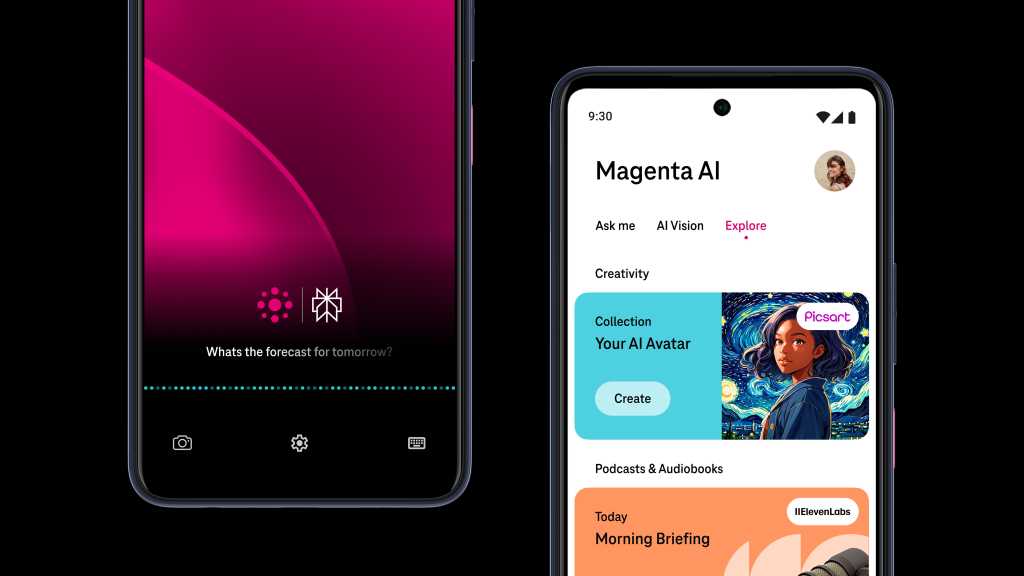
What would it be like if a digital concierge on your smartphone could reserve a table, call a cab or summarize texts by voice command or keyboard input in the future, without you having to call up the various apps? That’s Deutsche Telekom’s vision for an app-free AI phone — a vision that is now taking shape.
The German telecommunications group is being supported by the AI start-up Perplexity.ai and its digital assistant. This can be accessed directly via the home screen or the smartphone’s power button. The AI phone offers additional AI features in the form of applications from:
Google Cloud AI (object recognition),
Elevenlabs (podcast generator) and
Picsart (GenAI design tool).
As Head of Technology Claudia Nemat announced at the Deutsche Telekom booth at Mobile World Congress in Barcelona, the AI phone will be available in the second half of the year “at an affordable price”. Technical details about the Android-based smartphone were not disclosed. However, as most of the data is processed in the cloud, the hardware requirements are not that high.
Alternatively, Deutsche Telekom offers customers selected AI services via its MeinMagenta (My Magenta) app with “Magenta AI”. These already include the AI-supported search engine from Perplexity — but apparently not the Perplexity Assistant, which is freely available as an app. The aforementioned AI tools Google Cloud AI, ElevenLabs and Picsart are also set to be added in the summer.
Deutsche Telekom has also thought about public administration and business customers. At MWC, the company is using more than 30 solutions from ten countries to show how AI can contribute to growth, efficiency and customer satisfaction. One example is an AI chatbot that helps court clerks to search and analyze legal documents saving 70 percent of time, according to Nemat.
AI keeps hackers happy
Deutsche Telekom
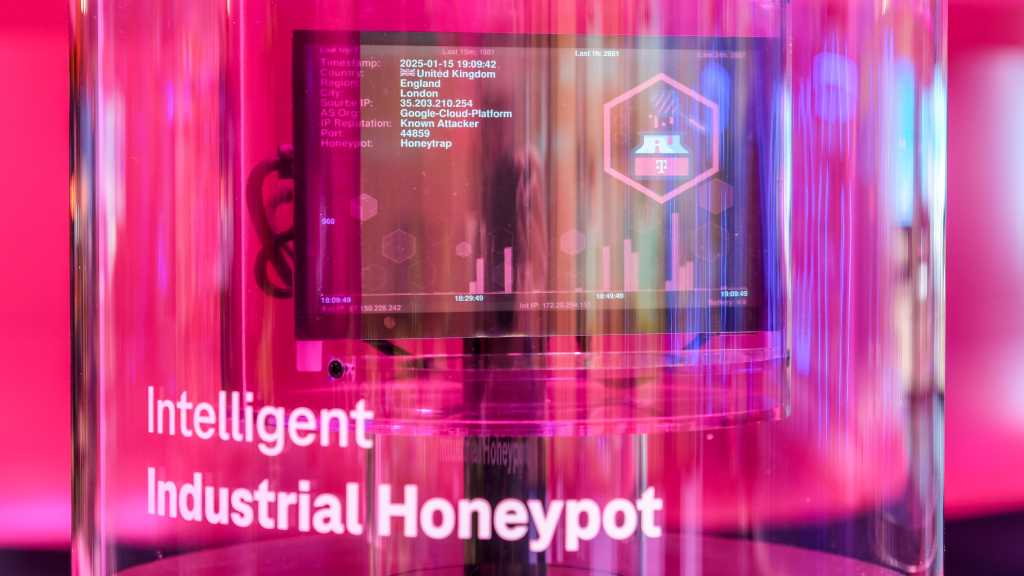
When it comes to cyber security and AI, Deutsche Telekom was apparently inspired by its competitor O2 and its AI grandma. Similar to Daisy, who drives telephone fraudsters to despair through endless conversations, the second-generation Telekom AI honeypots, based on the open source platform Beelzebub, now react as if the hacker’s request had been successful and evaluate their actions in parallel. According to Telekom, this also provides data on the attackers’ tactics and tools.
However, AI is not only intended to provide more security in the network, but also to ensure efficient and smooth operation. To this end, Deutsche Telekom says it is working with Google Cloud to develop a “RAN Guardian Agent”. The multimodal AI assistant, which is based on Gemini 2.0, should be able to
analyze network behavior in real time,
Recognize anomalies and
take self-healing measures if necessary in order to optimize network performance.
According to Nemat, the adjustments are so granular that humans would not be able to make them on their own.
The WLAN becomes an alarm system
Telekom also presented WiFi Sensing in Barcelona. With this technology, which is supported from Wi-Fi 7 onwards, algorithms analyze the Wi-Fi signals between the access point and Wi-Fi-enabled devices and detect when something changes. Thanks to machine learning, the technology can even distinguish whether a child, an adult or a pet is moving through the room. In contrast to the use of cameras, privacy is protected: Wi-Fi sensing also penetrates walls.
One possible scenario for Wi-Fi sensing is that movement in an empty home – in the event of a break-in, for example – triggers an alarm. In a smart home, the router could detect that everyone has left the home and trigger the heating to be turned down accordingly.
It is currently not known when corresponding applications will be available for Deutsche Telekom Speedport routers.
The notion of responsive platform security on Apple devices becomes far more profound now that Jamf, a leading device management and security vendor in the space, has agreed to acquire Identity Automation, an education-focused dynamic identity and access management (IAM) platform, for around $215 million.
What’s interesting about this deal is that the combined technologies should allow Jamf to support dynamic identity and access scenarios in a variety of industries.
Some, such as education, healthcare retail, aviation, and field engineering, are frequently characterized by rapidly changing roles, teams, schedules, and location, and require dynamic adjustment of security policy to support workers in what they do. Student roles and access frequently change based on class, grade, school, and district, for example, while air crews might require secure access to company resources from rapidly changing geographies.
Making identity and access dynamic
Identity Automation’s platform automates identity and access management workflows, which enables IT to more easily support security in such situations. The acquisition means Jamf can combine identity and device access in its software, further empowering Apple-based IT admins with what appears to be an initial focus on the education sector, where roles are particularly dynamic.
It’s important to understand that education IT frequently finds itself provisioning tens of thousands of devices in a very short time, particularly at the start of each semester. In that context, tools like these could prove invaluable. Identity Automation CEO Jim Harold, explained: “An intuitive user experience is essential to ensuring technology enhances rather than hinders the classroom experience.”
Said Jamf CEO John Strosahl: “By bringing our security solutions together, we’re creating a more streamlined and user-friendly experience that enables fast, dynamic access to all the resources users need to be productive. We see the huge potential to help organizations that have a shared-device model, deskless workers, temporary staff, or contractors. By removing cumbersome onboarding and off-boarding processes, users can be productive as soon as they pick up a device.”
How Identity Automation works
Identity Automation offers its service through a cloud-based platform and includes tools for managing identity lifecycles, governance, and authentication:
Identity Lifecycle Management: End-to-end lifecycle management automates provisioning, role assignments, and de-provisioning with real-time updates from HR systems.
Access Governance: Policy-driven configurations control who has access to systems and data.
Authentication: Customizable, multi-factor authentication policies handle role-based access, Single Sign-On (SSO), and rostering capabilities.
What makes the acquisition more interesting is that the tech can also integrate with other identity and SSO solutions, including those from Okta, Clever, and ClassLink. It will integrate with Microsoft Active Directory (AD) for authentication and MFA, and enable federation and SSO access for Google’s cloud-based applications.
In other words, bringing this technology into the Jamf fold means it will be available to a range of users for use in numerous deployment models.
It’s also logical to think it might eventually give Jamf additional reach into international markets, given that Identity Management’s RapidIdentity service is adopted nationally in Norway.
Why does this matter?
Accelerating technological change and the implications of increasingly mobile workforces and AI-driven business processes imply that security provisioning must itself become a business-enabling tech, not just a security requirement.
Combined with Declarative Device Management and No Trust, IAM systems that enable dynamic and responsive access and identity management should help support fast-changing business environments, particularly when the threat landscape is becoming more hostile by the day.
That Mac, iPhone, and iPad users can expect to be peer players in this evolution of device management also reflects Apple’s growing status in the enterprise. Would this have been true on the launch of the original iMac? Almost certainly not.
A study by the Massachusetts Institute of Technology (MIT) found that 80% of companies are monitoring remote or hybrid workers. Specialized software can track online activity, location, and even behaviors such as keystrokes and tone in communications — often without workers’ knowledge.
“There’s been a breakdown of trust” said Brent Cassell, a vice president in Gartner Research’s HR advisory group. “You’ve got situation where only about 52% of employees say they trust their organization and 63% of employers trust employees. It’s a faceoff.”
Gartner estimates that 71% of employees are digitally monitored, up 30% from a year ago. In fact, remote employee monitoring is “quickly becoming a multi-billion dollar market,” Cassell said.
According to a recent report by ExpressVPN, an online privacy and security provider, 74% of employers now deploy online monitoring tools. Another 67% use biometric methods, including facial recognition and fingerprints, to ensure employees are on the job. Those figures are roughly in line with what a 2022 New York Times investigation found: eight of the 10 largest US private companies track productivity, often in real time.
Gartner’s report showed corporate managers still depend on monitoring systems to trust employees. According to the latest Gartner data, only 42% of HR leaders agree their organization trusts employees to complete their work without being monitored.
Gartner
Cassell said his son’s middle school monitors its students so teachers can always see what’s on their tablet screens. “It’s interesting to me that the approach used to monitor seventh and eighth graders at my son’s middle school…is being adopted for managing adults in large organizations,” Cassell said. “It feels odd to treat grown professionals the same way.”
The increase in monitoring, however, is not surprising, Cassell and others noted.
“Leaders and managers want to make sure their workers are being productive, regardless of where they’re located,” said Helen Poitevin, a distinguished vice president analyst at Gartner.
Monitoring increases worker stress
The constant oversight is stressing workers. In a survey of 1,500 US-based employers and 1,500 workers by ExpressVPN, 24% said they take fewer breaks to avoid looking idle, while 32% feel pressured to work faster. In response, 16% fake productivity with unnecessary apps, 15% schedule emails, and 12% use tools to evade detection. Nearly half (49%) would consider leaving if surveillance increased, with 24% willing to accept a pay cut to avoid it.
“Surveillance may seem like a solution for improving efficiency, but it’s clearly eroding trust and morale in the workplace,” said Lauren Hendry Parsons, ExpressVPN’s Digital Privacy Advocate. “As companies adopt increasingly invasive tools, they risk losing the loyalty and well-being of their workforce.”
According to the ExpressVPN survey, significant growth has occurred in electronic, physical and AI-enabled tracking tools:
Online tracking tools: 74% of companies use software to log web browsing (62%) and track screens in real time (59%).
Physical surveillance: 75% monitor employees in the office with video surveillance (69%) and biometric access controls (58%).
AI-driven productivity metrics: 61% use artificial intelligence to evaluate employee performance.
If employee monitoring practices are not communicated transparently by employers, worker trust can erode, according to Gartner Research. That not only affects employee retention; it hurts productivity. In low-trust organizations, only 17% of employees bring new ideas to their managers, compared to 70% in high-trust organizations, the researcher said.
Watching employees too closely can actually make them more likely to break the rules, because they feel like they have no control over their actions, said David Welsh, a professor at Arizona State University who researches organizational and behavioral ethics.
For example, forced back into the office, many employees have admitted to showing up for just a few hours — enough time to swipe in with their employee badge, have a cup of coffee, and be seen in the workplace — then heading back home to do their work, according to one study. Known as “coffee badging,” the trend showed up on a survey of 2,000 full-time US workers conducted by videoconferencing tech vendor Owl Labs.
“However, if a company treats employees fairly and explains why monitoring is used, people are less likely to react negatively,” said Welsh, who published a study on employee monitoring.
To make monitoring work without causing productivity and attrition problems, “businesses should focus on fairness, trust, and giving employees a sense of control,” he said.
According to ExpressVPN, 86% of employers do disclose their surveillance practices, but that hasn’t eased employee concerns. More than 77% of workers believe companies should be legally required to disclose all forms of monitoring, while 78% support stricter federal and state regulations.
“Employees are demanding accountability, transparency, and respect for their privacy,” added Hendry Parsons. “Employers must strike a balance between oversight and autonomy — or risk alienating the very people who drive their success.”
Despite the misconception that remote work reduces productivity, Gartner research said 55% of employees with flexible work options are high performers, compared to 36% in traditional 9-to-5 office roles.
Employee monitoring technologies collect data to generate insights and reports, but measuring “productivity” is complex and context dependent. These tools often track time spent on tasks, which doesn’t always reflect performance, Gartner said. While there are risks, they can improve employee experience and productivity — when used properly.
Can employing monitoring be done right?
Monitoring isn’t “inherently bad,” according to Cassell. If organizations are transparent about what data they collect, why they collect it, and how it can help employees, most will be more accepting.
“The key is trust — organizations need to earn employees’ trust by clearly explaining the purpose and benefits of monitoring,” Cassell said. “When done right, employees may not fully embrace it, but they’ll be more comfortable with it.”
Truckers, for example, are routinely monitored by the employers to ensure time management principles, record accidents, and ensure driver safety. Knowledge workers at desk jobs can also benefit from monitoring, Cassell said, as it can help them meet deadlines and keep up with business goals.
For example, Microsoft Viva is an employee experience platform designed to help organizations improve employee engagement, well-being, learning, and productivity. If a company tracks an employee’s work but also offers productivity tips to help them improve, and the data isn’t used punitively, “employees are more likely to accept it,” Cassell said.
Many workers feel uninformed about how the monitoring data is used. According to Gartner, 41% report no communication about data collection, and even when communicated, clarity is often poor. Transparency about what data is collected, why, and who has access to it can build trust and boost employee engagement.
To ensure a successful implementation, HR leaders should tailor communication to different roles, account for geographic differences, and engage individual managers, according to Gartner.
“Organizations have to trust their employees before their employees trust them,” Cassall said. “One way that they can do that is letting them know what they’re doing and why and how it benefits them. And when they do that, what we find is employees are maybe not entirely okay with it, but they are more okay with it than they otherwise would be.”