Month: October 2025

Computer mice can eavesdrop on private conversations, researchers discover

High-end computer mice can be used to eavesdrop on the voice conversations of nearby PC users, researchers from the University of California, Irvine, have shown in a new proof-of-concept demonstration.

Given the catchy name ‘Mic-E-Mouse’ (Microphone-Emulating Mouse), the ingenious technique outlined in Invisible Ears at Your Fingertips: Acoustic Eavesdropping via Mouse Sensors is based on the discovery that some optical mice pick up incredibly small sound vibrations reaching them through the desk surfaces on which they are being used.

These vibrations could then be captured by different types of software on PC, Mac or Linux computers, including non-privileged ‘user space’ programs such as web browsers or games engines or, failing that, privileged components at OS kernel level.

Apple’s DMA troubles in Europe continue, but a solution may be in sight

While the struggle continues and Apple is urging the EU to repeal the legislation, the company may be inching toward some type of settlement with the EU over alleged violations of the bloc’s Digital Markets Act, according to The Financial Times.

It’s not a happy talk. Apple knows it needs to find some kind of deal with the EU under the DMA, even if it disagrees with the law, the implementation, and what it is required to do (which it does). Apple seems to have hundreds of the company’s salaried staffers dedicated to trying to find some way to meet Europe’s highly mutable DMA demands while maintaining what makes Apple what it is. 

It is also true that Apple and Europe have been in discussion about the creation and implementation of the DMA since day one, with Apple frequently saying it has tried, and failed, to gain clarity on sections of the act. That lack of clarity is particularly hard to stomach — how do you reach a deal when people don’t tell you what they want?

The art of the (bad) deal

This week’s regulatory story explains that Apple might be forced change some of its business practices following the punishing €700m fine it was hammered with for DMA breaches.

Apple has already changed some of those practices to meet the demands of the DMA, but must now find a way to continue to provide developers access to its technologies without treating some groups of developers unfairly. 

Apple’s Core Technology Fee was an initial attempt to achieve this, but regulators were unimpressed. The report indicates that discussions on a viable solution around this are ongoing, though not yet finalized.

Apple, Europe’s other R&D company

Apple has made no secret of its opinion that aspects of the implementation of the DMA mean it is forced to supply competitors with technology at no charge, even though its competitors are not held to the same standard. 

It has also complained that the manner of the DMA’s application means it must figure out how to make apps and services available to competitors for use in their products — even before it gets to release them to its own customers. In part, this is why parts of Apple Intelligence are unavailable in Europe.

Achieving that kind of parity has significant cost implications and means European customers must get used to lengthy waits until new features become available to them. There must surely be an opportunity to strike a better balance between the security and usability interests of customers and those of Apple’s competitors?

Apple’s ‘dark patterns’

Europe argues that its attempt is nothing to do with forcing compromise on platforms, telling the FT, “Compliance means that developers get a real chance and that users get a real choice, not buried under a maze of dark patterns from gatekeepers.”

At the same time, it is easy to argue that the implementation of the DMA also means consumers lose choice, in that they can no longer access the pure Apple experience they want. Indeed, you could argue that opting for the Apple-curated experience is itself a choice, particularly as Apple’s platform is a unique technology, and the company does not dominate any of its markets. 

Samsung, for example sells more smartphones, so why is it not being encumbered by DMA restrictions? “Apple has led the way in building a unique, innovative ecosystem that others have copied — to the benefit of users everywhere. But instead of rewarding that innovation, the DMA singles Apple out while leaving our competitors free to continue as they always have,” the company said.

Clarity, European style

Europe does hold the power in this negotiation. And while it hasn’t yet settled its case with Apple, the threat is that if the company cannot be bought into line, it will face periodic penalty payments up to 5% of global income. 

This threat is significant, particularly as Apple has consistently accused regulators of refusing to provide it with that clarity on compliance, and of also frequently moving the goalposts for what the company must do to comply. (Imagine if the road you drove on had a fluctuating speed limit that changed without warning — this is likely how Apple sees its experience of working with the EU.)

That experience is the context that seems to have created a general opinion within Cupertino that Europe’s DMA is not about real competition, but a political apparatus with which to attack US tech firms. If that feeling prevails, Europe really should get ready for trade-based reprisals from the Trump Administration, which has already uttered warnings concerning the application of the DMA.

Follow me on social media! Join me on BlueSky,  LinkedIn, and Mastodon.

Deloitte’s AI governance failure exposes critical gap in enterprise quality controls

A breakdown in AI governance at Deloitte Australia has forced the consulting giant to refund part of an AU$440,000 (US$290,000) government contract after AI-generated fabrications were included in a final report, exposing vulnerabilities that analysts said are symptomatic of broader challenges as enterprises rapidly scale up AI adoption.

Deloitte used OpenAI GPT-4o to help produce a 237-page independent review for Australia’s Department of Employment and Workplace Relations (DEWR), but failed to detect fabricated academic citations and non-existent court references before delivery. The firm also did not disclose its AI use until after errors were discovered.

The Australian government told ComputerWorld that Deloitte “has confirmed some footnotes and references were incorrect” and agreed to repay the final installment under its contract. The Secretary provided an update, noting that a correct version of the statement of assurance and final report has been released.

“The refund amount will be disclosed when the contract notice is updated on AusTender,” a DEWR spokesperson said.

“It’s symptomatic of broader challenges as enterprises scale AI without mature governance,” said Charlie Dai, vice president and principal analyst at Forrester. “Rapid adoption often outpaces controls and makes similar incidents likely across regulated and high-stakes domains.”

Despite the errors, “the substance of the independent review is retained, and there are no changes to the recommendations,” the DEWR spokesperson added.

Detection through domain expertise

Dr. Christopher Rudge, a University of Sydney researcher specializing in health and welfare law, discovered the fabrications when reviewing the report. He recognized cited authors as colleagues who had never written the attributed works.

“One of the easiest ways to tell was that I knew the authors personally, and so I knew they hadn’t written the books to which they were attributed,” Rudge told Computerworld. “The works were almost too perfectly tailored and too bespoke for the text, and that was a red flag.”

Sam Higgins, vice president and principal analyst at Forrester, said the incident served as “a timely reminder that the enterprise adoption of generative AI is outpacing the maturity of governance frameworks designed to manage its risks.”

“The presence of fabricated citations and misquoted legal raises serious questions about diligence, transparency, and accountability in consultant-delivered work,” Higgins said.

Shared responsibility for quality control

The vendor and the client share the responsibility, argues Sanchit Vir Gogia, chief analyst and CEO at Greyhound Research. “Clients cannot claim surprise when tools they themselves use internally appear in a vendor’s workflow,” he said. “Why wasn’t that check done before the report went public? Accountability works both ways.”

The revised report, published last Friday, included a disclosure absent from the original, acknowledging Deloitte used the AI tool to address “traceability and documentation gaps.”

Disclosure often lags because firms frame AI usage as “internal tooling” rather than material to outcomes, creating transparency and trust gaps, Dai said.

Higgins said the post-hoc disclosure undermined the Australian government’s own guidance requiring transparency when AI is used in decision-making. “Deloitte’s post-hoc disclosure sets a poor precedent for responsible AI use in government engagements,” he said.

The incident occurred as Deloitte announced a major partnership to deploy Anthropic’s Claude AI to its nearly 500,000 employees worldwide.

Deloitte did not immediately respond to a request for comment.

Modernizing vendor contracts

The disclosure failures and quality control breakdowns in the Deloitte case point to fundamental gaps in how organizations contract with vendors using AI tools.

Rudge argued that organizations deploying AI tools may need to institutionalize subject-matter expert review as a mandatory final quality gate, even as AI promises significant cost and time savings.

“At the end of any AI-assisted project, or any significant project where AI has been dominantly the knowledge-making tool, firms or organizations might still need to employ a human proofreader who is a subject-matter expert in the area to sense-check the documents,” he said.

Rydge suggested that the economics could still favor AI adoption even with expert review built in. “Maybe things will be so much cheaper to produce in the knowledge world that the cost of a subject matter expert who proofreads the paper, report, or product will only be understood as a small cost,” Rudge said. “But vetting by professionals should still continue to be the gold standard.”

Gogia said most current agreements still assume human-only authorship even though automation now underpins much of the work. “When something goes wrong, both sides scramble to decide who carries the blame — the consultant, the model, or the client reviewer who signed it off,” he said.

“Tech leaders should ask explicitly about AI involvement, validation steps, and error-handling processes,” Dai said. “They should also seek clarity on human review, source verification, and accountability for factual accuracy before accepting deliverables.”

Higgins outlined key questions: “What generative AI tools are being used, and for which parts of the deliverable? What safeguards are in place to detect and correct hallucinations? Is there a human-in-the-loop process for validation? How is provenance tracked?”

Building mature governance frameworks

Beyond vendor management, analysts said organizations need comprehensive governance frameworks that treat AI as a systemic risk requiring formal policies and cross-functional oversight.

Dai said CIOs and procurement teams should include clauses mandating AI disclosure, quality assurance standards, liability for AI errors, and audit rights. “They should also pursue alignment with frameworks like NIST AI RMF or ISO/IEC 42001 for risk management,” he said.

Higgins said provisions should require upfront disclosure, mandate human review, define liability for AI errors, and include audit rights.

“IT leaders should treat AI as a systemic risk, not just a productivity tool,” Dai said. “They should implement vendor AI governance, enforce disclosure, and integrate robust QA to prevent reputational and compliance fallout.”

Gogia said he saw an emerging model where joint review boards include client and vendor representatives, ensuring AI-produced content is examined before endorsement. “That is what maturity looks like — not the absence of AI, but the presence of evidence,” he said. “Governance in the AI age will reward collaboration, not confrontation.”

From pilot to production: How large enterprises can scale XR projects

Broad adoption of augmented and virtual reality (AR and VR) technologies remains at an early stage, but many businesses are already seeing value in the systems they’ve rolled out: immersive training for frontline employees, for example, or engineers who can collaborate on design using 3D models.  

But getting these systems up and running can be complicated. Despite evidence of the effectiveness of AR, VR and mixed reality (referred to collectively as XR) tools, companies still face a variety of technical, cultural and organizational challenges. 

At last month’s Augmented Enterprise Summit, several executives from large global enterprises offered insights into how to get XR projects started — and how to move from proof of concept (PoC) to successful real-world use. (They did not detail which XR systems they’re companies are using, focusing instead more broadly on how to successfully deploy the technology.)

Focus on outcomes, not just cost savings

Convincing senior leaders about the value of XR projects is one of the key challenges teams will face. 

Nic Sabo, AR program leader at GE Aerospace, said it’s often best to focus on what the technology enables rather than purely on potential cost savings. “What really does resonate is when you start talking about creating capacity,” Sabo said during the event, which took place Sept. 23-25 in Dallas.

This is a particular challenge for GE Aerospace, which regularly recruits and trains new technicians for its MRO [maintenance, repair and overhaul] shops; many are new to the industry and may have only recently graduated from school. 

If XR tools can help train 50% more employees a year, for example, that can have a knock-on effect for the entire production chain. That’s more valuable than money saved on training itself, said Sabo, shifting the conversation from labor savings of “maybe tens of thousands” to affecting “multi-million-dollar ‘throughput’ through my organization,” he said. 

“If you find those key pain points that leadership is really feeling and find a way to say, ‘I think I can solve this using XR in XYZ capacity,’ that translation really starts to make a lot of sense for them,” he said.

It’s also smart to identify which senior leaders can back a project and be aware of top-level priorities. Sabo recommends finding a “champion” early, “someone who has the funding and has the willingness to kind of try something new.

“It’s important to identify the leaders that can support a project and understand their priorities and the high-level business objectives,” he said. “From there, it’s possible to present XR tools as a way to solve problems.” 

Understand the user

To build XR services that will get adopted by employees, IT decision makers need a strong understanding of users’ roles and daily tasks, said Nike Adeoye, advanced technology and innovation advisor for FedEx. 

At the logistics and delivery company, VR is used to train new employees. “We start with the trainers to get their pain points,” Adeoye said. “Try to understand what the customer journey is, then build the value into that journey so that you can easily sell it to your stakeholders.”

Laura Kinkle, immersive technologies lead at Daimler, recommends involving users in the design process as early as possible. “Start with them at the very beginning, so they feel like they’re involved in coming up with the solution,” she said.

“If you go to your stakeholder and say, ‘I’ve got this really wow factor technology and I think you should use it this way,’ they’re not going to feel they’re part of coming up with the solution and not be as open to your ideas.”

Another priority when working with proofs of concept is to keep users engaged throughout the process.  Otherwise, they might drop out before the trial is complete, resulting in less evidence of its effectiveness to present to leaders.

“I call it ‘after the wow factor;’ when the novelty wears off for the user. What do you do when they’re not as engaged as in the beginning?” Adeoye said. “Their engagement gives you enough data points to be able to prove the concept.” 

She advised that companies create incentives for users so that they remain involved. It’s also important to be up front about the level of commitment required to collect the necessary data.

Treat a proof of concept the same as production 

While Ford has had a high success rate converting PoCs to production, that was not always the case: several years ago, there were half a dozen such efforts in progress at the company, with few signs of success. 

“One thing that we learned, or that we do now, is we just don’t consider a PoC a trial or evaluation,” said Muhammad Anwar, technology lead for Extended, Virtual, Augmented, Mixed Reality & Visualization at Ford. “We consider it as a baseline and foundation of future deployments.”

There are two “make or break” factors to consider, he said. One is scalability to ensure the XR systems and data are available to large numbers of users globally across an organization. The other is stability to prevent disruptions when XR systems are accessed at scale. 

The problems Ford ran into during its first successful deployments were less about the XR technology itself. “It was device setup and configuration,” said Anwar. “It was enrollment into the MDM [mobile device management software]. It was connectivity with your corporate network, OS upgrades, firmware upgrades.” 

To address those stumbling blocks, Ford devised “a very comprehensive business continuity plan at the POC stage to minimize the disruption,” said Anwar.

At the same time, data security should be a clear priority from the start, according to Adeoye.

“If your organization is like mine, where data security is crucial to anything you do, you want to make sure that you don’t raise any red flags during PoC security review, because the red flags will mean that you probably get blocked at the end and not go to deployment,” she said.

IT support for scaling up

For XR projects to succeed at large companies and across continents, robust IT systems should be in place to deliver the technology reliably to users wherever they are.

For Volvo, deploying a device management application helped it scale its immersive training to workers in 80 different countries. “We can push applications pretty much anywhere in the world,” said Matthew Connors, XR digital product area owner, Volvo Group Digital & IT, Volvo Group. “We don’t have that many applications, there are probably about 22 applications — technical, sales; they have different use cases — but we can push those out pretty much immediately.”

Volvos has used some 300 or so Meta Quest 2 and 3 devices and relies on management software from ArborXR, Connors said. “We can manage groups, indicate who’s got what device, where are they, is it up to date, is all the software already installed, do they need to have the application set. It’s been working out very well for us.”

At GE Aerospace, Sabo said the relationship with IT is critical when scaling up XR projects across a company’s operations. As soon as his team created its first successful piece of XR content they were under pressure to supply more. 

“All of a sudden, there’s a lot more demand, and a lot of demand for, ‘Can you do it faster, and can you produce a lot more?’” he said. “Without having that close partnership with IT and understanding what our digital strategy was, we didn’t have a place to really start for scaling. So, we learned very quickly we had to bring those stakeholders in as well.”

Otter.ai launches features to embed it in the enterprise

Otter.ai, which began life as a straightforward transcription tool and now integrates with Microsoft Teams, Zoom and Google Meet, Tuesday introduced a cross-platform enterprise suite of new features that it said optimize how organizations capture, organize and leverage meeting conversations.

The company said in a release, “[without a] central repository for conversations, valuable insights go untapped. Otter enables organizations to realize the full potential of meetings by creating proprietary intellectual property from all conversations and building a comprehensive corporate knowledge base that scales with business growth.”

Sam Liang, co-founder and CEO of Otter.ai. said in an email to Computerworld,  “over the years, what started as a consumer app has become an enterprise tool as individuals have wanted to use Otter for work because the tool saves them time and increases productivity.”

He added, “with more and more enterprise customers coming to us, we wanted to ensure we were building not just a great individual AI tool, but a serious enterprise player.”

The company, added Liang, “now has over 25 million global users spanning individuals, teams, startups, and Fortune 500 companies ,and Otter has moved well beyond transcription — today’s platform seamlessly integrates with Salesforce, HubSpot, Zapier, Notion, Atlassian, and Asana.”

Asked if an answer provided by AI contains references that allow a human to check the source material, he replied, “Otter AI Chat provides users with the source for its responses, whether that’s from within Otter (such as specific meetings or notes) or from external sources like [a] CRM or integrated documents. This allows users to verify the information and access the full context behind any AI-generated answer.”

Promises can outpace safeguards

Thomas Randall, a research director at Info-Tech Research Group, said the new capabilities “capture a familiar tension in the agentic AI surge: bold productivity promises often outpace the safeguards needed for governance, accuracy, and accountability. Hallucinations are a structural feature of how these systems work and cannot be 100% mitigated.”

Crucially, he added, “such tools lack the tacit knowledge and unwritten norms that shape how departments truly operate. As a result, they reflect an organization as it is, not as it claims to be. This is a potentially uncomfortable mirror for firms that fall short of their stated values, especially in frontline roles fully exposed to customers.”

Johannes Ullrich, dean of research for SANS Technology Institute, viewed the announcement as a move by Otter to follow the lead of other companies attempting to integrate business data into AI agents to streamline customer interactions, sales or support.

The issue, he said, “has been that once data is imported into a solution like this, it is very difficult to implement any form of access control. In short, the AI agent does not know which customer is supposed to have access to what data. Even if constraints like this are implemented as part of the system prompt, they are often easily bypassed with creative prompt injections.”

For example, a sales tool with the ability to query a CRM system may be tricked into revealing special terms other customers were able to negotiate, he said.

The other risk, said Ullrich, is hallucination, “causing customers to be provided with bad information. This has already happened with automated sales agents offering discounts that were not actually available. Air Canada’s chatbot recently offered such discounts, and the airline had to honor them. Companies can be required to honor deals like that, even if they are very costly to the company.”

Randall added, “when end users fail to critically evaluate AI output (particularly new hires unfamiliar with organizational nuance), the risk compounds. Mitigating these issues will require transparent data practices, active human oversight, and distributed accountability frameworks. Traditional, linear governance models are ill-suited for managing systems that learn, adapt, and infer in real-time.”

Otter launch deemed ‘logical evolution’

Adam Preset, VP analyst for Digital Workplace at Gartner, said, “Otter.ai’s push to make meetings the center of enterprise collaboration is a logical evolution for a vendor in this space. Integrating meeting data with broader enterprise systems can unlock value, but it also introduces new considerations. Meetings are just one part of work. Leaders must recognize the limits of what meeting platforms should become within the enterprise stack.”

Expanding Otter’s access to corporate data, he said, “brings familiar but serious risks. Any third-party access must comply with existing data governance, access controls, and security policies.”

The more deeply Otter is integrated into the enterprise, the “more critical it becomes to validate its authentication, authorization, and data handling, both contractually and technically,” he said. “Trust, but verify. Organizations must rigorously test and confirm that Otter’s security claims (including HIPAA compliance) hold true in their own environments before broad deployment. Failing to do so can expose organizations to significant security and reputational risk.”

Preset also pointed out, “we are still in the early days of generative AI. Enterprises should not treat AI-generated meeting summaries or sales insights as infallible. There is real liability if an AI provides inaccurate or misleading information to client.”

If a client claims they were misled by AI-generated information, he said, ”the organization is responsible. Practical risk mitigation means never handing over unchecked AI outputs to clients, and ensuring that AI augments, rather than replaces, human expertise in customer interactions.”

No meeting platform, he said, “should be considered the ‘single source of truth’ for sales or enterprise data. At best, Otter can provide a valuable lens onto meeting conversations and related knowledge, but core systems, like CRM or contract management, remain authoritative for their respective domains. Enterprises should be wary of vendors positioning their platform as the central hub for all work.”

For organizations, he recommended that best practice should “start with clear use cases, involve IT, legal, and security stakeholders, and rigorously evaluate the platform before scaling. Ensure vendor data handling terms meet your organizational and regulatory requirements. Balance risk and value: the promise of AI is real, but so are the risks, and most organizations are right to proceed with caution and focus on proven, incremental value.”

AI meeting platforms like Otter.ai, said Preset, “offer exciting new capabilities, but enterprises must approach integration with discipline, clear governance, and a commitment to human oversight. Those who use AI to augment, not replace, human judgment will ultimately win on trust and outcomes.”

Jamf gets into AI, APIs, and advanced DDM

IT services are changing. Their future will be defined by extensibility via APIs and artificial intelligence. It appears we’re moving toward a post-app digital economy, where personalization takes precedence over off-the shelf solutions. 

That seemed to be the message from Jamf at its 16th annual Jamf Nation User Conference (JNUC) in Denver, CO, where the company unveiled a new API ecosystem, AI capabilities, and automated software updates powered by Apple’s Declarative Device Management (DDM).

“This year marks a major evolution in how customers engage with Jamf,” Jamf CEO John Strosahl said in a statement. “These capabilities make it easier than ever for organizations to fully realize the potential of the Apple ecosystem — with features that matter, integrate seamlessly, and work the way customers need them to.”

When device management gets smarter

The company says these APIs should help its platform become a dynamic and flexible foundation for innovation. In essence, it means developers, admins, and security teams can use Jamf’s APIs to streamline automation, ease integration, and help manage/secure Apple devices at scale.

The idea is that organizations using the Platform APIs can build management tools personalized for the needs of their specific environment. This could be of use to IT and security teams building custom workflows as well as helping technology partners seeking to extend what Jamf can do with their own products and services. MacPaw is at JNUC to show how CleanMyMac Business already benefits from Jamf integration.

There seems to be an emerging rule that nothing in tech can be said unless there’s some mention of artificial intelligence, and Jamf is keeping to that exhortation. The company gave security protection an AI boost with Security Skill in Jamf Protect. It’s an AI assistant designed to help security teams by analyzing telemetry and events logs to provide plain-language incident guidance they can use, hopefully accelerating response. 

An extra security AI agent

“By simplifying complex frameworks such as MITRE ATT&CK and CVE references into actionable insights, the new capability enables security teams to cut through alert fatigue and focus on what matters most,” said Jamf.

The company shared initial reactions to the new solution at JNUC, stressing that the tool was delivering real solutions to real problems. In one example, Jamf demonstrated an AI analysis of a Time Stamping security alert. The AI considered the alert, analyzed it, and provided remediation in just seconds for IT. The feature is expected to arrive later this year. Jamf also confirmed it is using AI across the company to help build code and run operations — even turning to autonomous code agents.

“Every efficiency we bring with AI translates into productivity enhancements for you,” a Jamf executive told the audience of Apple admins. “This is enterprise AI done right.”

API, AI, and…DDM 

Declarative Device Management was always described as being the future of device management on Apple; now, it’s become part of the present. Jamf introduced Blueprints at JNUC 2024 and has now extended this support with new DDM-based workflows, including automated software update settings declarations; they basically let a managed device handle its own system updates based on policies defined by IT. This automates one of the pain points of managing Apple fleets and reduces the need for oversight through better automation. 

Digital everything

Reading between the lines of Jamf’s news from its show, it seems the company hopes to provide customers with the kind of extensibility they seek alongside the rock-solid platform security Jamf helps provide. 

The question is, as device management services become API-driven, at what point might some IT admins migrate to open-source alternatives, which also provide opportunities to build a new approach? 

Jamf, of course, can point to the market-tested resilience of its own platforms in contrast to other approaches. But there’s little doubt this will be part of the discussion in this part of the Apple industry over the coming months – especially since open source MDM provider Fleet cast some shade over the Jamf event. The latter has now become the biggest single sponsor of the largest IT group in the industry, the Mac Admins Foundation. Of course, the growing competition in the space reflects the extent to which the Apple-in-the-enterprise world is growing.

Follow me on social media! Join me on BlueSky,  LinkedIn, and Mastodon.

DevRev’s AI agent hangout targets worker productivity, data integration

Imagine a city hub where a multitude of AI agents can gather, interact, and converse. Office workers are more like sentries — seeing and interacting with the information generated by agents at the hub.

Buses move information from various “neighborhoods” to the city hub, where workers can build AI agents and skills, and use productivity applications that leverage the growing knowledge base. Those sources could be from Slack, Microsoft or even legacy systems.

That’s how Dheeraj Pandey, co-founder of DevRev, described “Computer,” which his company unveiled last month. (Pandey previously co-founded and served as CEO of Nutanix.)

“We are the bus,” Pandey said in referencing the enterprise integration approach. The “bus” term is also a reference to Tibco’s service bus, which did bidirectional data transfers between data sources.

DevRev’s Computer aims to bring connective tissue to disparate systems, effectively unlocking previously unused data — generally referred to as unstructured data — and delivering new context to the information used by companies to make key decisions.

“What you build on top of all of this is basically agents and skills. We also build apps,” Pandey said. 

Those insights are made accessible to office workers through a conversational user interface. The DevRev stack adds more context through its own reasoning, indexing, and data processing.

“Computer…unifies both structured and unstructured data with extreme depth of organization to eliminate these silos and give AI agents full context,” Pandey said.

Box, Microsoft and Google in the last year have released AI features that can conduct deep research and add context to unstructured data. Those companies are plugging AI features into their legacy strengths in storage and productivity. 

DevRev’s Computer functionality goes beyond simple systems integration, Pandey said. “We like to take the agent approach before we go to the apps. We are the only AI company that can replace apps as well,” Pandey said.

Pandey described Computer as a kind of Switzerland where all AI offerings are treated equally. There is no lock-in to specific platforms or data sources, where only a limited amount of data is shared between systems. It provides a platform where workers can draw input from all data.

DevRev’s Computer creates its own knowledge graph from the information transported by the bus to the city hub. The goal is to turn “enterprise data into like a living network that maps complex relationships between teams, customers and products,” Pandey said.

A technology called AirSync is a key component powering the technology. It is a bidirectional synchronization technology that moves information back and forth from various systems to feed the AI-native knowledge graph.

Workers build agents that access the hub through a search engine, a SQL engine, and an MCP (Model Context Protocol) gateway. Orchestrators continuously extract and load data from external systems, while agents apply reasoning to automate workflows and present information to users through a conversational interface.

“The SQL engine runs on users’ devices at the edge, enabling fast queries without relying on cloud infrastructure. That’s a design choice that makes the system more affordable and responsive,” Pandey said.

Workers need to invoke workflows via large language models (LLMs) through an engine that’s being published through MCP.  “Basically you’re taking all your automations and annotating them, labeling them, and really publishing it through the MCP protocol,” Pandey said.

For customers, it takes just “seven lines of code” to deploy Computer into a web portal or application.

“Our customer’s employees will use this through a desktop app. It will auto-upgrade whenever it has to. It basically starts with a search bar. And the search bar eventually becomes a ChatGPT-like interface.”

APIs connect to existing systems, and DevRev’s marketplace already has many connectors built in. “Once they have deployed the marketplace connectors, everything just flows in,” Pandey explained.

The product name “Computer” was inspired by Peter Drucker’s 1967 article “The Manager and the Moron.”  (In the article, the moron caricature was a computer.)

“In 1967, he was conceiving what the computer could do,” Pandey said. “And we said, look, we can look at this as a more intelligent computer. It’s a more intelligent moron, but it’s not here to take your job.” 

ChatGPT to evolve into an AI operating system as OpenAI opens doors to third-party apps

OpenAI has launched apps inside ChatGPT, a new feature allowing users to discover and use third-party applications directly within the chat interface.

ChatGPT can suggest relevant apps during a conversation, or users can invoke them by name, enabling tasks like browsing data, generating visuals, booking services, or accessing productivity and enterprise tools, without leaving the chat.

Are genAI-fueled layoffs ever legit? Oracle may have found a way

Oracle is not the first company you think of when it comes to disciplined spending and cash management. 

But in recent months, Oracle has surprised some people. (When it was hit with massive contracts that would require huge capacity expansion, top execs refused to move ahead until they knew for certain the contracts were real.)

Now, it looks as if the company may be smartly adjusting to the generative AI (genAI) revolution — and the potential workforce disruptions it’s brought to many companies. 

The problem with many of those genAI-fueled layoff attempts is that decision-makers usually lack any realistic business plan. They simply think replacing humans with software will be a wise long-term move. 

But Oracle, at least according to one analyst, might well have figured out a legitimate reason for culling some of its workers. 

Oracle is preparing to rid itself of many of the people who handle product enhancements and features specific to one vertical/geography or even business. That comes in concert with plans to enable customers to make those alterations themselves — and to allow them to do so on a temporary basis if that is cost-effective for them.

Akshara Naik Lopez, a senior analyst with Forrester, believes Oracle will soon get to the point where customers can leverage the company’s agentic AI tools to create their own custom apps, or at least add their own custom functionality to existing Oracle apps. 

If that pans out, Lopez said, it could mean that some Oracle workers focused on those app expansions could be laid off without the cuts hurting customer capabilities. In theory, she said, it could allow customers to add those capabilities in whatever timeframe, and within whatever budget, they need. 

“Let’s say a customer wants certain capabilities that are not in the product line,” Lopez said. “You can use [Oracle’s agentic] platform and have it create something for you for just a short duration of time and then you can turn it off when you no longer want it. It’s almost transferring the power with the agentic AI capabilities to the customer, so they can actually do it themselves or with partners.”

For the moment, Lopez said, Oracle is not quite at “that sophistication or maturity level.”

But the idea raises some intriguing possibilities. Consider Microsoft. So far, it’s been busy pushing Copilot to make its Office apps, such as Word or Excel, easier to use. Instead of learning how Excel formulas work, users can simply explain to Copilot what they want a spreadsheet to do and, in theory, it will now just do that.

But what if Microsoft considered the Oracle approach? Instead of using genAI to make its existing apps easier to use, what if it allowed customers to give the apps customized new functionality?

Here’s a suggestion right now. Using Word to copyedit a document is useful, but it’s highly limited. Why wouldn’t I want it to use all of the data available to it — just like a professional copyeditor would? 

You could check names using LinkedIn and other resources and then say: “I notice that you have given this source a different title than I found on LinkedIn. Can you please doublecheck?” Or maybe, “The spelling you used doesn’t match the spelling I found in a recent news release.” Or even, “Here you said there are five things wrong with the announced plan. But in the text, you only seem to list four. Can you please fix?” Or finally, “You said the XYZ project began in July 2022, but I am finding other stories that all say it began in June 2022. Can you please verify?”

You can see how having options like that could improve Microsoft’s apps by allowing companies to tweak them to their benefit — similar to what it appears Oracle has in mind.

One of the things that’s interesting about Oracle’s plan is that it has a revenue risky element. All major software vendors have decades of experience upgrading and charging more for new capabilities. If customers can add their own features — even temporarily — whenever they want, why would they ever upgrade? Could ISVs counter with sharp increases in licensing every year even if nothing new has been added? How would that change Apple’s and Google’s mobile OS model, given that they are used to adding features for free?

It’s just one more example of how genAI is upsetting a lot of tech industry apple carts, and those disruptions are not always related to job layoffs.

As AI redefines work, US employers cut jobs and remain cautious in hiring

Even without the latest monthly jobs report from the US Bureau of Labor Statistics because of the US government shutdown, other sources made one thing clear: employers are still making cuts and remain reticent to hire.

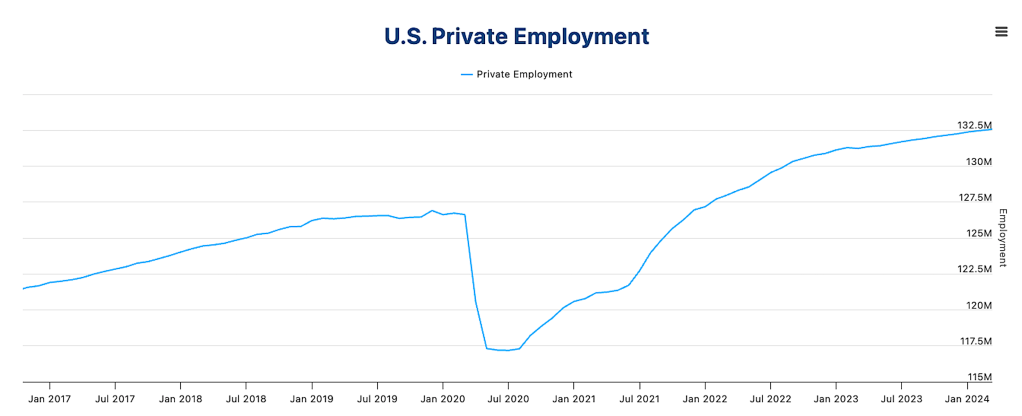
Private employers shed 32,000 jobs in September, according to a report from global HR and payroll solutions provider ADP.

Pay gains were largely unchanged for those who retained their jobs at 4.4% year-over-year; pay gains for people who changed jobs last quarter were 6.6%. 

“Despite the strong economic growth we saw in the second quarter, this month’s release further validates what we’ve been seeing in the labor market, that U.S. employers have been cautious with hiring,” said Nela Richardson, ADP’s chief economist.

Larger employers (with more than 500 workers) were more apt to hire than mid-size and smaller organizations, according to ADP’s data. Large companies in the US hired 33,000 people in September, while mid-sized firms (with 50-499 employees) let 20,000 workers go and small companies (fewer than 50 employees) let go of 40,000 workers.

One bright spot for hiring was “knowledge workers,” which includes technologists. Hiring of those workers increased by 3,000 last month. Education and health services jobs also saw significant gains, as 33,000 new workers were hired.

Jobs for September 2025

ADP

A ‘market under pressure’

Ger Doyle, regional president for ManpowerGroup in North America, described the hiring-firing shift as “a pivot” and “not a pause.”

“September reveals a market under pressure, with signs of continued softness,” he said. “Even without today’s BLS report, the labor market isn’t silent; it’s speaking through real-time signals. The labor market is reshaping in real time, and opportunity lies in how organizations reimagine entry points, invest in internal mobility, and build their workforces for what comes next.”

Hiring is slowing, with new job postings totaling 2.04 million, down 8% month over month and at their lowest level since December 2022, according to Doyle. Open roles have dropped to 6.86 million, down 10% — their lowest point in four years.

“September, typically a turning point for the labor market, hasn’t brought the lift we expected,” Doyle said.

Through ongoing surveys, ADP measures “employee sentiment” or how people think and feel about their jobs and employers. Its latest data showed knowledge workers’ motivation, in particular, remains high. In September, that motivation score climbed one point to 136, a sixth straight record high.

“People are holding onto their jobs and appear motivated to work,” said Mary Hayes, director of People and Performance at ADP Research.

Companies are shifting focus inward, with more employees staying put and internal moves up 11% year-over-year. External hiring is down, signaling a growing emphasis on career development and lateral mobility, ManpowerGroup’s data revealed.

Skills vs. resumes

The World Economic Forum predicts that while 92 million jobs will be displaced globally by 2030, 170 million new ones will be created. That’s why companies must shift to skills-based hiring rather than relying solely on resumes, according to Sibyl McCarley, Chief People Officer at HR tech provider Hirevue.

When considering new hires, 80% of corporate executives will prioritize skills over degrees, with half planning to increase freelance hiring this year to close the gap in AI and other skills, according to a new study from freelancing platform Upwork.

“When roles emerge that didn’t exist five years ago, past job titles alone won’t tell you who’s qualified,” McCarley said. “Organizations that embrace this forward-looking approach will be better positioned to compete. That being said, we are seeing reductions in entry-level positions that are instead being fulfilled by artificial intelligence [AI].”

Many organizations, she said, are now weighing AI as an alternative to workers before backfilling roles. While the larger impact is still limited, each lost job is personal and leaders must respond with empathy, she said. If AI-driven displacement accelerates, there need to be serious strategies in place to support those affected, McCarley said.

Broader economic forces, such as President Donald J. Trump’s tariffs, policy uncertainty, and the rising cost of capital investments, are contributing to workforce disruption, McCarley added.

Ben Johnston, COO of small business lender Kapitus, said US businesses are grappling with tariffs that raise costs on imported goods, potentially making domestic manufacturing more competitive long term. But in the short term, those tariffs risk driving up inflation and disrupting global supply chains, threatening jobs across the manufacturing, wholesale, and retail sectors.

AI is also beginning to displace workers, especially in white-collar jobs. Companies are currently investing heavily in AI technologies that can analyze data and quickly make decisions that once could only be made by humans, Johnston said.

Companies are using AI to gather and analyze data from the web, internal systems, and third parties — tasks once done only by humans — mainly in white-collar roles like analytics and underwriting. And as robotics advance, AI could soon take on physical tasks in blue-collar jobs like driving, factory work, and even home healthcare, Johnston noted.

ManpowerGroup’s Doyle agreed, saying as roles evolve, especially under the influence of AI and automation, the expectations for entry-level talent are changing.

“The ability to orchestrate, adapt, and work alongside emerging technologies is becoming a baseline requirement,” he said. “For many, the first step into the workforce now looks very different than it did even a year ago.”