Imagine a city hub where a multitude of AI agents can gather, interact, and converse. Office workers are more like sentries — seeing and interacting with the information generated by agents at the hub.
Buses move information from various “neighborhoods” to the city hub, where workers can build AI agents and skills, and use productivity applications that leverage the growing knowledge base. Those sources could be from Slack, Microsoft or even legacy systems.
“We are the bus,” Pandey said in referencing the enterprise integration approach. The “bus” term is also a reference to Tibco’s service bus, which did bidirectional data transfers between data sources.
“What you build on top of all of this is basically agents and skills. We also build apps,” Pandey said.
Those insights are made accessible to office workers through a conversational user interface. The DevRev stack adds more context through its own reasoning, indexing, and data processing.
“Computer…unifies both structured and unstructured data with extreme depth of organization to eliminate these silos and give AI agents full context,” Pandey said.
Box, Microsoft and Google in the last year have released AI features that can conduct deep research and add context to unstructured data. Those companies are plugging AI features into their legacy strengths in storage and productivity.
DevRev’s Computer functionality goes beyond simple systems integration, Pandey said. “We like to take the agent approach before we go to the apps. We are the only AI company that can replace apps as well,” Pandey said.
Pandey described Computer as a kind of Switzerland where all AI offerings are treated equally. There is no lock-in to specific platforms or data sources, where only a limited amount of data is shared between systems. It provides a platform where workers can draw input from all data.
DevRev’s Computer creates its own knowledge graph from the information transported by the bus to the city hub. The goal is to turn “enterprise data into like a living network that maps complex relationships between teams, customers and products,” Pandey said.
A technology called AirSync is a key component powering the technology. It is a bidirectional synchronization technology that moves information back and forth from various systems to feed the AI-native knowledge graph.
Workers build agents that access the hub through a search engine, a SQL engine, and an MCP (Model Context Protocol) gateway. Orchestrators continuously extract and load data from external systems, while agents apply reasoning to automate workflows and present information to users through a conversational interface.
“The SQL engine runs on users’ devices at the edge, enabling fast queries without relying on cloud infrastructure. That’s a design choice that makes the system more affordable and responsive,” Pandey said.
Workers need to invoke workflows via large language models (LLMs) through an engine that’s being published through MCP. “Basically you’re taking all your automations and annotating them, labeling them, and really publishing it through the MCP protocol,” Pandey said.
For customers, it takes just “seven lines of code” to deploy Computer into a web portal or application.
“Our customer’s employees will use this through a desktop app. It will auto-upgrade whenever it has to. It basically starts with a search bar. And the search bar eventually becomes a ChatGPT-like interface.”
APIs connect to existing systems, and DevRev’s marketplace already has many connectors built in. “Once they have deployed the marketplace connectors, everything just flows in,” Pandey explained.
The product name “Computer” was inspired by Peter Drucker’s 1967 article “The Manager and the Moron.” (In the article, the moron caricature was a computer.)
“In 1967, he was conceiving what the computer could do,” Pandey said. “And we said, look, we can look at this as a more intelligent computer. It’s a more intelligent moron, but it’s not here to take your job.”
OpenAI has launched apps inside ChatGPT, a new feature allowing users to discover and use third-party applications directly within the chat interface.
ChatGPT can suggest relevant apps during a conversation, or users can invoke them by name, enabling tasks like browsing data, generating visuals, booking services, or accessing productivity and enterprise tools, without leaving the chat.
Oracle is not the first company you think of when it comes to disciplined spending and cash management.
But in recent months, Oracle has surprised some people. (When it was hit with massive contracts that would require huge capacity expansion, top execs refused to move ahead until they knew for certain the contracts were real.)
The problem with many of those genAI-fueled layoff attempts is that decision-makers usually lack any realistic business plan. They simply think replacing humans with software will be a wise long-term move.
But Oracle, at least according to one analyst, might well have figured out a legitimate reason for culling some of its workers.
Oracle is preparing to rid itself of many of the people who handle product enhancements and features specific to one vertical/geography or even business. That comes in concert with plans to enable customers to make those alterations themselves — and to allow them to do so on a temporary basis if that is cost-effective for them.
Akshara Naik Lopez, a senior analyst with Forrester, believes Oracle will soon get to the point where customers can leverage the company’s agentic AI tools to create their own custom apps, or at least add their own custom functionality to existing Oracle apps.
If that pans out, Lopez said, it could mean that some Oracle workers focused on those app expansions could be laid off without the cuts hurting customer capabilities. In theory, she said, it could allow customers to add those capabilities in whatever timeframe, and within whatever budget, they need.
“Let’s say a customer wants certain capabilities that are not in the product line,” Lopez said. “You can use [Oracle’s agentic] platform and have it create something for you for just a short duration of time and then you can turn it off when you no longer want it. It’s almost transferring the power with the agentic AI capabilities to the customer, so they can actually do it themselves or with partners.”
For the moment, Lopez said, Oracle is not quite at “that sophistication or maturity level.”
But the idea raises some intriguing possibilities. Consider Microsoft. So far, it’s been busy pushing Copilot to make its Office apps, such as Word or Excel, easier to use. Instead of learning how Excel formulas work, users can simply explain to Copilot what they want a spreadsheet to do and, in theory, it will now just do that.
But what if Microsoft considered the Oracle approach? Instead of using genAI to make its existing apps easier to use, what if it allowed customers to give the apps customized new functionality?
Here’s a suggestion right now. Using Word to copyedit a document is useful, but it’s highly limited. Why wouldn’t I want it to use all of the data available to it — just like a professional copyeditor would?
You could check names using LinkedIn and other resources and then say: “I notice that you have given this source a different title than I found on LinkedIn. Can you please doublecheck?” Or maybe, “The spelling you used doesn’t match the spelling I found in a recent news release.” Or even, “Here you said there are five things wrong with the announced plan. But in the text, you only seem to list four. Can you please fix?” Or finally, “You said the XYZ project began in July 2022, but I am finding other stories that all say it began in June 2022. Can you please verify?”
You can see how having options like that could improve Microsoft’s apps by allowing companies to tweak them to their benefit — similar to what it appears Oracle has in mind.
One of the things that’s interesting about Oracle’s plan is that it has a revenue risky element. All major software vendors have decades of experience upgrading and charging more for new capabilities. If customers can add their own features — even temporarily — whenever they want, why would they ever upgrade? Could ISVs counter with sharp increases in licensing every year even if nothing new has been added? How would that change Apple’s and Google’s mobile OS model, given that they are used to adding features for free?
It’s just one more example of how genAI is upsetting a lot of tech industry apple carts, and those disruptions are not always related to job layoffs.
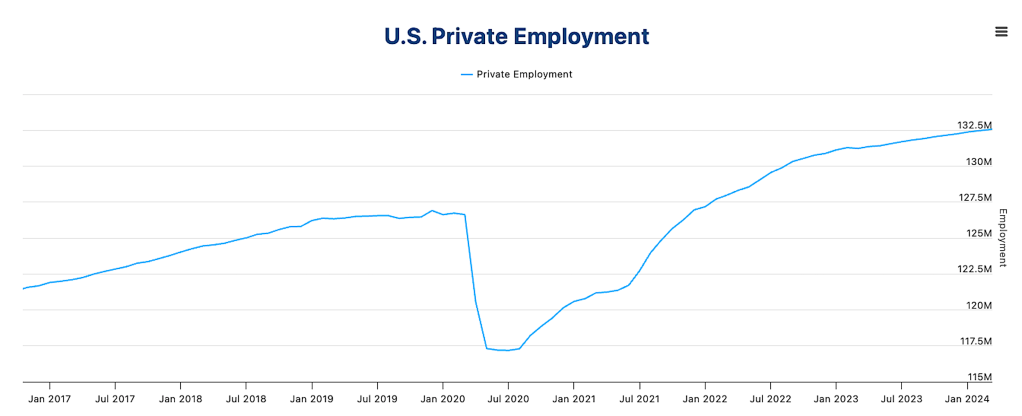
Even without the latest monthly jobs report from the US Bureau of Labor Statistics because of the US government shutdown, other sources made one thing clear: employers are still making cuts and remain reticent to hire.
Pay gains were largely unchanged for those who retained their jobs at 4.4% year-over-year; pay gains for people who changed jobs last quarter were 6.6%.
“Despite the strong economic growth we saw in the second quarter, this month’s release further validates what we’ve been seeing in the labor market, that U.S. employers have been cautious with hiring,” said Nela Richardson, ADP’s chief economist.
Larger employers (with more than 500 workers) were more apt to hire than mid-size and smaller organizations, according to ADP’s data. Large companies in the US hired 33,000 people in September, while mid-sized firms (with 50-499 employees) let 20,000 workers go and small companies (fewer than 50 employees) let go of 40,000 workers.
One bright spot for hiring was “knowledge workers,” which includes technologists. Hiring of those workers increased by 3,000 last month. Education and health services jobs also saw significant gains, as 33,000 new workers were hired.
ADP
A ‘market under pressure’
Ger Doyle, regional president for ManpowerGroup in North America, described the hiring-firing shift as “a pivot” and “not a pause.”
“September reveals a market under pressure, with signs of continued softness,” he said. “Even without today’s BLS report, the labor market isn’t silent; it’s speaking through real-time signals. The labor market is reshaping in real time, and opportunity lies in how organizations reimagine entry points, invest in internal mobility, and build their workforces for what comes next.”
Hiring is slowing, with new job postings totaling 2.04 million, down 8% month over month and at their lowest level since December 2022, according to Doyle. Open roles have dropped to 6.86 million, down 10% — their lowest point in four years.
“September, typically a turning point for the labor market, hasn’t brought the lift we expected,” Doyle said.
Through ongoing surveys, ADP measures “employee sentiment” or how people think and feel about their jobs and employers. Its latest data showed knowledge workers’ motivation, in particular, remains high. In September, that motivation score climbed one point to 136, a sixth straight record high.
“People are holding onto their jobs and appear motivated to work,” said Mary Hayes, director of People and Performance at ADP Research.
Companies are shifting focus inward, with more employees staying put and internal moves up 11% year-over-year. External hiring is down, signaling a growing emphasis on career development and lateral mobility, ManpowerGroup’s data revealed.
Skills vs. resumes
The World Economic Forum predicts that while 92 million jobs will be displaced globally by 2030, 170 million new ones will be created. That’s why companies must shift to skills-based hiring rather than relying solely on resumes, according to Sibyl McCarley, Chief People Officer at HR tech provider Hirevue.
When considering new hires, 80% of corporate executives will prioritize skills over degrees, with half planning to increase freelance hiring this year to close the gap in AI and other skills, according to a new study from freelancing platform Upwork.
“When roles emerge that didn’t exist five years ago, past job titles alone won’t tell you who’s qualified,” McCarley said. “Organizations that embrace this forward-looking approach will be better positioned to compete. That being said, we are seeing reductions in entry-level positions that are instead being fulfilled by artificial intelligence [AI].”
Many organizations, she said, are now weighing AI as an alternative to workers before backfilling roles. While the larger impact is still limited, each lost job is personal and leaders must respond with empathy, she said. If AI-driven displacement accelerates, there need to be serious strategies in place to support those affected, McCarley said.
Broader economic forces, such as President Donald J. Trump’s tariffs, policy uncertainty, and the rising cost of capital investments, are contributing to workforce disruption, McCarley added.
Ben Johnston, COO of small business lender Kapitus, said US businesses are grappling with tariffs that raise costs on imported goods, potentially making domestic manufacturing more competitive long term. But in the short term, those tariffs risk driving up inflation and disrupting global supply chains, threatening jobs across the manufacturing, wholesale, and retail sectors.
AI is also beginning to displace workers, especially in white-collar jobs. Companies are currently investing heavily in AI technologies that can analyze data and quickly make decisions that once could only be made by humans, Johnston said.
Companies are using AI to gather and analyze data from the web, internal systems, and third parties — tasks once done only by humans — mainly in white-collar roles like analytics and underwriting. And as robotics advance, AI could soon take on physical tasks in blue-collar jobs like driving, factory work, and even home healthcare, Johnston noted.
ManpowerGroup’s Doyle agreed, saying as roles evolve, especially under the influence of AI and automation, the expectations for entry-level talent are changing.
“The ability to orchestrate, adapt, and work alongside emerging technologies is becoming a baseline requirement,” he said. “For many, the first step into the workforce now looks very different than it did even a year ago.”
Parallels Desktop is a market-leading emulator for macOS that lets you run genuine instances of Windows (and other operating systems) on your Mac. The virtualization is rock solid, regularly updated, and improves each year.
The fastest version of Windows runs on a Mac
Cast your mind back a couple of years and you might recall that the development team behind Parallels was astonished when Apple introduced the first Macs to use Apple Silicon; they found Windows virtual machines ran faster on those Macs than Windows itself runs on some PCs. One tester went on the record to say running Windows for ARM on an M1 Mac using Parallels Desktop 16 was “the fastest version of Windows” they’d ever used at the time.
The combination lets you use a Mac to run and access nearly all those legacy Windows services that have locked you into those systems for years. This can help organizations close a major gap: supporting employee preference for Macs, while still delivering essential Windows applications without the compliance or security headaches.
What does the integration mean?
The tie-up between Jamf Pro and Parallels answers that pain point, and makes it easier to automate deployment and updates, reclaim licenses when devices are reassigned, and apply consistent security and compliance policies across both macOS and Windows environments.
What that means, really, is that enterprises working with both platforms — or actively migrating to Mac — can bridge many of the annoying problems found when moving between the platforms. Because Macs run Windows, too.
So, what does this integration provide?
You can deploy Parallels Desktop from within Jamf Pro’s built-in App Catalog.
IT can pair deployment with configuration profiles, which means you can automate license key provisions — so those Windows licenses can go to those who need them, rather than sitting around gathering update fees while contributing little else.
You gain compliance tools, including standards alignment from the console and granular control over updates, access, and data sharing with enforced security policies.
And, of course, Declarative Device Management on the Mac adds yet another layer of protection across your systems.
Once you have Windows working on virtual machines on a Mac, you also gain a more secure computing experience, in part because even if the Windows volume succumbs to one of the many viruses that infest that platform, your Mac volume will take the strain. But with Parallels’ management portal, IT can keep a beady eye on the condition of all the installs, helping ensure consistency, compliance and early warning of any vulnerabilities.
What next?
I’m the AppleHolic so of course I see major merits in this offer. To my mind, it supports the ongoing momentum in the Apple-in-the-enterprise space, an environment now seeing an acceleration in the adoption of Macs.
The great thing about the combination of Jamf and Parallels is that the move brings together two trusted names in the macOS space, combining virtualization and device management expertise in a good way. And while the combo can’t claim to counter every argument against wider Mac adoption, it’s certain to help convince some business customers they can migrate, the support to do so exists, and many legacy apps and services can come along for the ride — pending their inevitable replacement by cross-platform, mobile-friendly alternatives.
What’s behind all of this is momentum, in part built around Apple Silicon. The decision to put M-series chips inside Macs continues to pay big dividends, and these systems have enough power to handle running Windows alongside the host Mac OS. It means that if your employees would prefer to run Macs instead of Windows, they can do so. And in combination with Jamf Pro, your IT team might eventually recognize that, just like when iPod came to Windows, the combination of Mac, Parallels, and Jamf is a glass of water in the enterprise computing desert.
Perplexity has announced that its AI browser Comet is now available to all users at no cost.
When the first version of Comet was released in July, only users who paid $200 per month for Perplexity’s max subscription could access the browser. The big draw of Comet is a built-in assistant that answers questions, summarizes content, and browses for the user.
However, if users want help with more advanced tasks or access to high-performance AI models, they’ll still have to pay for the max subscription, Techcrunch reports.
Bringing AI to work just got easier, according to Microsoft, as employees with a personal Microsoft 365 account can now use their Copilot AI assistant in Office documents at work.
Microsoft announced the change in a blog post Thursday. It means that users with Microsoft 365 Personal, Family and Premium plans (the latter of which launched this week) can use Copilot features in apps such as Word, Excel, and PowerPoint in the office, regardless of whether their employer has an enterprise Microsoft 365 Copilot license.
“This offers a safer alternative to other bring-your-own-AI scenarios, and empowers users with Copilot in their daily jobs while keeping IT firmly in control and all enterprise data protections intact,” said Samer Baroudi, product marketing manager at Microsoft.
To use the Copilot features, employees sign in to Microsoft 365 (M365) with both their work and personal accounts using multiple account access. When they open an Office file, they can then use Copilot features such as summarization or text drafting in Office as usual.
There are limits, however. More advanced functions — such as the abilty to access an organization’s Microsoft Graph data, or ask questions about other files in the M365 tenant — requires a full M365 Copilot license.
The personal Copilot can only access files and data for which the employee already has permission to use, Microsoft said, and all Copilot actions are auditable by IT. Admins can also disable personal Copilot access for some or all users, should they choose to do so. (It’s enabled by default.)
According to Microsoft’s own survey data, 82% of employees already use unsanctioned AI tools at work.
The prospect of the company endorsing “bring your own AI” at work might sound alarming at first, but the Microsoft move shouldn’t trouble IT teams much, said Dan Wilson, vice president analyst at Gartner. “What Microsoft is essentially promoting is a way to sell personal Copilot licenses that could potentially be leveraged for work purposes, with little to no risk or ramification on enterprise data protection or identity, because that all still gets maintained,” said Wilson.
“So it’s not bring your own AI, it’s bring your own Copilot license,” he said.
Wilson likened the capability to the free Copilot Chat that can be enabled in enterprise M365 deployments: it also has limited access to corporate data because it’s grounded in web data rather than a business’s own content.
Still, enterprise IT and security teams should be wary of how the capability functions in practice, said Jeff Pollard, vice president and principal analyst at Forrester. “While Microsoft’s announcement offers assurances that its existing data protection mechanisms apply and it will stay in the Copilot service boundary, it’s going to have to prove that. And security researchers — and hackers — will attempt to see if those assertions are true,” he said.
One consideration is who pays for Copilot and whether employers should receive any compensation for using their personal license. It’s similar to the rise of “bring your own device” policies of a decade or so ago, said Wilson, and might require an update to an organization’s policies.
For businesses, the ability of employees to use their own Copilot tools could bolster productivity and help employees become more familiar with AI in the workplace, said Pollard. It could also place pressure on M365 customers to pay for the 365 Copilot, he added, if employers are already using the AI assistant internally.
“That’s a sales tactic as much as it is a technology announcement,” he said.
Enabling employees to use their own Copilot license offers Microsoft a “land and expand” strategy that can grow adoption and encourage customers to adopt the enterprise Copilot — which costs $30 per use each month — across their workforce, said Pollard.
If successful, it could drive enterprise licensing while users continue to pay for their personal version, potentiallyopening up other revenue streams from business customers.
“Once the company adds Copilot to its enterprise licensing, well, next up comes Purview and its associated suite of offerings so you can protect, prevent, detect, and respond to data issues,” he said. “So your spend with Microsoft keeps increasing.”
I’ve already told you about the Dead Internet Theory, the false conspiracy theory that might as well be true. The Dead Internet Theory claims that secret government or corporate conspirators are trying to replace people on the internet with bots and AI to “manipulate public perception, control narratives, and influence the public’s behavior.”
The conspiracy part isn’t true. But the effort to replace people with AI and bots is true. Tech companies are already replacing human content creators with AI-generated books, podcasts, videos, and more.
Now, I’m here to tell you how companies are seeking to replace communication and interaction with family, friends,and pets with solitary people using AI products.
Wait, pets? Oh, yeah.
Here comes Moflin
Casio this week released a robot called Moflin, created by the Japanese startup Vanguard Industries Inc. and now licensed and manufactured by Casio. The palm-sized creature uses AI to develop a unique and evolving “personality.” The “companion” looks like a cross between an owl and a tribble.
The little robot shipped Oct. 1 for $429. (It’s already big in Japan.)
Casio’s Moflin robot mimics what it’s like to take care of a pet.
Casio
The Moflin “expresses” many distinct personality traits. If ignored, it becomes passive and timid, and its personality can’t be reset. An app called MofLife shows the product’s “emotional state” and tracks its “personality” evolution.
It can’t walk or roll, but it does have touch sensors on its head, an accelerometer, gyroscope, microphone, and light and temperature sensors. It responds to touch and recognizes its owner’s voice. It has a rechargeable battery that recharges in its “nest.”
Casio says the gadget was designed to feel “natural,” “lovable,” and “alive.” It coos, responds to your presence, and simulates breathing.
The Casio Moflin represents a larger and (in my opinion) horrible trend: AI replacing people and pets in our lives with one-sided “interaction.”
Here’s what I mean. The Moflin is an advanced AI product designed to simulate sentience and affection. Stroke the gadget on the “head,” and it coos and makes sounds to delude you into believing it enjoys the attention. The Moflin simulates a distinct personality, a necessary condition of human affection. (We love children and pets because they exhibit unique traits.)
But here’s the thing: Our desire to care for pets is wired by evolution and our moral culture. We enjoy caring for those in need, and it’s the right thing to do because people and animals need care.
When caring for a pet, we enjoy petting, talking to, feeding, and protecting it because it benefits from our care. Dogs are the most popular pet because they enjoy and express how much they enjoy our attention. Cats are second in popularity and have the ability to express happiness (by purring, for example).
The Casio Moflin and similar products offer a new idea: We can experience the gratification of caring for a pet — without actually caring for a pet.
Casio is essentially hijacking our natural nurturing instincts to give us our side of the nurturing relationship without any creature receiving it on the other side. It’s like a loving, mutual relationship between a person and an animal. But instead of a connection between two sentient mammals, it leaves us alone holding and petting a product perfectly incapable of participating in the “relationship.”
This is the megatrend of the century. Consider bitcoin. Backers call it a “currency,” but mostly Bitcoin is used as an investment that wallet-holders can use to make money.
Traditionally, investment meant providing money to capitalize for companies providing goods and services to people. For example, if I invest in an apartment building, I hope to profit from that investment. But I can’t profit unless I provide housing for people who need housing. In fact, it’s almost impossible to buy stock in the stock market without materially supporting the provision of food, housing, transportation or other human needs.
Bitcoin is fundamentally one-sided. I’m investing and hoping to make a return, and nobody else benefits. When I buy Bitcoin, I’m not feeding, housing, clothing or providing goods or services to anyone. It’s all just for me. I’m investing in nothing and nobody.
The trend is bigger than Bitcoin and fake pets. It affects even human relations.
When social media isn’t social anymore
For example, ever since CompuServe, if you’re of a certain age, or MySpace if you’re another, or Snapchat if you’re yet another, people have used social networks to interact with other people. We use social networks to share human experiences like travel or food, and interact with people about culture or politics.
Silicon Valley wants to replace that, turning person-to-person interactions into person-to-machine interactions, leaving us alone talking to no one.
OpenAI, for example, has launched an app called “Sora,” powered by its new Sora 2. According to the company, the app enables you to “create, remix each other’s generations, discover new videos in a customizable Sora feed, and bring yourself or your friends in via cameos [which you can use to] drop yourself straight into any Sora scene.”
Sora 2 is a replacement for TikTok where, instead of looking at videos people make to share their actual experiences, users see AI-generated clips up to 10 seconds long — all displayed in a swipeable, personalized feed reminiscent of TikTok’s interface. The feature set includes tools for liking, commenting on, and remixing videos directly within the app.
TikTok is toxic, but at least it gives each user a glimpse into the lives of other people. With Sora 2, users are simply shown: “here’s what our product made, and here’s another thing our product made.”
Sora 2 reminds me of SocialAI, an AI-powered social network developed by Friendly Apps and launched in 2024. SocialAI is a “social network” that is neither social nor a network. But like a social network, you can post, build a following, comment on other posts, etc., except there are no other people involved in your interaction. You’re alone on the social network interacting with bots, which are simulating other users.
Just like Moflin and Bitcoin, you’re supposed to enjoy the experience of interaction, but no other sentient being benefits. It’s just you, all by yourself.
This use of AI to replace social interactions in a mutually beneficial encounter between actual people with a person “interacting” alone with a product is the super-trend of our generation. Movies used to be social, where audience reactions were part of a social experience. Now, people replace that experience with solitary movie and TV streaming. Some even prefer to watch “reaction” videos on YouTube, where social watching is simulated.
Video games enable players to simulate a wide range of activities people do with and for other people, such as farming, fishing, and cooking, managing cities, renovating houses, building PCs, and running a business. You get the satisfaction of these activities without benefiting anyone. (There are even games where you pick up trash and clean up an environment instead of going outside and doing it to actually improve the lives of others).
Technology and tech-adjacent companies intend to hijack our inherently civic-minded, social, romantic, and nurturing nature and replace mutual interaction with simulated society, leaving us alone, helping and benefiting nobody but ourselves and those companies.
AI is amazing and can lead to fantastic benefits to humankind. It can transform personal and organizational productivity for the benefit of humankind. It can transform materials science, medicine and engineering for the benefit of humankind.
While it’s benefiting humankind, it’s also capable of breaking human kinship — if we let it. We need to just say no to companies that want to put the Dead Internet Theory into practice.
Two decades ago, Apple surprised most the tech world by announcing it would adopt Intel processors across its Mac lineup — its only major product line at the time. (This was shortly before the iPhone launched.) At the time, Intel was running high, thanks to massive market share for Windows PCs, particularly in business. Apple at the time still seemed like a scrappy upstart and, after years of Intel processors touting higher clock speeds, the move seemed to show Apple finally understood how the PC market worked.
(Clock speeds isn’t really a true metric of overall performance, but that’s another story.)
A lot has changed since then. First came the iPhone, then Android, then the broader mobile revolution that made players like BlackBerry and Windows Mobile obsolete.
In 2010, Apple announced it needed better from the processors in the iPhone and iPad than it could get by letting other companies design the chips. So, it built its own processor based on Arm — and an Intel chip design. A few years later, Google followed suit. In no time, other players like Qualcomm were ready with chips like the Snapdragon to supply other Android device manufacturers.
Intel was largely AWOL from this mobile arms race, doggedly churning out chips for PCs, Macs, and servers — and blind to what was coming. Even as Apple began to flex its chip-design muscles with things like the Apple Watch SOC processor and custom silicon for its AirPods, Intel remained wedded to a market it seemed to own: computer processors for traditional computers.
Then Apple did something as shocking as its earlier embrace of Intel. It launched its M-series chips as replacements for Intel processors in Macs. The resulting surge in performance and efficiency in these also Arm-based designs took even long-time Apple users by surprise, especially laptop buyers. The aggressive timeline and the relative ease of the transition to Apple Silicon were almost as astonishing — though to be fair, Apple had several such transitions (including the one to Intel) already under its belt by then.
It’s hard to believe that when Apple was in talks with Intel 10 or 15 years ago, it didn’t discuss its plans for the iPhone even obliquely or under extensive NDA. Yet, Intel seems to have missed the mobile wave completely. (Oh, to have been a fly on the wall for those discussions.)
It wasn’t just Apple who bet on Arm over Intel; Microsoft unveiled a version of Windows 8 that ran on Arm instead of Intel chips. It never seemed to take off – and being tied to the UI controversy involving Windows 8 didn’t help. But that didn’t stop Microsoft from keeping the concept around and reworking it over several years.
More recently, the AI boom has given Arm-based PCs a chance to shine, encroaching on Intel’s turf with a truly functional version of Windows (without the Windows 8 baggage) and an embrace of Microsoft’s Copilot approach to generative AI. For Intel, the damage is done: a Windows PC no longer requires Intel inside.
When you add the increased competition Windows faces from mobile platforms, Apple hardware, and alternatives like Chromebooks — as well as the effects of employee-choice programs and BYOD — it’s clear the old days of hardware procurement that gave Intel a major advantage in the market are over.
The question becomes: what does Intel do now?
The company has flirted with closing plants and renting out its fabrication facilities. (The latter represents the simplest way for Intel to remain relevant, and perhaps learn new tricks or poach needed talent.) Given President Donald J. Trump’s push to reshore manufacturing to the US, the second option seems ideal. But it’s a rocky road, given the lack of skilled US workers, limited access to raw materials and rare earths, and the difficulties getting facilities ready and convincing others to make their chips in Intel’s fab plants on US soil.
Having other high-profile tech companies like Apple as part of the plan would lend a degree of credibility to Intel’s efforts to rebound. An investment isn’t just about money. Ultimately, it’s about perception — in many ways placing Apple in the role Intel once played for it years ago.
The difference is that this time it says it only wants to damage the privacy and security of the UK’s subject population. “The UK government has issued a new order to Apple to create a back door into its cloud storage service, this time targeting only British users’ data,” the FT reported.
It’s not over till it’s over
Snap back in time and you’ll recall the UK Home Office secretly demanded that Apple create a worldwide back door into encrypted iCloud data. Apple responded by withdrawing its Advanced Data Protection service from the UK market and opposing the request in a top-secret UK court. The original order also extended to users outside the UK, so the government also faced opposition from privacy and free speech advocates and the US government as the move trampled on the Constitutional rights of US citizens.
The latter seemed to have an impact.
In the end, we believed the UK had pulled back, particularly as its overreach was deeply dangerous, would invite imitation from other repressive governments, and would deeply damage data security with the potential to undermine international business transactions.
The widely understood argument is that if one back door exists, every hacker, surveillance fetishist, tech-addicted stalker, criminal, gangster, or enemy nation would spend vast resources locating that door and exploiting it.
Anyone, absolutely anyone, who has any insight into how digital communications works will tell you the same thing. Any weakening of encryption opens a Pandora’s box of harms and will not keep you safe.
UK.gov wants all your data
Unfortunately, the Keir Starmer government is big on hyperbole and short on sense, so the Home Office has returned to the fray, filing a September TCN insisting Apple build encryption back doors that only target UK subjects.
It can make this egregious request because the subjects of the UK crown have no constitutional rights to protect them, (despite much-repeated hokum concerning the Magna Carta) and US politicians are unlikely to care so long as US citizens aren’t affected by the rule.
The thing is, technically it’s impossible. There is no real way to create a back door or to weaken encryption of UK user’s data that does not also impact others — if nothing else, the existence of that door means it will be abused, and digital criminals are quite sufficiently well-resourced to find that weakness, exploit, and extend it. Just look at the existence of the highly profitable surveillance-as-a-service “industry” for proof. In other words, the UK’s demand still undermines the rights enjoyed by US users.
Dangerous overreach
The other thing is that the UK plan can’t work. Anyone who understands technology and values data privacy will simply add additional encryption to the files they store online, using tools like Cryptomator. That means the only people who will be affected by the rule will be ordinary folk, rather than criminals. That suggests the UK agenda is not about crime prevention, but more likely concerned with wider exploitation of the data made available. Such intentions don’t appear to have been discussed in public, which hints the UK public would probably reject them if it knew.
That’s the worst thing about the UK’s determination to continue down this dangerous road; not only is it refusing to listen to common sense about the dangers of weakening data protection, but it is also making moves that would be unpopular with no transparency at all.
For the government, the danger here is that it will be remembered for putting in place the mechanism for dangerous authoritarianism (including Digital ID) without scrutiny, transparency, or legal recourse.
What Apple said
In a statement provided to Computerworld, an Apple spokesperson said: “Apple is still unable to offer Advanced Data Protection (ADP) in the United Kingdom to new users and current UK users will eventually need to disable this security feature.
“ADP protects iCloud data with end-to-end encryption, which means the data can only be decrypted by the user who owns it, and only on their trusted devices. We are gravely disappointed that the protections provided by ADP are not available to our customers in the UK given the continuing rise of data breaches and other threats to customer privacy. Enhancing the security of cloud storage with end-to-end encryption is more urgent than ever before. Apple remains committed to offering our users the highest level of security for their personal data and are hopeful that we will be able to do so in the future in the UK.
“As we have said many times before, we have never built a back door or master key to any of our products or services, and we never will.”
What the UK said
The UK Home Office told the FT that it does not comment on such matters, including, “for example,” confirming or denying the existence of any such notices. “We will always take all actions necessary at the domestic level to keep UK citizens safe,” it said.