Author: Security – Computerworld

Tech companies break records, spending more money than ever on lobbying the EU

Major US tech companies are spending more money than ever lobbying the EU to influence its digital rules, Politico reports. Artificial intelligence and rules such as the Digital Markets Act (DMA) and the Digital Services Act (DSA) will be a particular focus.

A new analysis shows that 733 digital sector players together spend around €151 million a year on lobbying, compared to €113 million in 2023.

The biggest spenders are US companies such as Meta, Microsoft, Apple, Amazon, Qualcomm and Google. The top 10 tech companies now spend more than the top players in the pharmaceutical, financial and automotive industries combined. Meta is now the biggest lobbyist in the EU with an annual budget of over €10 million.

Increased spending is also reflected in more lobbyists and more meetings with EU institutions. Critics argue that lobbying can weaken established rules, while companies themselves claim they want to provide expertise to lawmakers.

Further reading:

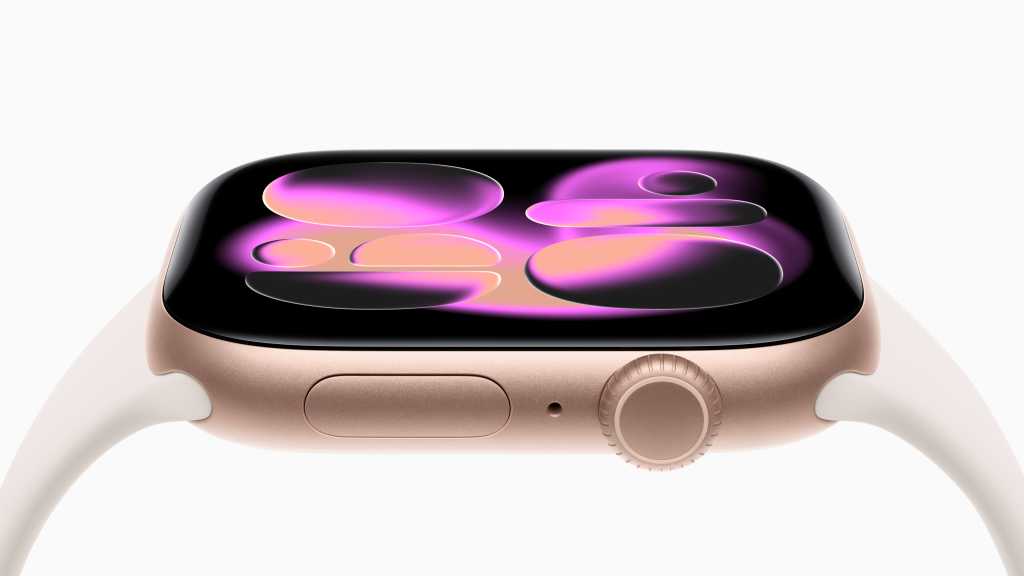
Apple Watch Series 11: The things you don’t see

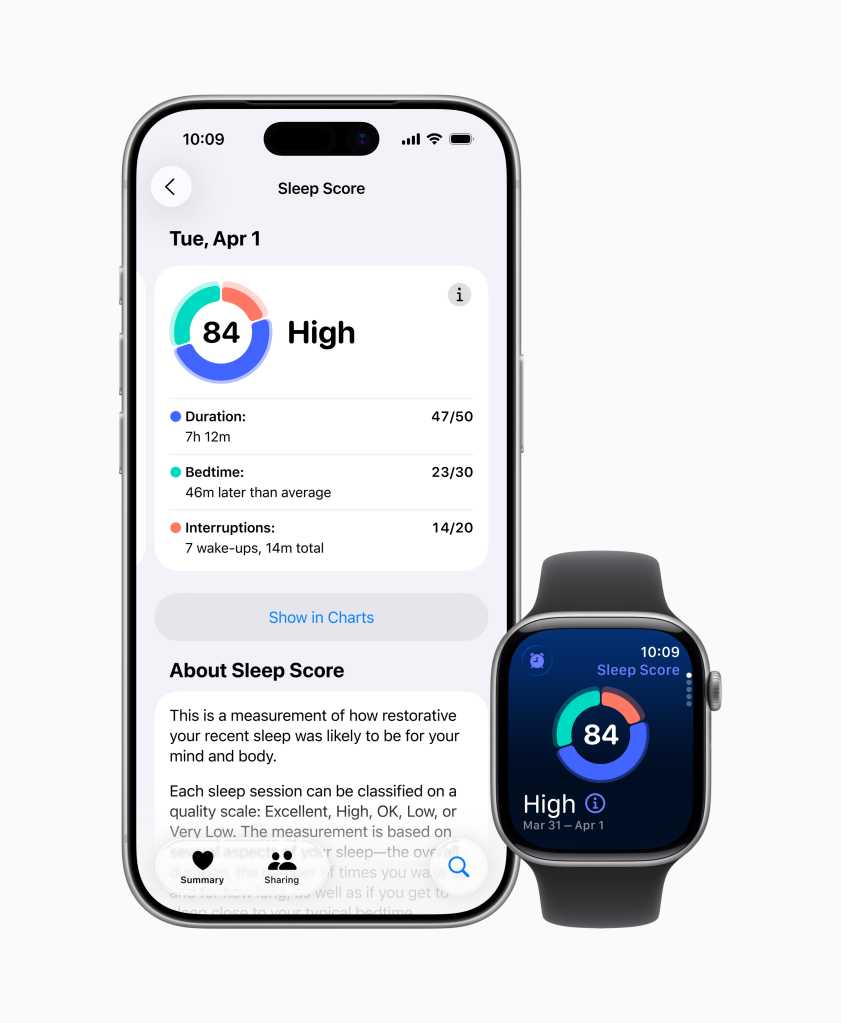
While there were solid improvements in the last generation of Apple’s popular wearable, the huge 24-hour battery life in Apple Watch Series 11 means this smartwatch has finally become what it always promised to be: a device capable of running all day and all night, which is especially for tasks like sleep tracking.

Based on my time with a Series 11 version provided for review by Apple, if you already wear a Series 10 Apple Watch, much will feel the same. The newest edition is just as thin, weighs about the same, and even looks the same. If you’re already comfortable with your existing watch, the new one will be familiar.

The ever improving user experience

Setting up a new Apple Watch seems to get a little easier each time; all you need to do is power it up and hold it near your iPhone to begin the pairing process. You’ll be given a sequence of easy start-up instructions and the chance to set the watch up as new or restore it from a backup. With the exception of the restore, the process takes no time at all, and you will be wearing your new watch in a few minutes. 

Like so much about what Apple does, many of us may take the ease of setup for granted. We shouldn’t. Apple has spent years refining that part of the experience to make it as seamless and easy as possible. It’s continuously improved that experience since the first Apple Watch, with user interface improvements, added watch faces and dozens of built-in tools to help you with your life. (Being able to walk through many airports using travel tickets and boarding passes tucked away on your watch can feel pretty magical sometimes.)

Once I upgraded, everything pretty much just worked — with the exception of apps that might require authorization, and card payments using Apple Pay/Wallet, which had to be verified with my payment providers. (Some payment providers have a multistep process for this; others just took two steps.)

Work, eat… and sleep

Pretty soon, I was going about my daily business, using the watch to check incoming messages, monitor my step count, check the weather, pay for groceries, deal with public transit, get directions, and take calls — thanks to the built-in cellular connection. I’ve even used the watch to convert ingredient measurements when cooking recipes.

Typically, Apple Watch wearers do a lot with their device, which has been a problem when using the sleep tracking it has provided since 2020. Using that feature meant you had to remember to charge the device before or after you slept if you wanted to continue using it the rest of the day. 

This got better with Apple Watch Series 10 which gave us up to 18 hours of use, but Apple Watch Series 11 is the equivalent of the Holy Grail, offering up to 24 hours of battery life. It means you can track sleep and still use your watch the next day, something Apple Watch users have wanted from the start.

Apple also introduced a second battery boost in the form of faster charging, which means that when your watch is running out of power you’ll get eight more hours of battery life in just 15 minutes on charge (or 5 minutes for a night’s sleep tracking). That’s a meaningful upgrade on its own.

Watching the detectives

Other improvements are harder to spot:

  • Ion-X glass used in the screen is much more durable; users may notice how much less prone it is to becoming scratched than any previous model. There’s a reason for that, which is that Apple has tweaked the sophisticated and proprietary process design to put together the toughest glass in the industry, reinforced with a ceramic coating at an atomic level. This basically makes the screen incredibly hard to crack.
  • Hypertension notifications should help people better maintain oversight of their own fitness, helping by spotting some of the signs of heart attack, stroke, or kidney disease. To achieve this, the watch gathers data from the optical heart sensor over a 30-day period, analyzes this, and notifies you if it spots consistent signs of hypertension.
  • The blood oxygen app has once again appeared, alongside all the other fitness features. It’s why Apple Watch remains king of the fitness bands, though the hypertension feature is once again something most of us hopefully will never have to deal with.

Another thing you don’t see is a new chip inside. The S10 is basically the same chip used in the previous model. Also identical are the W3 Apple Wireless chip and the Ultra-Wideband chip used in the devices. 

Intelligent machines

I think this is the first time Apple has not upgraded the processor inside a new watch model, though software tweaks and other on-device improvements mean you will continue to get seamless, responsive performance.

Apple has also put more artificial intelligence inside, principally a new neural network that helps optimize some tasks, including voice isolation when using the watch to make a call. Apple has also improved one of the more popular apps. The Workout Buddy delivers more personalized ways to stay active and supports additional workout types. Meanwhile, the addition of flick gestures, watch faces and more means everything that already works on Apple Watch works at least as well as it ever did. The overall result is a big improvement in the overall user experience.

Buying advice

What was always good about the Apple Watch remains just as good as ever. In many cases, artificial intelligence has made those features better, while the improved display and battery resilience means you can usually trust Apple Watch to take you where you want to go, and back again. 

If you have an Apple Watch Series 10, you might be tempted to upgrade — six hours of extra battery life is nice to have. If you have an older model, the battery life improvement makes this a super upgrade. It means you now have a wearable that can take you through your night and through your day, while also letting you know how much energy you need yourself, thanks to the sleep monitoring tools you can more easily use. Apple Watch Series 11 prices begin at $399 and is available now.

You can follow me on social media! Join me on BlueSky,  LinkedIn, and Mastodon.

Signal: We have no choice but to use AWS

Last week, the privacy-focused messaging service Signal was temporarily shut down when Amazon Web Services (AWS) suffered a major outage. This led to criticism of Signal’s use of such a dominant provider as AWS.

Signal CEO Meredith Whittaker has now commented that Signal basically has no other choice.

“The problem is the concentration of power in the infrastructure space, which means there is effectively no real alternative: the entire stack is effectively owned by 3-4 players,” writes Meredith Whittaker on Bluesky.

She continues:

“The question isn’t ‘why is Signal using AWS?’ It’s about looking at the infrastructural requirements of any global, real-time mass communication platform and asking how it is that we have ended up in a situation where there is no realistic alternative to AWS and the other hyperscalers.”

[ Related reading: Post outage, AWS adds automated incident reporting to its CloudWatch service ]

AI data center building boom risks fueling future debt bust, bank warns

Soaring optimism about AI has set off a huge global boom in data center construction that could be storing up problems for the future if the sector suffers a sudden correction.

That’s the thinly-disguised message from two interventions by the Bank of England (BoE) last week. The first was an analysis, published on Friday, that examines how AI is creating deeper financial dependencies across the tech sector and beyond.

At the heart of this are data centers, the element on which the whole AI economy depends. AI needs a lot of them, which will cost $5.2 trillion worldwide by 2030 to build, according to McKinsey. The BoE suspects that meeting this demand will increasingly involve companies taking on extra debt, which is where its anxiety starts to rise.

The sums of money estimated to be going into the data center sector are huge, dwarfing previous tech booms over similar timescales. Should the AI market hit problems — for example, after a dot.com-like market correction — the banks making those loans could face losses on a scale that risks wider economic problems, said the BoE.

In case the message was missed, BoE sources separately told Bloomberg that the BoE is currently reviewing the scale of lending to the data center sector and the interconnections between its leading companies.

Economics are good when demand remains high

From the bank’s perspective, building huge AI datacenters isn’t that different to property development. The economics are good as long as demand remains high. If demand drops, an AI data center that can’t easily be put to alternative use turns into another large building nobody wants.

However, that’s only one part of the problem. Meeting the power demands of AI data centers will require the energy sector to make large investments. Then there’s data center demand for microprocessors, rare earth elements, and other valuable metals such as copper, which could, in a bust, make data centers the most expensively-assembled unwanted assets in history.

“Financial stability consequences of an AI-related asset price fall could arise through multiple channels. If forecasted debt-financed AI infrastructure growth materializes, the potential financial stability consequences of such an event are likely to grow,” warned the BoE blog post.

“For companies who depend on the continued demand for massive computational capacity to train and run inference on AI models, an algorithmic breakthrough or other event which challenges that paradigm could cause a significant re-evaluation of asset prices,” it continued.

According to Matt Hasan, CEO of AI consultancy aiRESULTS, the underlying problem is the speed with which AI has emerged. “What we’re witnessing isn’t just an incremental expansion, it’s a rush to construct power-hungry, mega-scale data centers,” he told Network World.

Could be worse than the dot.com bust

The dot.com reversal might be the wrong comparison; it dented the NASDAQ and hurt tech investment, but the damage to organizations investing in e-commerce was relatively limited. AI, by contrast, might have wider effects for large enterprises because so many have pinned their business prospects on its potential.

“Your reliance on these large providers means you are indirectly exposed to the stability of their debt. If a correction occurs, the fallout can impact the services you rely on,” said Hasan.

Meanwhile, some now believe that AI data center investment is draining money from other things, including US President Trump’s attempts to persuade companies to build more factories in the US. Sceptics have also warned about the folly of pushing money through startups like OpenAI, and of the likelihood of a painful market reversal.

Perhaps, it has also been suggested, bubbles are a necessary phase in every technological wave, a list of which, in addition to the dot.com implosion, would include excessive investment in internet and telecom infrastructure around the same time.

A more gradual slowdown is also possible. In this scenario, limitations in adjacent technologies such as storage slow the growth of AI, not the lack of AI data center capacity as such.  Either way, at some point, experts say, the AI and data center market will need to consolidate into fewer more stable companies to prevent the dire consequences of the ballooning debt.

This article originally appeared on Network World.

The latest genAI scam: fake expense receipts

Businesses around the world have seen a surge in fake expense receipts created using AI-powered image generators from OpenAI and Google, among others, according to the Financial Times.

The generative AI (genAI) tools make it possible to create extremely realistic fake receipts in just a few seconds without any specialized knowledge.

The financial management platform AppZen reported that around 14% of fake receipts in September 2025 were AI-generated, compared to none at all last year. Fintech company Ramp says its software detected more than $1 million dollars worth of fake invoices in just three months.

To detect the scams, companies in turn use AI that can analyze metadata, patterns in file names and other details. But the control systems are far from secure, as even metadata can be deleted.

Windows 10 continues to help boost Mac sales

You can’t ignore the trend. Apple continues to be one of the big beneficiaries of the Windows 10 support shut down, with research from Counterpoint, IDC, Gartner, and others confirming Mac sales are increasing faster than the rate of PC industry growth. It means the switch is on.

Take the evidence, just in the last few weeks:

  • Counterpoint confirmed a 14.9% increase in Mac sales in Q3 2025, against an industry average of 8.1%.
  • IDC gave Apple a 13.7% growth rate in Mac sales, compared to what it saw as 9.4% industry growth. (It pegged Apple as holding 9% of the entire global PC market.)
  • Gartner determined that Apple experienced a 10.7% increase, with the industry reaching 69 million sales, up 8.2%.

With hundreds of millions of upgrades, percentages mean a lot

There are nuances of difference within the data points; many analysts see other PC makers also experiencing strong growth, with sales of smaller brand PCs seeing decline. But those slivers of difference don’t mask that all three analyst firms see Mac sales increasing at a rate that exceeds industry growth.

What this means for Apple is important. It means that with hundreds of millions of PCs still in use that need to be replaced because they cannot run Windows 11, more people than before are choosing to switch to Mac.

Certainly, not every customer purchasing a Mac is switching from Windows — many are upgrading existing Apple hardware, or may be shifting across from not owning any kind of PC. But the trend tells the tale of the resurgence of the Mac.

The forced Windows 11 upgrade isn’t the only story in town. 

Thinking Machines

The need to invest in tech capable of running artificial intelligence is another yarn. Those same hundreds of millions of PCs that don’t run Windows are very unlikely to be able to handle on-device AI, and with many companies seeking to use this tech to get things done, it’s mandatory that IT invest in PCs fit for the task.

The Mac, of course, has already become a convincing platform for AI. We know that analysts tend to look through the facts with a Windows-tainted lens, but even they recognize that AI PCs are the other string to the upgrader’s bow.

“The PC market’s rebound in 2025 is not just about replacing outdated systems, it is about preparing for what is next,” said Counterpoint’s Associate Director, David Naranjo. “Many enterprises are choosing AI-capable PCs to future-proof their fleets, even if they do not yet need those capabilities immediately. The next refresh cycle will be defined by intelligence at the edge, not just performance improvements.”

That story of edge intelligence matters a great deal. It’s a story that can only be well told by computers capable of delivering edge-based artificial intelligence, which is something you can already expect from any Mac sold since 2020, thanks to the introduction of Apple Silicon.

Apple Silicon, the great enabler

Companies such as WebAI are already selling Mac-based AI systems to deliver highly secure AI operations at the edge, no servers required. These will only become more popular as enterprise purchasers develope a better understanding of the need for sovereign data services and compliant data security protections around the use of cloud services.

There’s also the likely truth that as the venture capital funding dwindles, many current generative AI services will be forced to pass costs onto their users to stay in the game. That means companies will be looking for services that can work at the edge, are highly secure, and don’t threaten their future business with vendor lock in.

Speaking to an audience of Apple enterprise developers and admins at MacAD 2025, Chris Chapman, CTO at MacStadium put this into perspective: “Apple has created a completely capable and powerful AI processing platform that speaks to the energy demand, the privacy, and the security that people are demanding around AI.”

Apple Silicon is its own story, of course, but as Apple’s recent M5 Macs showed, Apple is on a fast track to processor development. Early benchmarks show the M5 processors inside the portable entry-level MacBook Pro compete against the leading desktop processors from both Intel and AMD. Apple will introduce desktop versions of the M5 chips, and once it does, don’t be surprised to see these machines leap to the top, or near the top, of the performance charts.

The trend toward increasing Mac adoption isn’t just fashion, it reflects the extent to which Apple’s PCs now meet many of the evolving needs of business users.

You can follow me on social media! Join me on BlueSky,  LinkedIn, and Mastodon.

Microsoft sued in Australia over alleged deceptive Copilot bundling

Australia’s competition regulator is suing Microsoft and its Australian subsidiary for allegedly misleading approximately 2.7 million customers about Microsoft 365 Personal and Family subscription options when it integrated Copilot AI.

The case raises stark transparency questions for enterprise customers, as CIOs increasingly look to include “AI transparency clauses” in renewal contracts to prevent similar price shocks tied to automation features.

Microsoft faces potential penalties of up to $33 million (A$50 million) for the breach.

While the lawsuit addresses consumer subscriptions, the bundling strategy signals broader implications for enterprise procurement. Technology leaders are now incorporating contractual safeguards against forced AI upgrades as software vendors increasingly integrate generative AI into core productivity suites and pass through corresponding cost increases.

Allegations of deceptive conduct

The Australian Competition and Consumer Commission (ACCC) alleged Microsoft engaged in deceptive conduct from October 31, 2024, by telling subscribers with auto-renewal enabled they had two options: accept Copilot integration with a price increase of up to 45% or cancel their subscription. The regulator claims that Microsoft deliberately concealed a third option that would have allowed customers to maintain their existing features at previous prices.

“The ACCC alleges that since 31 October 2024, Microsoft has told subscribers of Microsoft 365 Personal and Family plans with auto-renewal enabled that to maintain their subscription they must accept the integration of Copilot and pay higher prices for their plan, or, alternatively, cancel their subscription,” the ACCC said in a statement. “This information provided to subscribers was false or misleading.”

Deliberate omission alleged

The case centers on two emails and a blog post Microsoft allegedly sent subscribers about Copilot integration and accompanying price increases. Annual subscription prices for Microsoft 365 Personal increased from $71 to $103 (A$109 to A$159), while Family plans rose from $90 to $116 (A$139 to A$179). According to the ACCC’s court filings, Microsoft made no mention of Microsoft 365 Classic plans in these communications.

“We will allege in court that Microsoft deliberately omitted reference to the Classic plans in its communications and concealed their existence until after subscribers initiated the cancellation process to increase the number of consumers on more expensive Copilot-integrated plans,” ACCC Chair Gina Cass-Gottlieb said in the statement.

The Classic plans allegedly became visible only when subscribers began the cancellation process, denying customers the ability to make informed decisions about subscription options that included retaining all existing features without Copilot at the lower price point. The proceedings involve only consumer Microsoft 365 Personal and Family plans, not business or enterprise subscriptions.

Industry shift toward AI bundling

Microsoft’s bundling approach reflects a broader industry shift, according to Sanchit Vir Gogia, chief analyst and CEO at Greyhound Research. “Customers rarely buy AI as an isolated feature, so vendors are turning it into part of the core suite,” Gogia said. “For Microsoft, adding Copilot straight into Word, Excel, and Outlook ensures that every user encounters its capabilities in their daily routine.”

However, the strategy introduces transparency risks extending beyond consumer markets. “Once an AI feature becomes the default rather than an explicit decision, the boundary between added value and forced adoption becomes blurred,” Gogia said. He added that leaders are now writing “AI transparency clauses” into renewal contracts to prevent surprise increases tied to new automation features.

“Optional AI lets finance and risk teams ring-fence cost, audit usage, and decide when to scale,” Gogia said. “Bundled AI removes that visibility. Vendors that trade clarity for faster uptake may gain short-term revenue but risk long-term erosion of customer confidence.”

Microsoft rolled out Copilot integration globally in January with varying price increases across jurisdictions. The Australian action comes months after those worldwide changes.

Market power amplifies scrutiny

The ACCC emphasized the essential nature of Microsoft Office applications in its complaint. “The Microsoft Office apps included in 365 subscriptions are essential in many people’s lives, and given there are limited substitutes to the bundled package, canceling the subscription is a decision many would not make lightly,” Cass-Gottlieb added.

Gogia noted this market position amplifies regulatory scrutiny and affects enterprise procurement dynamics. “When a platform becomes as entrenched as Office 365, every additional service layered on top of it inherits the power of that monopoly,” he said. The analyst pointed to Microsoft’s antitrust pressure in Europe for tying Teams to Office 365 as a similar pattern.

“The key difference is that Copilot is not an app but a learning system embedded into the workflow itself,” Gogia said. “When intelligence becomes inseparable from the productivity stack, procurement moves beyond simple licensing to questions of liability and governance.”

Potential penalties and global implications

The ACCC is seeking penalties, injunctions, declarations, consumer redress, and costs. Under Australian Consumer Law, the maximum penalty for each breach is the greater of $33 million (A$50 million), three times the total benefits obtained from the conduct, or 30% of Microsoft’s adjusted turnover during the breach period if benefits cannot be determined.

Microsoft did not immediately respond to ComputerWorld’s queries.

Gogia suggested the case could become a global template for AI transparency. “If the Australian court rules that Microsoft misled users, the ripple will be immediate,” he said. “Global vendors would have to redesign renewal communications to show exactly what portion of a subscription relates to AI, what data it uses, and how customers can opt out.”

“Transparency around AI is quickly turning into a measure of corporate ethics,” Gogia said. “Copilot now stands as the global test case for whether default AI integration can coexist with fair disclosure.”

Existing Microsoft 365 Personal and Family subscribers who have not renewed since July 8 may still access Classic plans by initiating the cancellation process, according to the ACCC.

Who’s right — the AI zoomers or doomers?

We grumble about political polarization, but there’s even less agreement about artificial intelligence (AI). 

Zoomers believe AI will bring big benefits to humanity, downplaying the risks and problems. 

LinkedIn co-founder Reid Hoffman wrote in a January New York Times Op-Ed that AI in the hands of regular users will boost human creativity and control and democratize knowledge and innovation by giving billions of people access to reasoning tools once reserved for experts. 

Microsoft co-founder Bill Gates is also bullish on the technology. On “The Tonight Show With Jimmy Fallon” in February, he said AI would make “excellent medical guidance and top-notch tutoring” universally available at no cost within a decade, giving everyone access to high-quality expertise. Gates framed this as a massive equalizer for global education and healthcare, saying AI-driven personalization and virtual help would improve billions of lives by breaking down knowledge barriers.

Earlier this month, Nare Khachatryan published a long post — “The Impact of Artificial Intelligence on Society in 2025” — on the PrometAI blog. The article described AI as “a catalyst of human progress,” saying that one technology is reshaping every layer of human life. It said AI touched 3.5 billion lives daily in 2025 and compared its effect to the Industrial Revolution. Khachatryan listed positive changes in healthcare, education, and creativity.

Among Khachatryan’s claims: AI will improve cancer detection accuracy by nearly 40%, reduce global healthcare costs by $100 billion annually, shrink drug development timelines from 15 to five years, and enable 90% fewer traffic accidents through the use of autonomous vehicles. The piece concluded that AI “is quietly reshaping what it means to live, work, and dream,” envisioning it as a democratizing and human-empowering force if guided with fairness and conscience.

On social networks like Reddit, it’s easy to find a large number of overly optimistic AI fans who attack critics as clueless Chicken Little types. 

All is lost — already?

Then there are the doomers.

Earlier this week, the Emory Wheel editorial board published an opinion column claiming that without regulation, AI will soon outpace humanity’s ability to control it. The post said AI’s uncontrolled evolution threatens human autonomy, free expression, and democracy, stressing that the technical development is faster than what lawmakers can handle.

The New York Times published a March opinion piece by Tressie McMillan Cottom called “The Tech Fantasy That Powers A.I. Is Running on Fumes,” saying the technology makes a post-truth culture worse by rewarding prediction over real understanding. The piece said AI systems promote lazy thinking, strengthen false information, and replace real reasoning with fake thinking, lowering our ability to seek truth and have open discussions.

Scientific American published a January piece claiming that AI companies hide behind exaggerated claims while ignoring the fact that AI already causes real harm. The column mentioned examples like wrongful arrests from facial recognition, deepfake pornography, wage suppression by algorithmic management, and systemic bias in health care and housing. 

Super-doomers are everywhere. Eliezer Yudkowsky and Nate Soares wrote a book “If Anyone Builds It, Everyone Dies,” arguing that artificial general intelligence (AGI) will likely escape human control, consume Earth’s resources to sustain itself, and lead to the extinction of all organic life. 

In short, experts say AI will either bring about an age of peace, prosperity, health, and leisure — or it will take all the jobs and destroy humanity.

Don’t forget AGI

Both zoomers and doomers agree that humanity’s fate will be decided when the industry releases AGI or superintelligent AI. But there’s strong disagreement on when that will happen. 

From OpenAI’s Sam Altman to Elon Musk, Eric Schmidt, Demis Hassabis, Dario Amodei, Masayoshi Son, Jensen Huang, Ray Kurzweil, Louis Rosenberg, Geoffrey Hinton, Mark Zuckerberg, Ajeya Cotra, and Jürgen Schmidhuber — all predict AGI by later this year to later this decade. 

Others don’t agree. 

AGI or superintelligent AI won’t happen for decades, if ever, according to Gary Marcus, Yann LeCun, Stuart Russell, Arvind Narayanan, Helen Toner, the Association for the Advancement of Artificial Intelligence, AIMultiple Research, and others. 

At least it will do all our software coding for us, right? 

The coding tool of the future?

Dario Amodei thinks AI will write almost all code within a year and replace human developers completely. Altman believes it  will become the world’s best programmer by late 2025. Marc Benioff thinks AI will automate almost all software engineering jobs. Zuckerberg believes AI will perform mid-level engineers’ work and make coding automatic. Andy Jassy thinks it will cut down the need for most corporate software jobs. Arvind Krishna thinks AI-driven automation will save billions and take over IBM’s engineering. And Oak Ridge National Laboratory researchers believe machines will automatically write most code by 2040.

Not true at all, say other experts. Yann LeCun, Stephen Wolfram, Boris Cherny, Simon Willison, Alex Gu, and Marselena Sequoia believe that despite progress in AI-assisted coding, current systems lack the reasoning, understanding, and reliability to autonomously perform most software development work anytime soon. They believe skilled human programmers will remain indispensable for complex, large-scale projects.

Almost every strong public opinion about AI is extreme.

Flip a coin

Some say we need strict global rules, maybe like those for nuclear weapons. Others say strong laws would slow progress, stop new ideas, and give the benefits of AI to China. 

There’s no agreement on open-versus-closed systems. Some think open AI makes the world safer because everyone can check how it works. Others think giving powerful tools to anyone is too risky and could help criminals or hostile nations. 

No one agrees who should be in charge: companies, governments, or international groups.

Experts debate whether we can make AI truly safe. Some believe science will solve it with better design and testing. Others say safety is about values and ethics, which humans don’t agree on. 

Supporters of Universal Basic Income think everyone should get a share of the wealth AI creates. Critics call that unrealistic and dangerous. 

Artists and writers disagree on whether AI inspires more creative work or replaces and destroys human creativity.

People debate whether AI makes us smarter or dumber. Many scientists say AI can speed up research and give everyone access to expert help. But others think it will fill the world with falsehoods and make people lazy about thinking. 

AI excels at recognizing patterns, not understanding ideas, leading to doubts about its “knowledge.” Some say chatbots show true intelligence; others say they just copy what they’ve seen before without any real thought at all.

People disagree on what AI is. Some think it already shows reasoning, problem-solving, and consciousness. Others argue it only copies understanding and lacks thinking, awareness, or even a consistent “self.”

Just say no to extreme views

One thing is clear about AI: We don’t agree on what it is, how it works, and what its impact on people will be in the future.

When it doubt remain clear-headed

This leads me to the following advice: Reject AI dogma. Reject certainty. Be suspicious of motives (like when those who can make money from AI tell us to relax and accept it).

And reject the extremes. AI is most likely neither all good or all bad. 

AI is already causing harms. It contributes to privacy invasion, disinformation and deepfakes, surveillance overreach, job displacement, cybersecurity threats, child and psychological harms, environmental damage, erosion of human creativity and autonomy, economic and political instability, manipulation and loss of trust in media, unjust criminal justice outcomes, and other problems. 

But it’s also already helping people by improving healthcare and medical discovery, driving scientific and climate research, enhancing productivity and economic growth through automation, minimizing human error and increasing safety, improving transportation and urban infrastructure management, strengthening cybersecurity and data privacy, and boosting creativity, culture, and problem-solving for some. 

One thing is certain: Anyone who says AI is all good or all bad is wrong. We should be humble and open-minded about AI’s future, neither zoomer nor doomer. We should explore and exploit AI’s benefits while advocating for protections from potential or actual harms. 

AI has both good and bad impacts on people. It’s the mixed bag of the century. 

OpenAI’s company knowledge wants access to all of your internal data

OpenAI on Thursday rolled out its latest offering, a comprehensive data collection and analysis capability called “company knowledge”. And although vendors have been granted access to a wide range of enterprise data for decades — think of malware detection that reviews all messages and downloads — analysts and industry observers see this OpenAI effort as being meaningfully different.

Part of that difference is the extreme depth of access that OpenAI is proposing, along with a lack of assurances about how that sensitive enterprise data would be used and protected. But an even greater factor is OpenAI itself and how comfortable enterprise IT executives are about trusting a relatively young company with this intense level of access.

Making granting that trust yet more difficult is the lack of clarity around the ultimate OpenAI business model. Specifically, how much OpenAI will leverage sensitive enterprise data in terms of selling it, even with varying degrees of anonymization, or using it to train future models. 

Jeff Pollard, VP/principal analyst for Forrester, said trust, or the lack of trust, is the most critical background factor in this announcement.

“Whether it’s Microsoft Copilot M365, Gemini Enterprise, Anthropic Claude Enterprise Access, and now OpenAI company knowledge, the choice is really between the devil you know — the vendor you already work with — and who do you trust?” Pollard said. “The capabilities across all these solutions are similar, and benefits exist: Context and intelligence when using AI, more efficiency for employees, and better knowledge management.”

But Pollard said the risks of such an offering are equally important. “Data privacy, security, regulatory, compliance, vendor lock-in, and, of course, AI accuracy and trust issues. But for many organizations, the benefits of maximizing the value of AI outweigh the risks.”

The ROI debate

This ROI debate is intrinsic to all AI strategy decisions and goes well beyond this one OpenAI product/service rollout.

Enterprise IT executives “need to remember one important fact: Enterprise AI is shifting from isolated applications to connected agents and agentic systems that integrate with technologies already deployed to maximize value for users,” Pollard said. “These are high risk, high reward integrations that are unavoidable. These solutions exacerbate existing challenges related to identity and access management [such as] entitlements, data security including labeling/categorization, compliance, and governance, but the perceived productivity and efficiency gains make it too tempting for businesses to pass up.”

OpenAI’s statement gave perhaps the best illustration of how extensively they want to integrate with all manner of enterprise data. 

“With company knowledge, the information in your connected apps—like Slack, SharePoint, Google Drive and GitHub—becomes more useful and accessible. It’s powered by a version of GPT‑5 that’s trained to look across multiple sources to give more comprehensive and accurate answers. Every response includes clear citations so you can see where the information came from and trust the results,” OpenAI said. “For example, if you have an upcoming client call, ChatGPT can create a briefing for you based on recent messages from your account channel in Slack, key details from emails with your client, the last call notes in Google Docs, and any escalations from Intercom support tickets since your last meeting.”

How will the data be used?

The only data use restriction that OpenAI’s statement mentions does not address how OpenAI will use the data, but only says that it won’t access information that an individual end user wouldn’t have system permission to view.

“Anyone on ChatGPT Business, Enterprise, and Edu can use company knowledge. Company knowledge respects your existing company permissions, so ChatGPT only has access to what each user is already authorized to view,” the OpenAI statement said.

Some industry officials said enterprises will have to rely on legal contracts, including service level agreements, to control what a vendor can do with their data. The problem is that the data that OpenAI would access would also be available to a very large number of employees, contractors, and third parties. If some of this sensitive data was later discovered on the dark web or in the possession of a data broker, it would be all but impossible to prove from where that data was accessed.

“That data would be difficult to track” and that would make it easy “to find ways to avoid the repercussions” and to potentially deny that the data came from OpenAI, said Brady Lewis, the senior director of AI Innovation at the Marketri marketing consulting firm.

“This is one of those announcements that sounds great on paper, until you start thinking about what it actually means for your organization. The productivity promise is legit. Instead of toggling between Slack to find assignments, tabbing to Google Drive for specific files, or hunting for names and numbers, ChatGPT can deliver all that information directly into your chat session,” Lewis said. “Here’s where my 25+ years in tech makes me pause. Employees are submitting company data to ChatGPT and other tools with little to no oversight, often including PII or PCI data. So while OpenAI is building enterprise-grade controls, the real question is whether organizations are prepared to govern their employees properly.”

Lewis said that much of this comes down to OpenAI’s perception within enterprise IT. He said that OpenAI is seen as “overpromising and underdelivering. They haven’t proven their credibility, their trustworthiness.”

Risks too serious to ignore

Andrew Gamino-Cheong, CTO at Trustible, said his biggest concern with company knowledge is the unintentional loss of data control.

“The main risk for this set up is accidental data leakage of privileged information. This may be exacerbated if systems like ChatGPT don’t leave a breadcrumb [audit trail] that they accessed that information,” said Gamino-Cheong, who does not recommend deploying the feature yet. “There needs to be a very clear understanding of all of the access controls in place.”

Gary Longsine, CEO at IllumineX, said that he still sees OpenAI as a startup that doesn’t precisely know what it wants to be when it grows up — and that includes knowing specifically how it will make its money.

Longsine said that the risks of company knowledge are too serious to ignore. “No company in their right mind would ever [deploy this],” he said, unless they desperately needed this kind of data integration and analysis. And even if that enterprise did need such things, they should demand “their own instance of the LLM to prevent data leakage, and that would require funding a data center. That’s the only way I know how to do this and still protect enterprise data.”

Another cybersecurity executive, Bobby Kuzma, the director of offensive cyber operations at cybersecurity consulting firm ProCircular, added, “For companies that have solid data classification controls, there might be some benefit here. Unfortunately, that’s a very tiny fraction of the universe of organizations.”

But there are important questions to be answered. “OpenAI’s integration is leveraging the individual user’s access. That’s nice,” he said. “[But] how long is that access maintained? Does it only stay valid for that specific interaction with the user or is there longer term storage of tokens that could be leveraged if OpenAI is compromised? This has me more than a bit leery.”

And even if the vendor can be trusted to not be co-opted by other third parties, Kuzma asked what would happen if the US government hit OpenAI with a national security letter and demanded full access? 

But he mostly was worried about the financial incentives for OpenAI to use that data in a wide range of ways. “Think about an anonymized dataset of top manufacturing companies worldwide. Can you imagine the economic value of that, of monetizing access to that data?”

Asked what advice he would offer enterprise IT executives about using company knowledge, Kuzma was direct. “Please don’t,” he said, adding, “we don’t have a long track record of seeing how OpenAI deals with data access. They are subject to the same pressures as every other startup: ‘First become cashflow positive and then maybe we can think about security’.”

Scammers try to trick LastPass users into giving up credentials by telling them they’re dead

Are you sure you’re still alive? If so, you may fall for a phishing scam aimed at getting the master login passwords of LastPass password manager users.

OK, this sounds weird, but in some ways it isn’t. If a person dies, their immediate family may not know how to get into the deceased’s password manager, and may contact the vendor asking for access. Scammers suspected of being part of the CryptoChameleon cyber criminal group are trying to take advantage of that by sending oddly-worded phishing messages to LastPass customers.

The goal, presumably, is not only to get LastPass login credentials, but also to access the user’s cryptocurrency wallet and drain its contents.

On Friday, LastPass sent a warning to customers about the phishing campaign, which began in the middle of this month, because the messages are spoofing the LastPass domain to appear to come from the company.

The subject line reads ‘Legacy Request Opened (URGENT IF YOU ARE NOT DECEASED),’ and the message begins: “A death certificate was uploaded by a family member to regain access to the LastPass account of . If you have not passed away and you believe that this is a mistake, please reply to this email with ‘Stop.’”

The email says that a support case has been opened to execute the request, and includes fabricated information regarding a supposed agent assigned to the case, including an agent ID number, the date the case opened, and the case priority. 

It also includes a link to cancel the request, which in fact directs the intended victim to an attacker-controlled URL where the victim is asked to enter their LastPass master password, in an attempt to harvest their credentials.

The email concludes with the statement “Your security is our top priority. Never share your master password with anyone – including us!” 

In some cases, a threat actor has also phoned people, claiming to be from LastPass and urging them to go to the phishing site and enter their master password.

In its alert, LastPass reminded users that it never asks for their master password.

A tricky one to prevent

David Shipley, head of Canadian-based employee security awareness firm Beauceron Security, called the pitch “the most creative” phishing lure he’s seen this year.

“Have to wonder if they used AI to come up with the concept,” he added.  

However, Roger Grimes, data-driven defense CISO advisor at KnowBe4, said it’s “far from” the oddest phishing lure he’s seen; social engineering is involved in up to 90% of all successful hacks, he said in an email.

“In this case, the social engineering hack was in convincing the user to download malware,” he said. “That’s a tricky one to prevent. I always tell people to learn the following and practice it religiously: If you receive an unexpected message asking you to do something you’ve never done before, at least for that sender, research the request using known trusted methods before performing. That will save you in 99% of social engineering scams, including this one.”

Staff should be using MFA

CSOs and IT managers should ensure that any password managers their employees use have phishing-resistant multifactor authentication or require an additional login factor, so if staff fall for a scam like this, the scammer can’t log in just using stolen credentials, Grimes said.

If the corporate approved password manager doesn’t allow MFA for logging into the app, it should have some additional login factor – for example, making the employee provide other confidential information that is far harder to obtain. 

Combating phishing requests for password manager credentials requires a combination of user education and adding friction to the logins by requiring more than just the master password and MFA to access accounts or add new devices, said Shipley, who pointed out that some other password management providers require access to a secret key in addition to a master password to add access to a new device.

IT leaders should be sending an e-mail blast to employees to let them know about the scam, linking to the LastPass blog, and encourage them to report any e-mails that look as though they’re coming from LastPass, he said.

The LastPass warning includes suspicious IP addresses and URLs as references for infosec leaders. It has taken down the initial phishing site.

Scam going after ‘a broad user base’

LastPass wouldn’t disclose to CSO how many, if any, customers fell for this scam.

Asked if the campaign is targeting enterprise customers as well as consumers, a representative from the LastPass threat intelligence, mitigation and escalation team said it is targeting “a broad user base.”

CSOs and IT leaders should warn employees not to click on emails with the subject line “Legacy Request Opened,” the spokesperson said, and to report suspicious emails or phone calls claiming to be from LastPass.

According to the LastPass warning, the URL associated with this campaign has been linked by Google Threat Intelligence with the known cybercriminal group CryptoChameleon (also known as UNC5356). The group is associated with targeting of cryptocurrency exchanges and users with the intent to steal cryptocurrency. The group previously leveraged LastPass as part of a phishing kit in April 2024.

Other indicators of malicious behavior associated with this campaign, says LastPass, include the threat actors’ use of known bulletproof host NICENIC to host the phishing site, and the attempted direct social engineering, which are again consistent with previous CryptoChameleon behavior

In its advisory, the company also included the indicators of compromise, along with a list of URLs associated with the malicious IP addresses used by the attackers.  

LastPass asks customers to forward any phishing emails or screen captures of texts that are targeting its products to abuse@lastpass.com.